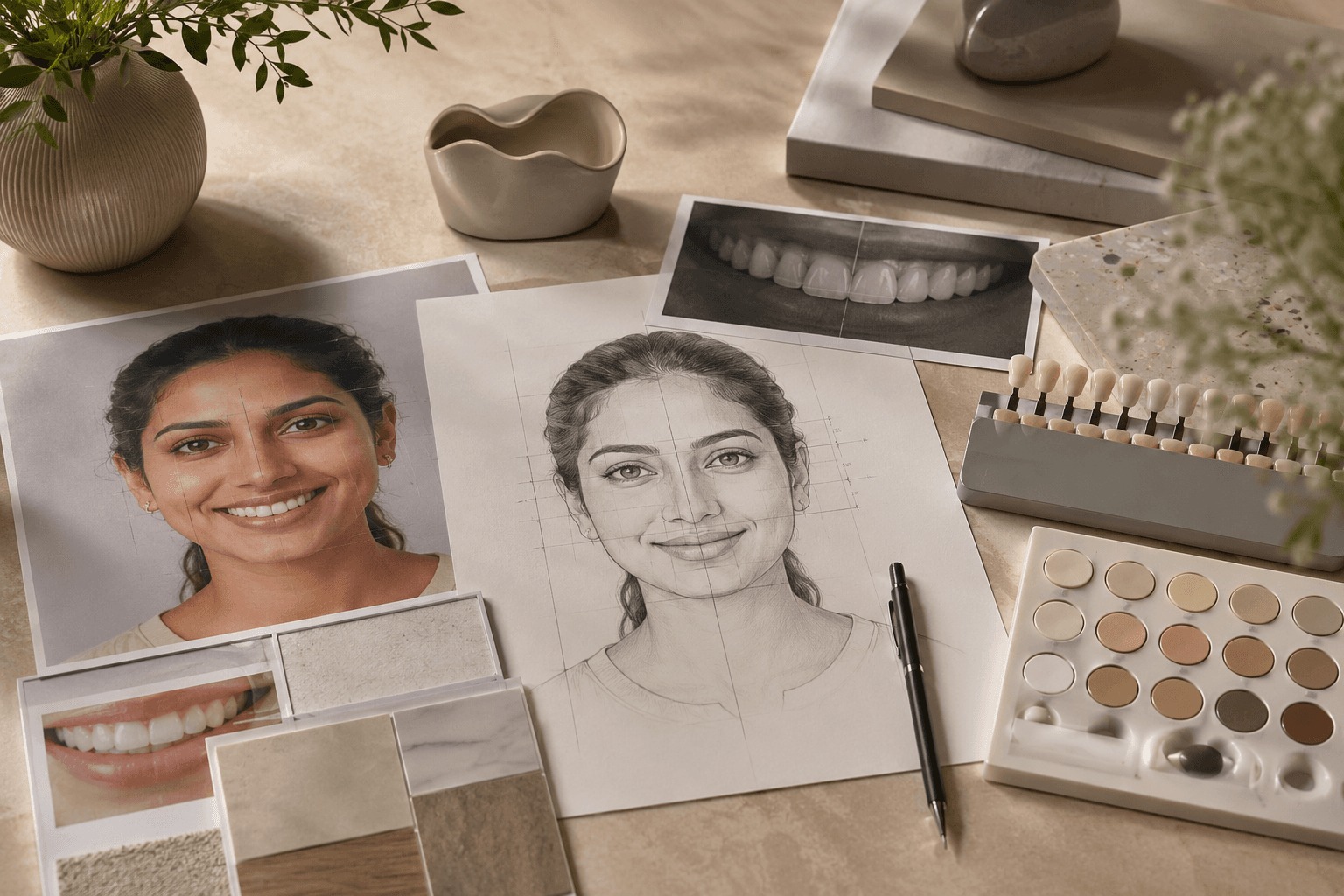
Smile design is the planning work that happens before any cosmetic procedure is begun. It is not a single treatment; it is the careful conversation, the photographs, the trial mock-ups, and the written sequence that turn a vague wish to "fix the smile" into a plan that can be carried out tooth by tooth. The procedures that follow (whitening, bonding, veneers, sometimes crowns or orthodontic work) come out of the design, not the other way around.
A good design starts with the face and ends at the teeth, rather than the other way around. The way your lips move, the way you laugh, the gum line above your teeth, the colour and texture of the surrounding tissue, the age you are now and the age you would like the result to suit at. All of this shapes what should and should not be changed.
At our Mohali clinic, smile design is treated as the slowest part of cosmetic work, not the fastest. The procedures take days. The planning takes weeks. The result is in proportion to that allocation.
When smile design is the right starting point
Smile design is the right starting point whenever the change you want is not obvious in advance. If you know exactly which tooth bothers you and what you want done to it, you can sometimes go straight to treatment; if you do not, designing the plan before deciding the procedure is almost always the wiser sequence.
Smile design is particularly useful when several teeth are involved, when whitening alone would not solve the concern, when older restorations no longer match the natural teeth around them, or when you want a coordinated change rather than a series of small repairs. It is also useful for patients who have looked at "before and after" photographs online and want to understand which kinds of result are realistic for their own face.
When it can wait, and when it should not
Smile design can almost always wait. There is no medical urgency, and the time spent thinking carefully about the plan is rarely wasted. Patients who book a consultation, sit with the recommendations for a few weeks, and come back with questions usually arrive at a smaller, more conservative plan than patients who decide on the first visit.
What should not wait is the underlying dental health that the cosmetic plan will sit on. Decay, gum disease, cracked teeth, and bite problems all need to be addressed before any cosmetic procedure. A smile design that ignores the base layer is fixing the wrong layer of the problem.
How we approach smile design at our Mohali clinic
We perform smile design in-house at our Mohali clinic. The first visit is a long one. We take photographs of the face at rest, while you speak, and while you laugh. We discuss what you actually want changed in your own words. We examine the teeth, the gums, the bite, and the way your lips frame the smile. We write up a recommended plan with each procedure named and sequenced.
For designs that involve restorative or orthodontic work alongside the cosmetic procedures, Dr Aman coordinates with visiting specialists who treat patients here at the clinic. For cosmetic-only sequences, the work stays in-house. The principle that shapes every plan is set out in the journal piece a smile, planned around your face and not a template.
We use trial bonding, digital previews, and shade matching to let you see the design before the permanent work begins. We expect to revise the plan based on what the previews show. The first plan is almost never the final plan, and that is by design rather than indecision.
What to expect across the design process
Smile design takes weeks rather than days, and the appointments are spaced to allow for thinking time between them.
- A consultation visit with photographs, examination, and an unhurried discussion of what you want changed and why.
- A written design with each recommended procedure named, sequenced, and provisionally costed.
- A second visit a week or two later to walk through the design, answer questions, and revise the plan if the patient wants changes.
- Trial bonding or a digital mock-up where useful, so the planned result can be previewed before any permanent work is begun.
- The treatment sequence itself, which may span weeks or months, depending on what the design includes.
- A final review a few weeks after the last piece of work, with photographs to compare against the starting point.
At any stage you can scale the plan back, defer parts of it, or stop the sequence altogether. The design is a recommendation, not a commitment.
Common questions before treatment
Patients ask whether smile design and smile makeover are the same thing. They are related but not identical. Smile design is the planning. Smile makeover is the broader treatment course that the design may lead to. Some patients design their smile and then act on only a small part of the plan, which is a legitimate outcome. Others design, decide on a full makeover, and execute it over months.
Patients ask how long the whole process takes. The design phase typically runs two to four weeks. The treatment phase that follows depends on what the design includes: a few weeks for a whitening-and-bonding plan, a few months for a plan with veneers, longer still for plans that include orthodontics or implant work.
A third common question is whether the design will be honest about what cannot be changed. Yes. Some features of a smile (the position of the gum line, the proportions of the lips, the age-related thinning of the upper lip) are not changed by dentistry alone. The design respects those limits and works within them rather than pretending they are not there.
A note on cost and timelines
Cost depends entirely on which procedures the eventual plan includes. The design phase itself (consultation, photographs, written plan, and discussion visits) is a defined cost; the procedures that follow are quoted separately, stage by stage, so you can decide what to act on and what to defer.
For patients planning around a wedding, a milestone, or a long-postponed family event, please give us as much lead time as you can. Smile design plus the procedures it leads to is rarely a six-week project, and treatments that involve healing or lab work need that time built in.