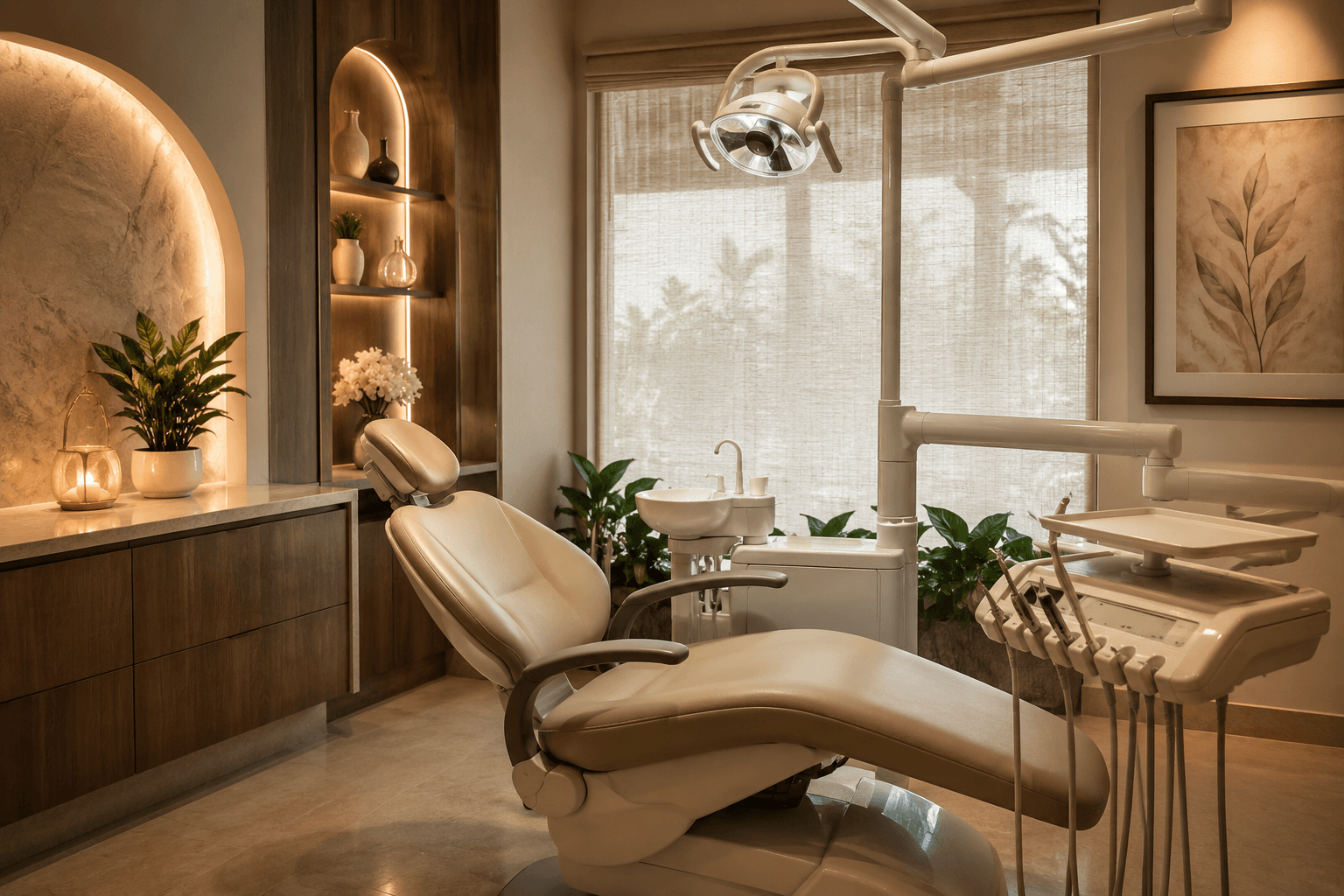
Sedation dentistry is the use of medication to help a patient stay calm during dental treatment. It is not the same as general anaesthesia, where the patient is fully unconscious; it sits along a spectrum, from mild oral medication that helps an anxious patient feel relaxed, to deeper sedation that requires a trained anaesthesiology colleague in the room. Each level has its own indications, its own safety considerations, and its own preparation.
Sedation is a tool for patients who genuinely need it, not a routine upgrade. Most dental work, including most work for nervous patients, can be done well with careful technique, time, and good communication, without any sedation at all. Where sedation is the right answer (for severe dental anxiety, for some special-needs patients, for long or complex procedures done in one sitting, for selected paediatric cases) we plan it carefully and we do not offer it casually.
At our Mohali clinic we treat sedation as a serious clinical decision. We discuss the alternatives openly, we use the lightest level of sedation that fits the case, and we involve specialist colleagues when the sedation depth calls for it.
When sedation is appropriate
Sedation is appropriate when a patient’s dental anxiety is so severe that ordinary treatment cannot be completed safely or kindly without it, when several long procedures are being combined into one sitting, when a patient has special needs or a medical condition that makes ordinary cooperation difficult, or when a child needs treatment that cannot be completed with gentle technique alone. Sedation also has a role in selected oral surgery cases that would otherwise require multiple visits.
Sedation is not appropriate as a default option for patients who would simply prefer not to feel the procedure, where the procedure could be done well with normal local anaesthesia. The risks of sedation, while small for the right patient in the right setting, are real, and they should not be taken on without a clinical reason that justifies them.
When it can wait, and when it should not be rushed
Sedation is almost never an emergency decision. A patient with severe anxiety who needs a non-urgent procedure has time to think about whether sedation is the right approach for them, to consider the alternatives, and to have a planning conversation with the dentist and (where relevant) the anaesthesiology colleague. Rushing into sedation, especially deeper levels, is not how good sedation cases proceed.
What should not be rushed is the pre-sedation assessment. A careful history of the patient’s medical conditions, current medications, allergies, and previous experiences with sedation or anaesthesia is the foundation of a safe sedation appointment. We will not sedate a patient until that history has been taken properly.
How we approach sedation at our Mohali clinic
We offer mild oral sedation in-house at our Mohali clinic for patients with significant dental anxiety where the procedure suits it. This is the lightest end of the sedation spectrum and lets an anxious patient remain conscious and able to respond, while feeling much calmer than they would without medication.
For deeper levels of sedation (conscious IV sedation, sedation in selected paediatric cases, or sedation in patients with complex medical histories), Dr Aman coordinates with visiting anaesthesiology colleagues who work alongside the dental team here at the clinic. Deeper sedation is not a one-person operation, and we treat it as the multi-disciplinary appointment that it actually is.
Whatever level is being used, the principles are the same: a careful pre-sedation assessment, fasting instructions where appropriate, monitoring throughout the procedure, and a clear discharge plan with a responsible adult to take the patient home. We do not let a sedated patient leave the clinic alone.
What to expect at your appointment
A sedation appointment is usually longer than the equivalent non-sedated visit, because of the preparation and recovery time involved.
- A pre-sedation planning visit, with a discussion of the level of sedation being recommended and why, and a careful medical history.
- Clear written instructions for the day of the procedure: fasting, medication adjustments if any, what to wear, who will accompany you.
- On the day, monitoring is set up before the sedation begins, and remains in place throughout the appointment.
- The procedure itself, performed once the sedation has taken hold and you are comfortable.
- A recovery period at the clinic before you are allowed to leave, with discharge only when we are satisfied you are safe to do so.
- Clear written aftercare and a phone number to call if anything is unusual in the hours after the appointment.
You should not drive, work, sign documents, or look after children for the rest of the day after sedation. The responsible adult who took you home should stay with you for the first few hours.
Common questions before treatment
Patients ask whether they will be unconscious. With the sedation levels we use in routine practice, no. You will be conscious, you will be able to respond, and you will be much calmer than usual. With deeper sedation arranged through our anaesthesiology colleagues, the answer depends on the specific plan; we will explain in detail before any deeper sedation is booked.
Patients ask whether they will remember the procedure. With many forms of sedation, memory of the procedure is reduced; some patients remember little, others remember most of it. This is normal and not a sign that anything has gone wrong. We will tell you what to expect in your specific case.
A third common question is whether sedation is safe. For appropriate patients, in an appropriate setting, with monitoring and trained staff, sedation has a strong safety record. The risk is not zero; that is why we are careful about who is sedated, at what level, and under what supervision. We will not recommend sedation for a patient whose medical history makes it the wrong choice.
A note on cost and timelines
Cost depends on the level of sedation, on whether an anaesthesiology colleague is involved, and on the procedure being done under sedation. We will give you a written estimate that separates the sedation cost from the dental treatment cost, so each can be considered on its own.
For patients travelling from abroad and considering treatment under sedation, please get in touch well in advance. The planning visit, the medical clearance, and the procedure itself are usually best spread across two trips, although shorter sequences are sometimes possible for less involved work.