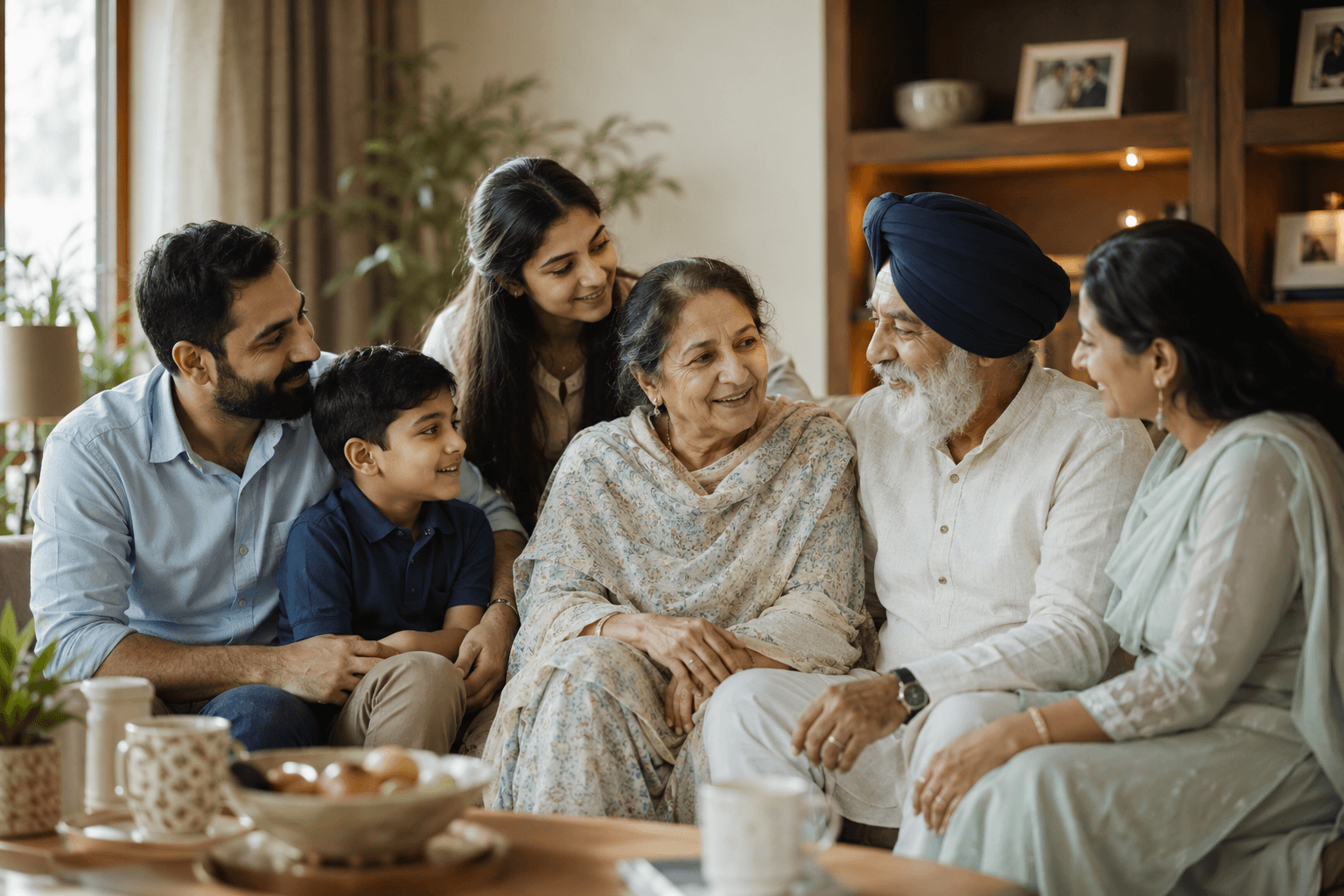
A family dental practice is one that sees you over years rather than visits. The same dentist looks at your child’s first tooth, your parents’ denture comfort, and your own check-up in the same morning. Notes from ten years ago are open on the screen during the appointment today. The history travels with the patient, and the care reflects it.
Dr Nanda’s Dental Clinic has been a family practice in Mohali since 1997. Three generations of some families pass through the door now. That continuity is not a marketing line; it is the working assumption of how the clinic runs. The dental needs of a child, an adult, and an older patient are different, and the value of a family practice is that it knows the difference for each member it sees.
At our Mohali clinic, family dentistry is the broadest of the services we offer, and the one that ties most of the others together. The pages below describe the specific procedures; this one describes how we think about a family across the long arc of dental care.
What family dentistry covers at our Mohali clinic
Family dentistry covers the routine and preventive care that keeps the rest of dentistry small. Scaling and polishing twice a year for most patients, fillings for cavities caught early, gum care, bite checks, and the appointments where nothing is wrong and the patient leaves having had a careful look but no treatment. It also covers the gradual conversation about whether and when a tooth needs more involved work.
Family dentistry is also the front door into the rest of the practice. When a child needs a paediatric appointment, paediatric dentistry picks up from here. When an older patient begins to consider denture work, the conversation usually starts in a family appointment before moving on to dentures planning. The continuity is the point.
How needs change across generations
A child’s dental needs are about prevention, education, and helping them feel safe in the chair. A young adult’s needs are about wisdom teeth, the end of orthodontic treatment, the choices about cosmetic work that come up around weddings and photographs. A middle-aged patient’s needs lean toward maintaining the dentistry they already have and catching slow problems before they become difficult ones. An older patient’s needs include dry mouth, medication effects, dexterity for cleaning at home, denture comfort, and the management of existing crowns, bridges, and implants over many more years.
The same patient, over decades, moves through all of these. The dental work that suits the patient at thirty-five is not the same as the dental work that suits the same patient at sixty-five. A family practice has the history to make that transition gracefully.
Our approach with children
Children are not adults in smaller bodies. We slow the appointment down, let them see the room before we touch them, and accept that a first visit may achieve nothing more than the child leaving feeling calm. Most paediatric work is straightforward: prevention, education, fluoride and sealants where appropriate, occasional fillings, and the gentle handling of early orthodontic signs.
For more involved paediatric work, or for older children with significant fear, the paediatric dentistry page sets out our approach in detail. The journal piece on helping an anxious child feel safe in the chair explains the why behind it.
Our approach with adults
Adult family dentistry is mostly about preserving what you already have. Routine cleanings on a sensible interval, fillings when they are needed, gum care, and the considered replacement of older dentistry when its time has come. We aim for the long view, not for the quick treatment plan that fixes everything in one season.
Adult appointments also cover the conversations that lead into the rest of the practice: about cosmetic work when a patient is starting to think about it, about implants when a tooth is failing, about orthodontic options when a long-postponed alignment is finally on the table. None of these is rushed in a family visit; they are introduced and revisited over more than one appointment.
Our approach with older patients
Older patients often come to us with a longer dental history, more existing dental work to maintain, and a different set of daily concerns. Dry mouth from medication is common, and it matters: saliva protects the teeth and gums in ways that are not obvious until it is reduced. Reduced hand strength can change what kind of brush and what kind of cleaning routine works at home. Existing crowns, bridges, dentures, and implants need a different rhythm of attention than the teeth of a thirty-year-old.
We adjust the appointment cadence and the home-care advice for each patient rather than running everyone on the same schedule. The journal piece on dry mouth, medication, and oral health later in life explains some of the changes that come with age. The broader caring for teeth and gums across a lifetime piece sets out the long view.
Common questions families ask
Families ask whether they should all come on the same day. Many do, and we are happy to arrange family appointments in a single morning when that suits everyone. It is convenient, it lets siblings see the clinic together, and it makes the conversation about shared habits (snacking, brushing routine, family history of dental issues) easier to have once.
Families ask whether one dentist will see everyone, or whether different family members will be passed around. At this clinic, Dr Aman and the team see all the family members directly. The records stay together. The history of one generation informs the care of the next.
A third common question is what to do when one family member is visiting from abroad while others live in Mohali. We will coordinate appointments around the visiting member’s trip and run the regular Mohali appointments on their usual cadence. Patients abroad with longer-running issues should send X-rays or recent records ahead of the trip so the in-person visit starts in the right place.