A dry mouth can sound like a small complaint. For an older patient, it can become a daily problem.
Saliva protects the mouth. It helps with chewing, swallowing, speaking, taste, denture comfort, and protection against decay. When the mouth is dry again and again, teeth and gums become more vulnerable.
Dry mouth is common later in life, but it is not something to dismiss as simply age. Many older patients experience it because of medicines, dehydration, diabetes, mouth breathing, cancer treatment, or other health conditions.
If an elderly parent keeps sipping water, struggles with dentures, complains of burning, or develops new cavities quickly, dry mouth may be part of the explanation.
What saliva does
Saliva does quiet protective work all day.
It helps:
- Wash away food debris
- Neutralise acids
- Protect enamel
- Make chewing and swallowing easier
- Support speech
- Protect soft tissues
- Keep dentures more comfortable
- Reduce the risk of fungal infection
- Maintain taste and comfort
When saliva is reduced, the mouth loses one of its natural defences.
Why medicines can cause dry mouth
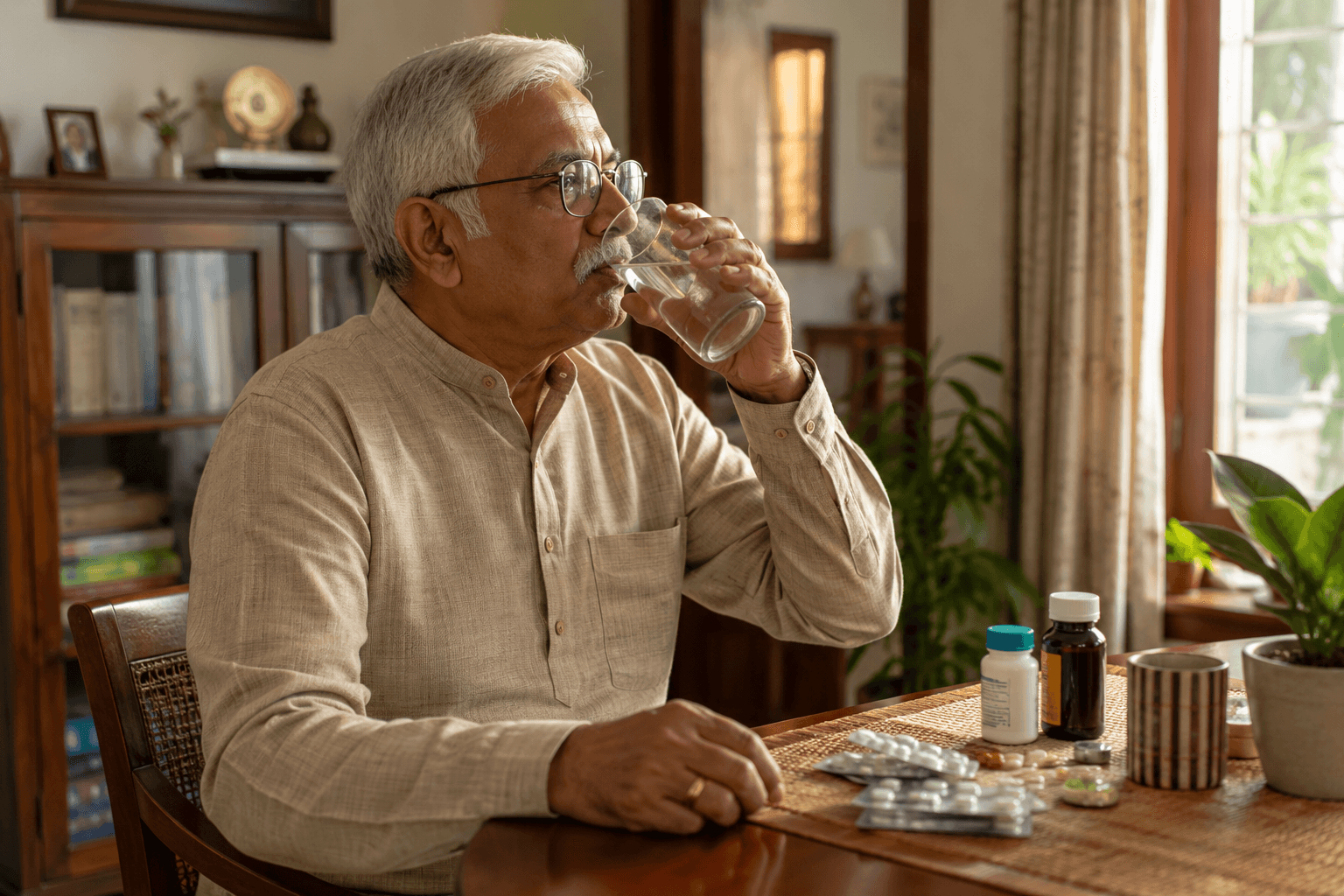
Many commonly used medicines can reduce saliva or make the mouth feel dry.
These may include some medicines used for:
- High blood pressure
- Depression or anxiety
- Allergies
- Pain
- Sleep
- Urinary problems
- Parkinson's disease
- Certain heart conditions
A patient may not connect dry mouth to medicines because the medicine is taken for another part of the body. But the mouth often feels the effect.
Do not stop or change medicine on your own. If dry mouth is significant, discuss it with the prescribing doctor and your dentist.
What older patients usually notice
Dry mouth may feel like:
- Needing water frequently
- Sticky saliva
- Difficulty swallowing dry food
- Burning or soreness
- Bad breath
- Cracked lips
- Altered taste
- Dentures rubbing or feeling loose
- More cavities than before
- Waking at night to sip water
- Trouble speaking for long periods
Some patients do not complain directly. Families may notice that an elderly parent avoids certain foods, eats slowly, or removes dentures often.
Why dry mouth increases dental risk
Without enough saliva, acids remain in contact with teeth for longer. Food sticks more easily. Plaque becomes harder to control. Roots exposed by gum recession are more vulnerable than enamel.
This can lead to:
- Faster tooth decay
- Root cavities
- Gum irritation
- Denture sores
- Bad breath
- Fungal infections
- Difficulty wearing dentures
- Increased sensitivity
Dry mouth can make a previously stable mouth become high-risk.
Dry mouth and dentures
Dentures need a comfortable moist mouth to sit well.
When the mouth is dry, dentures can rub against the gums or palate. Sore spots may form. Food may collect. The patient may speak or eat less comfortably.
A denture problem is not always only a denture problem. Sometimes the mouth underneath has changed.
This is why dry mouth should be mentioned during denture appointments.
What patients can do at home
Simple steps may help:
- Sip plain water regularly
- Avoid frequent sugary drinks
- Limit tobacco, gutka, paan masala, and alcohol
- Avoid very dry snacks without water
- Use sugar-free chewing gum if suitable
- Maintain careful brushing with fluoride toothpaste
- Clean between teeth where possible
- Keep dentures clean
- Use lip balm for cracked lips
- Discuss saliva substitutes or gels with the dentist if needed
If reflux, diabetes, mouth breathing, or medicine side effects are involved, the underlying cause also needs attention.
When to call a dentist
Call a dentist if dry mouth is joined by:
- New cavities
- Sensitivity
- Denture sores
- Burning mouth
- Bad breath that does not settle
- White patches or suspected fungal infection
- Difficulty chewing or swallowing
- Cracked corners of the mouth
- Gum bleeding
- Painful ulcers
Older patients with multiple medicines should mention dry mouth even if it feels minor. It can change the dental risk profile.
What the dentist may check
The dentist may check:
- Saliva levels and oral moisture
- Decay around roots and old fillings
- Gum health
- Denture fit and sore spots
- Fungal infection signs
- Oral hygiene ability
- Medicine history
- Diabetes or other health factors
- Diet and fluid habits
- Whether fluoride support or saliva substitutes may help
Sometimes the dentist may advise coordination with the patient's physician.
What not to do
Do not ignore dry mouth because there is no pain.
Do not keep sucking sugary sweets for relief. That may increase decay risk.
Do not stop prescribed medicines without medical advice.
Do not use tobacco, gutka, or paan masala to manage mouth discomfort.
Do not assume denture pain is always due to the denture alone.
Do not let an elderly parent struggle silently with eating or speaking because of dry mouth.
FAQs
Is dry mouth normal in old age?
Dry mouth is common in older adults, but it is not simply a normal part of ageing. Medicines, dehydration, diabetes, mouth breathing, and health conditions may contribute.
Can medicines cause dry mouth?
Yes. Many medicines can reduce saliva or make the mouth feel dry. Do not stop medicines yourself, but mention the symptom to your doctor and dentist.
Why does dry mouth cause cavities?
Saliva helps wash away food and neutralise acids. Without enough saliva, teeth are more exposed to acid and plaque, which can increase decay risk.
Can dry mouth affect dentures?
Yes. Dentures may rub more, feel loose, or cause sore spots when the mouth is dry.
What can I do for dry mouth at home?
Sip water, avoid sugary drinks, maintain fluoride brushing, keep dentures clean, and ask your dentist about saliva substitutes or other supportive care.
When should dry mouth be checked?
It should be checked if it is persistent, affects eating or speaking, causes denture sores, or is linked with new cavities, burning, ulcers, or bad breath.
Dry mouth is small only when it is occasional. When it becomes persistent, it changes the mouth.
For older patients, saliva is part of comfort, nutrition, speech, denture fit, and decay prevention. A dry mouth should be discussed, not quietly endured.
At Dr Nanda's Dental Clinic in Mohali, later-life dental care includes looking beyond teeth alone. Medicines, habits, saliva, dentures, and daily comfort all matter.