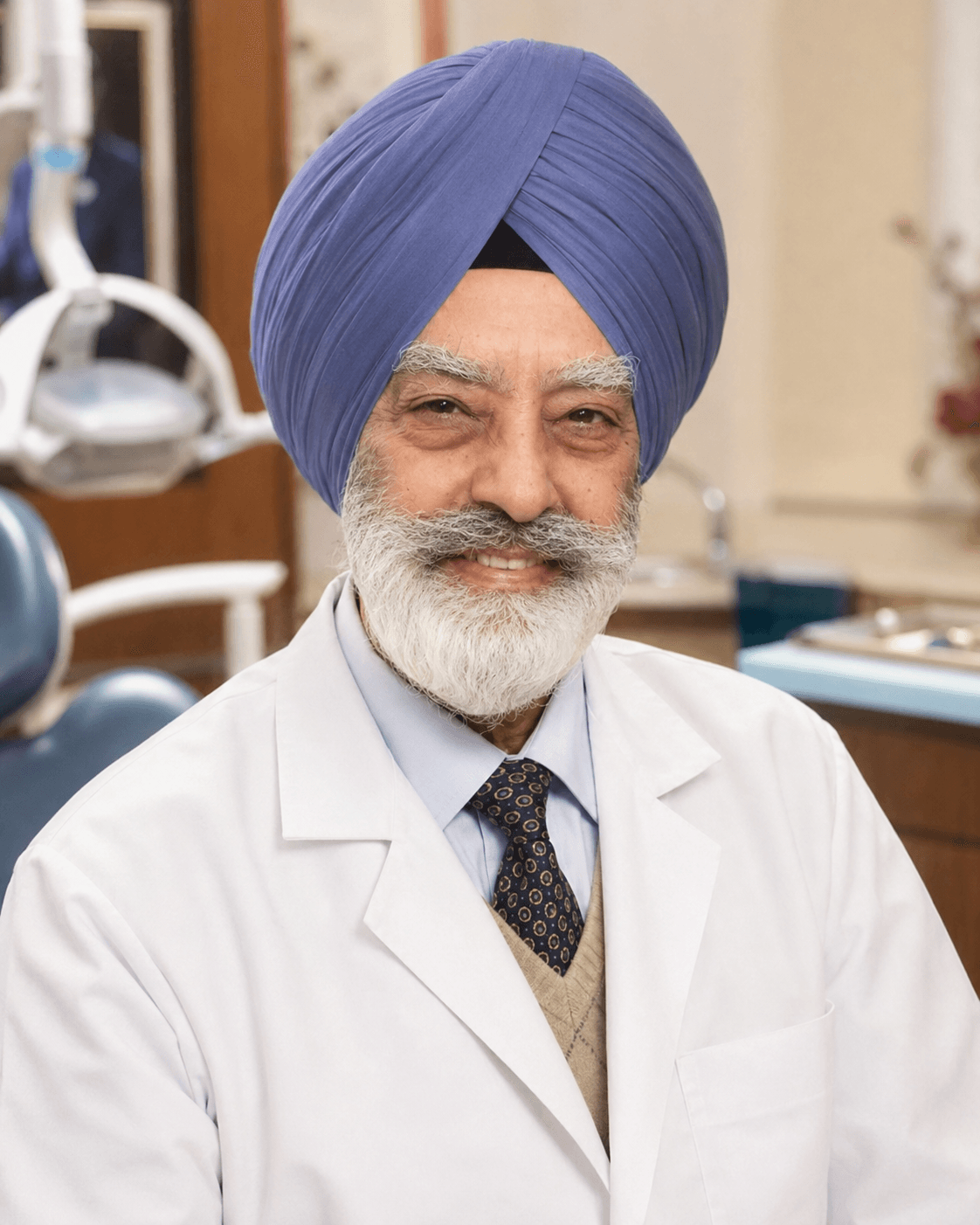
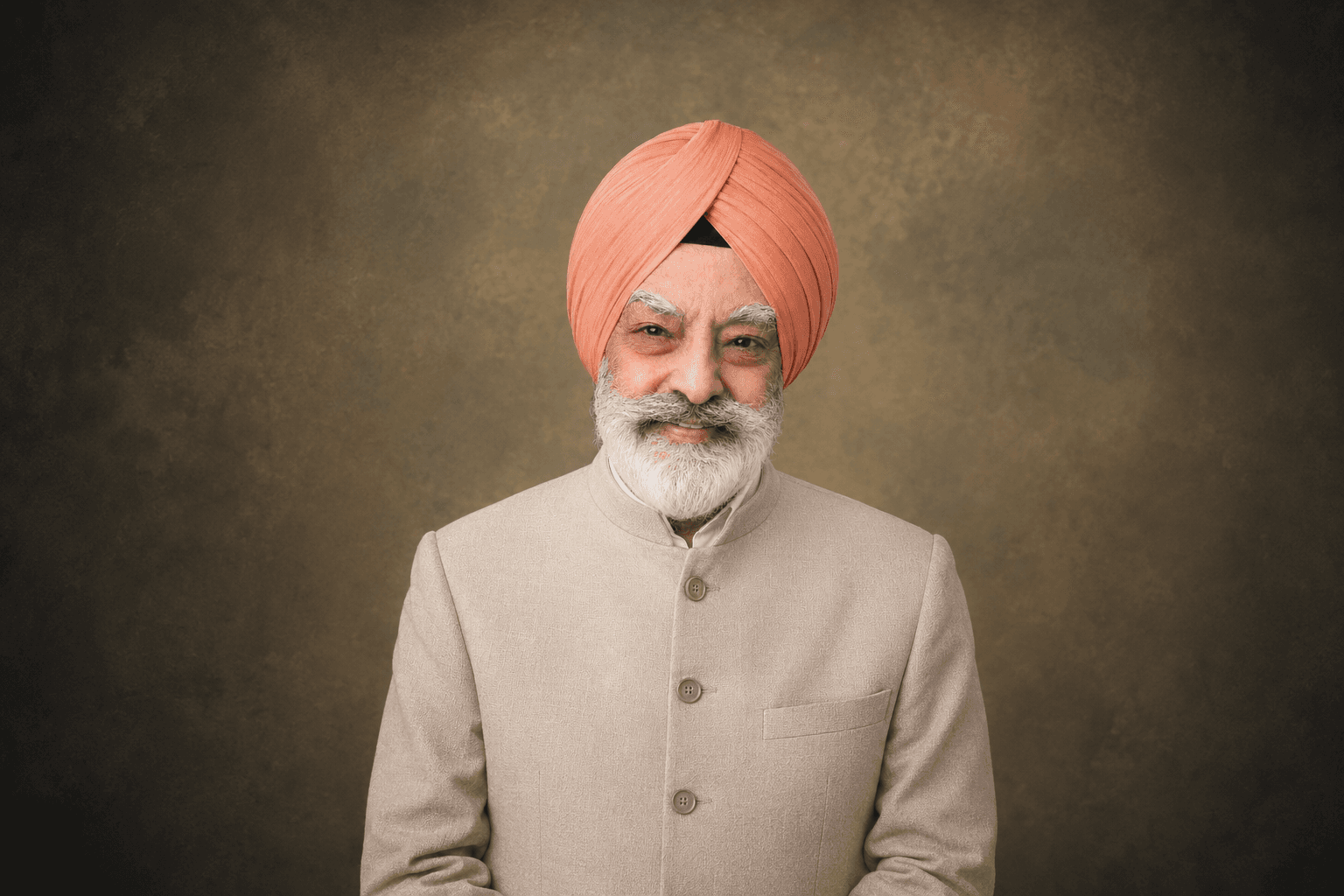
Dr T.S. Nanda crossed the border from undivided Punjab in 1947 with nothing in his hand. He was a child. By the time he had finished school, he had also finished the calculation that most refugees of his generation made silently: that what he carried out with him from one country into another was not property or position but the right to begin again. He was the first person in his family to complete a master's degree. He chose dentistry, and within the profession he chose periodontics, the discipline of the gums and the foundation of every tooth above them. The bone you cannot see, holding up the smile you can. It was a fitting choice.
He spent the next four decades in the public sector. Punjab government service, rising through a long career to the post of Civil Surgeon, the highest dental position the state of Punjab confers. He served a hundred patients a day, sometimes more, in the kind of public-health environments where the queue never ends and the gloves are counted before they are issued. He believed, with a clarity that did not waver in fifty years, that dentistry was service to humanity. That conviction came partly from his upbringing in a devout Sikh household, where the principle of seva, selfless service, sits at the centre of the faith. But he held it in a wider register than any one religion. Humanity, he often said, was a bigger religion than anything else.
When he retired from government service in 1997, the clinic opened the same year. He could have rested. He chose not to. He opened Dr Nanda's Dental Clinic in S.C.F. 91, Phase 3B-2, Sector 60, Mohali, on the simple reasoning that there were not enough qualified dentists in the region and his last working years were owed to the same people he had served all his life. It was one of the first private specialist dental clinics in Mohali. For its first decade it was two people: him and his daughter Dr Amandeep Kaur Nanda, who joined him directly out of her internship and who is, by her own account, a reflection of him. They did no marketing. They placed no advertisements. The clinic grew because patients told other patients, and three generations of some families now come to the same chair because of decisions Dr Nanda made about how to receive them, decades ago.
He was a strict teacher and a loving father, often in the same hour. He set a standard at the chair that he expected his daughter, and later himself, to meet without exception: treat every patient with utmost care, recommend only what was necessary, and never let financial pressure shape the clinical plan. He wrote his consultation notes by hand, took as long as he needed with each patient, and had no fixed time slots. The consultation took as long as it took. If a child came in for a check-up and seemed nervous, he would have ice cream ordered from the market across the road. The family teases that the ice cream was a sensitivity test disguised as a treat, which was true, but the children did not know that and would not have minded if they did. He was their favourite dentist.
What patients remember more than the clinical work was the man at the chair. The smile, the calm, the gratitude he carried with him into every consultation. An aura that older patients in the Mohali years would describe in religious terms more readily than in medical ones. He was thanked, often, for things that had nothing to do with his hands. He thanked his patients back, every time, for trusting him with their care.
When Dr Amandeep began introducing newer techniques to the practice, dental implants in 2008 in particular, he was already nearly seventy. Most dentists of his generation greeted implants with the conservative resistance that comes naturally to a long career. He did not. He was open-minded by temperament, ahead of his time by inclination, and he insisted that his daughter keep the clinic current so its patients always received the most considered care available. He asked her to walk him through the cases. The senior dentist in the room, listening carefully to the younger one. The clinic continued forward as one practice, with two doctors learning from each other across forty years of clinical experience between them.
He was diagnosed with cancer in 2015. He kept practising. Through chemotherapy and through surgeries he continued to come to the chair, take patients, and write his notes by hand. The diagnosis recurred in 2019 and he could no longer work. The transition to Dr Amandeep had been gradual, deliberate. Even after he had stopped seeing his own patients, he came to the clinic when his body allowed, to make sure no patient of the practice would suffer through the change. That care for the continuity of the institution he had built was, in the end, the same care he had given individual patients for his entire life. It did not change because he was the one being looked after.
He passed away on 30 October 2024 at home, in his eighty-fourth year, surrounded by the people who loved him. The clinic he founded continues. Dr Amandeep leads the clinical work today, alongside a panel of visiting specialists who attend the clinic across orthodontics, oral surgery, periodontics, prosthodontics, and the adjacent disciplines. The chairs are the same chairs. The waiting room is the same room. The principle the clinic was founded on, that dentistry is a service rendered carefully to one person at a time, has not moved.
Patients still come and miss his energy. They sit down in the operatory and tell Dr Amandeep about a consultation they had with her father in 2003, in 2011, in 2018. They remember the ice cream, the handwritten notes, the way he stood up to greet them. The clinic carries his absence the way an institution carries the absence of its founder: as a presence. The work he started in 1997 with a small clinic and a clear principle continues, in his family's hands, in the same chairs, at the pace he set.
There is a Punjabi phrase, often used for those who have gone before us. Charhdi kala. The eternal optimism. The bright, unbreakable, forward-leaning spirit that does not concede to circumstance. He carried it across a border in 1947, through a public-service career of half a century, into a clinic he founded after retirement, and through nine years of illness that did not stop him from showing up to the chair until his body itself made the decision for him. He carries it still, in the practice he left behind.