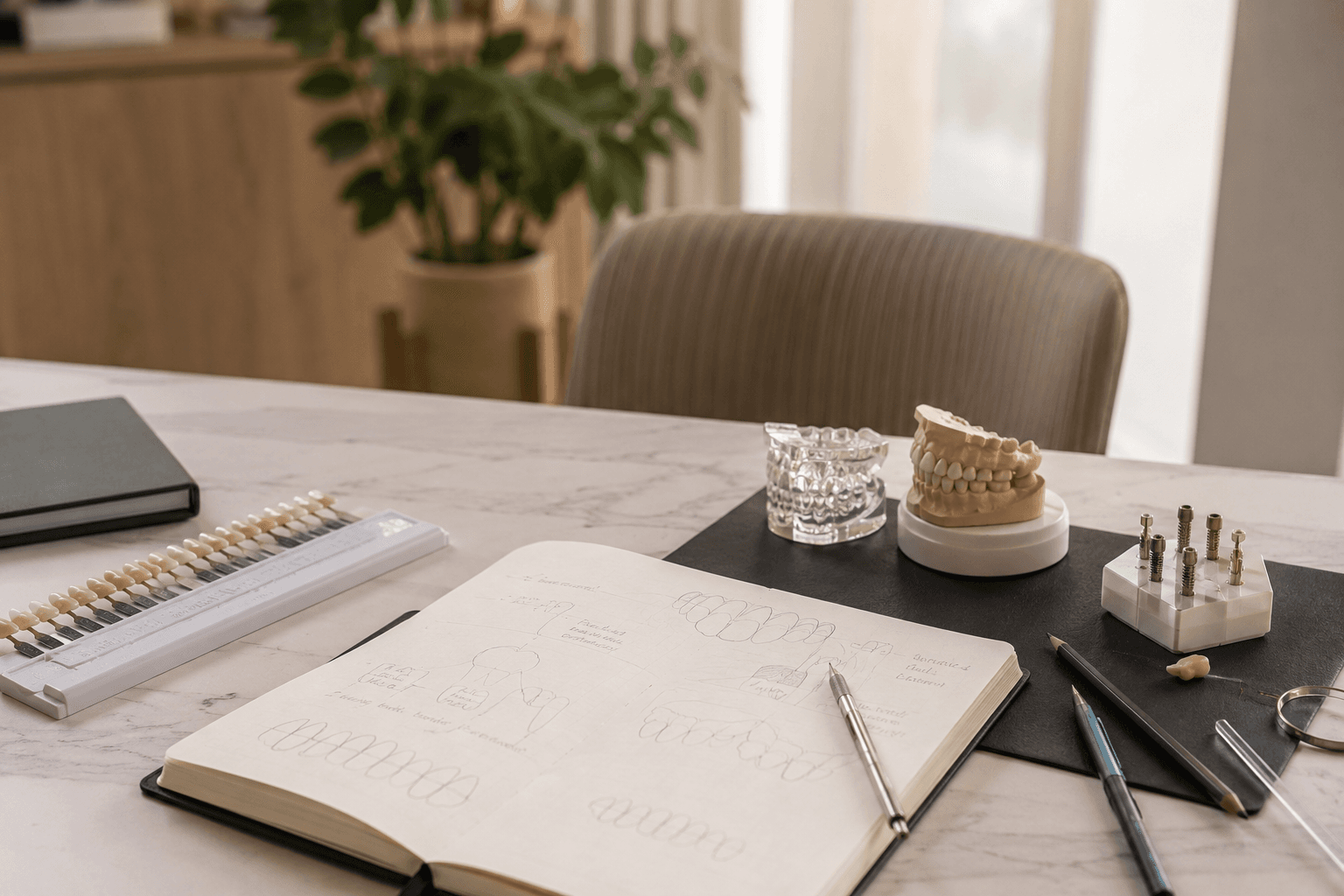
A good smile does not look separate from the face.
It belongs to the person. It moves with their lips, suits their age, sits within their features, and looks natural when they speak, laugh, and rest.
That is why cosmetic dentistry should not begin with a template. It should begin with the face in front of the dentist.
A smile planned around your face considers tooth shape, colour, gumline, lips, bite, skin tone, age, expression, and how much change is actually needed. The best result is often not the brightest or the most dramatic. It is the one that looks like it should always have been there.
What template smiles get wrong
Template smiles usually chase sameness: very white teeth, identical shapes, broad symmetry, and a result that may look impressive in a photograph but artificial in real life.
Real faces are not symmetrical. Real smiles have character. A tooth that looks beautiful on one person may look heavy, flat, or false on another.
A smile cannot be designed by copying a celebrity, a filter, or a before-and-after image. Those references can begin a conversation, but they should not decide the treatment.
What face-led planning means
Face-led planning means the dentist studies the whole person, not only the teeth.
The dentist may assess:
- Face shape
- Lip movement
- Smile width
- Gum display
- Tooth size and proportion
- Tooth colour
- Skin tone
- Age and personality
- Speech and resting lip position
- Bite and jaw movement
- Existing fillings, crowns, or wear
- Gum health
This is why cosmetic dentistry should not be rushed. The dentist is not simply changing teeth. The dentist is changing how the teeth sit inside a living face.
Why natural colour matters
Many patients ask for very white teeth because social media has made whiteness look like health.
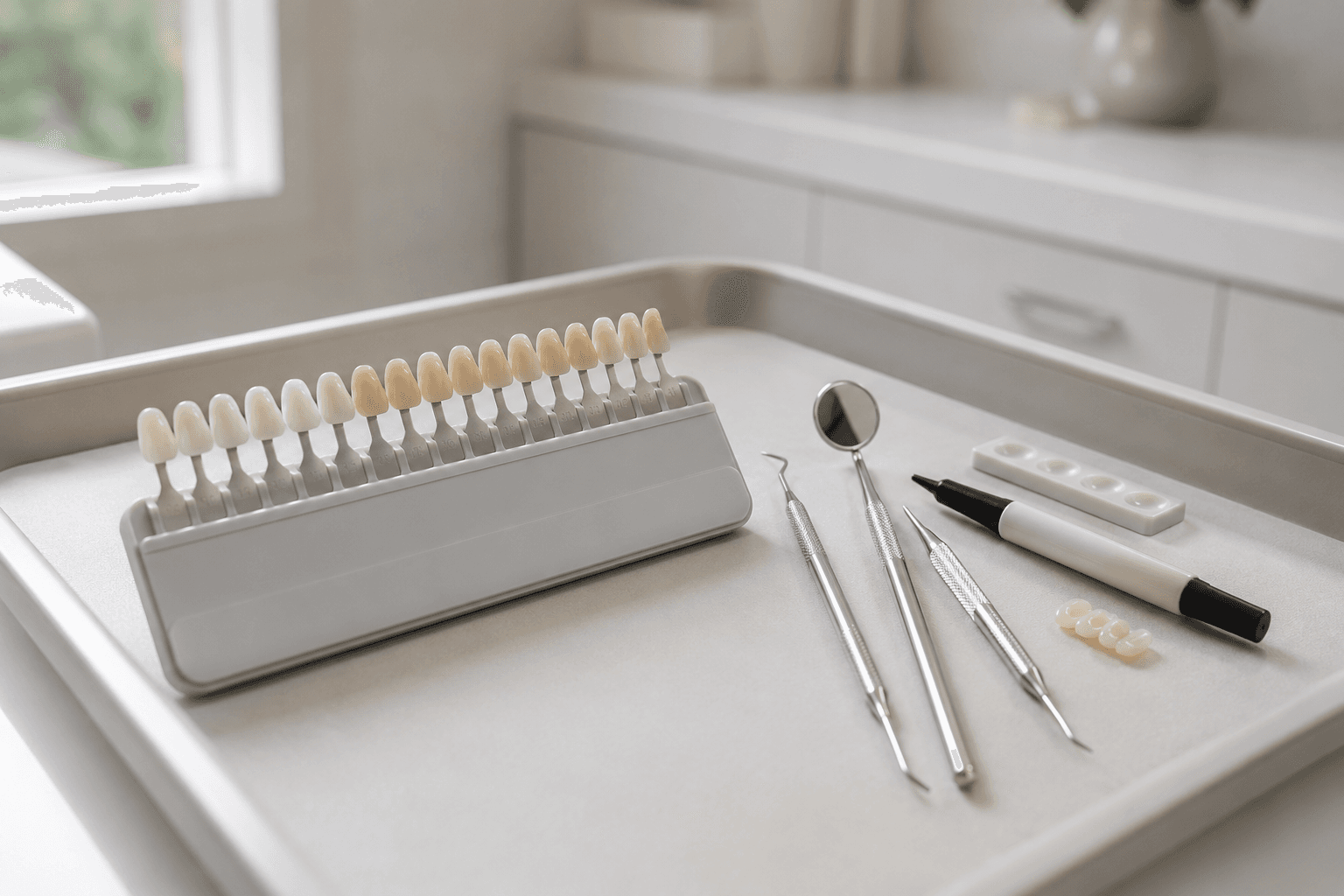
But natural teeth are not pure white. They have depth, translucency, and small variations. A shade that looks bright in a phone photo may look artificial in person.
The right shade depends on the face, age, skin tone, and neighbouring teeth. In a refined result, brightness should not be the only goal. Harmony matters more.
Why tooth shape matters
Tooth shape changes the character of a smile.
Longer teeth may make a smile look younger in some cases, but too much length can look forced. Square teeth may look strong on one face and heavy on another. Rounded edges may soften a smile, but too much rounding can look unnatural.
Small changes in edge shape, width, and surface texture can make a large difference. That is why cosmetic work should be planned in millimetres, not in slogans.
When cosmetic work can be conservative
Not every smile concern needs veneers or crowns.
A patient may need only:
- Cleaning and polishing
- Whitening
- Bonding for a small chip
- Recontouring of a rough edge
- Replacement of an old visible filling
- Gum health improvement
- Alignment discussion
- A single crown or veneer rather than a full smile change
The best cosmetic plan often begins by asking what can be preserved.
When more involved treatment may be needed
More involved cosmetic treatment may be considered when there is:
- Severe wear
- Multiple old restorations
- Broken or heavily filled teeth
- Discoloured teeth that do not respond to whitening
- Gaps or shape concerns that bonding cannot manage well
- Bite problems affecting appearance and function
- A need to restore both front and back teeth together
Even then, the treatment should be explained clearly. Cosmetic dentistry should not hide clinical dentistry.
What patients should ask before smile design
Before beginning cosmetic work, ask:
- How much natural tooth will be removed?
- Are my gums healthy enough for this?
- Will whitening be needed before shade matching?
- Are bonding, whitening, or alignment options possible first?
- How will the result look when I speak, not only smile?
- How long will it take?
- What maintenance will it need?
- What can go wrong?
A beautiful result should survive these questions.
What not to do
Do not choose a smile from a catalogue.
Do not ask for the whitest shade without seeing whether it suits your face.
Do not begin veneers or crowns without understanding how much tooth is being altered.
Do not ignore bite, gum disease, grinding, or old dental problems before cosmetic work.
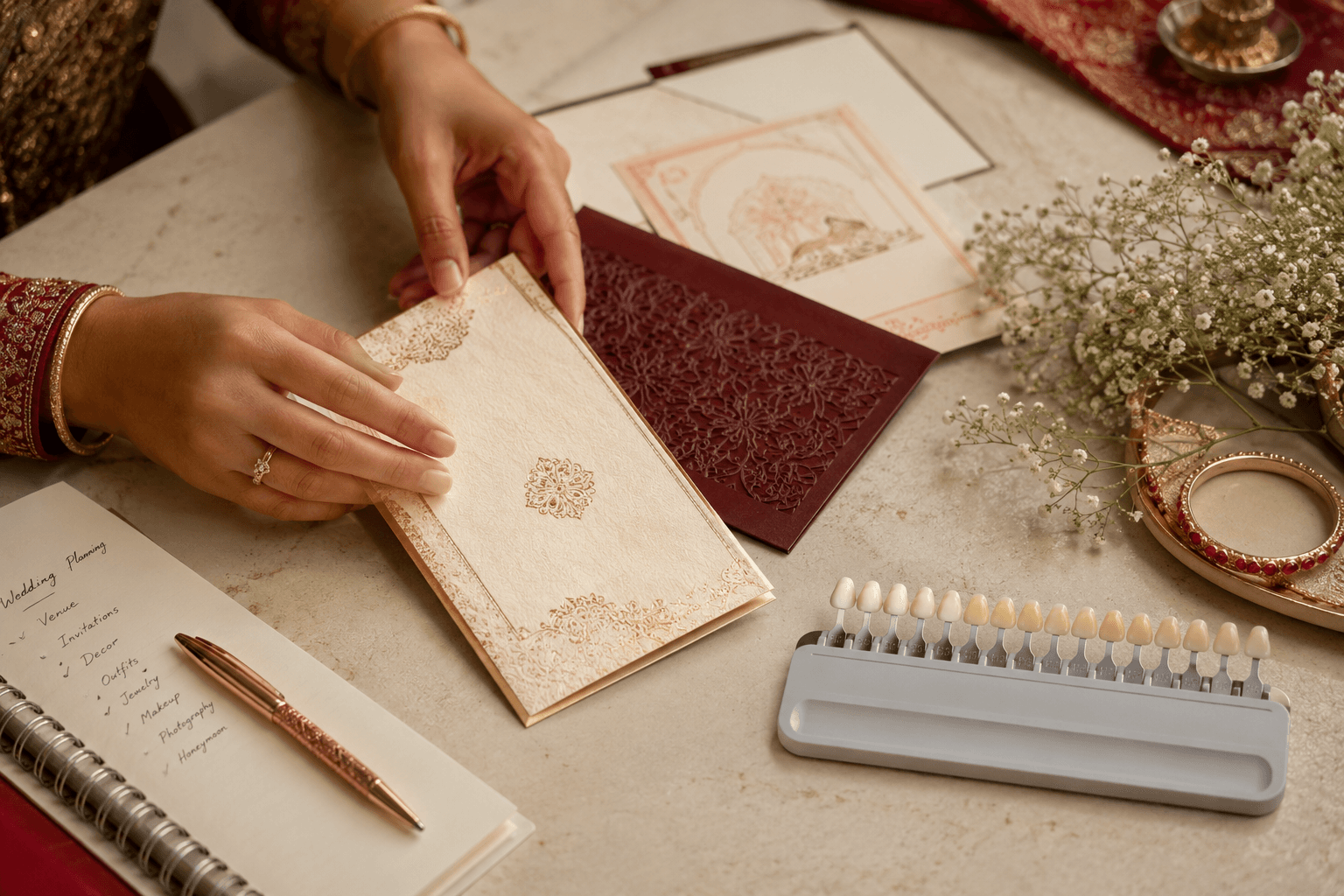
Do not plan a major smile change too close to a wedding or important event without buffer time.
FAQs
What is smile design?
Smile design is the planning of cosmetic dental changes around the teeth, lips, gums, bite, and face. It may include whitening, bonding, veneers, crowns, alignment, or other care.
Should I bring reference photos?
You can bring them, but they should be treated as conversation starters. Your final plan should suit your own face and teeth.
Are veneers always needed for smile design?
No. Some smiles improve with whitening, bonding, cleaning, gum care, or minor reshaping. Veneers are only one option.
Can cosmetic dentistry look natural?
Yes, when planned carefully. Natural results depend on shade, shape, surface texture, gumline, and how the smile fits the face.
Why do some cosmetic smiles look fake?
They often look fake because the teeth are too white, too uniform, too bulky, or not planned around the lips and face.
Is smile design only for young patients?
No. Cosmetic planning can be done at different ages, but the plan should respect the patient's age, face, and dental health.
How early should I plan before a wedding?
Plan as early as possible. Whitening, bonding, veneers, gum care, and bite adjustments all need time, and rushing can compromise the result.
A smile is not a separate object. It is part of a face.
Good cosmetic dentistry should make the teeth look healthier, calmer, and more harmonious, without making the person look unlike themselves.
At Dr Nanda's Dental Clinic in Mohali, cosmetic planning begins with restraint. If you are considering a smile change, call or WhatsApp the clinic to discuss what can be improved, what should be preserved, and what will still look like you.