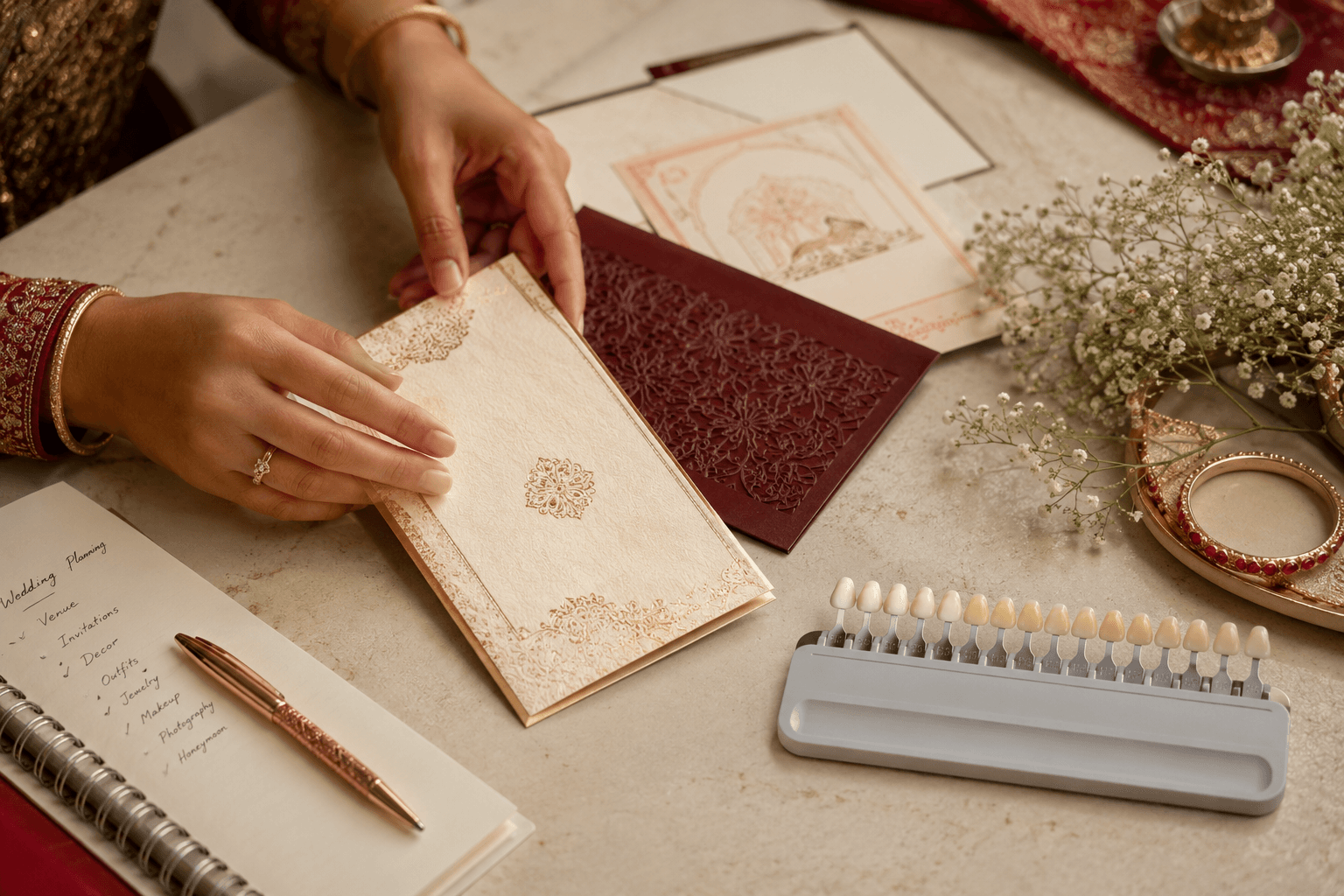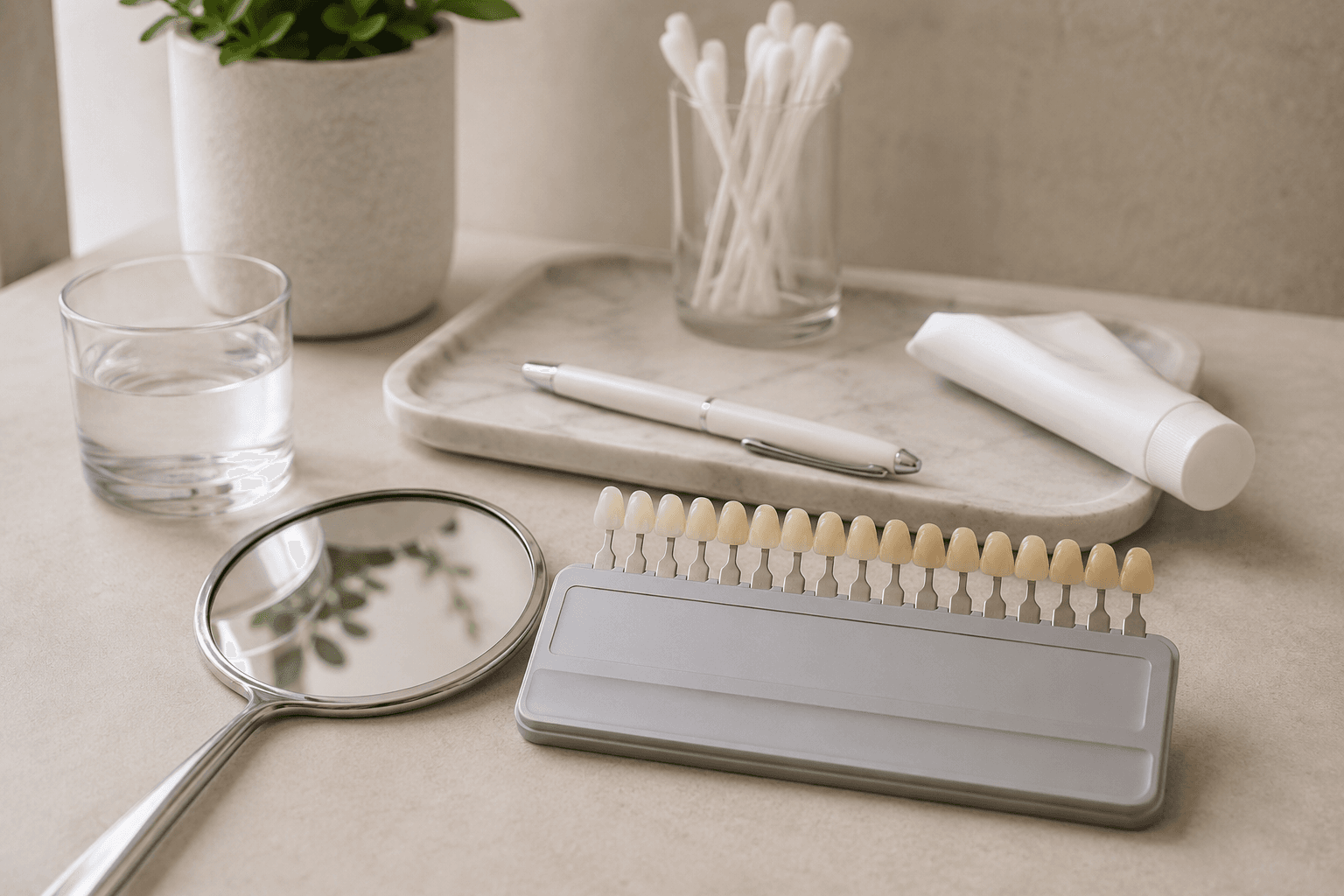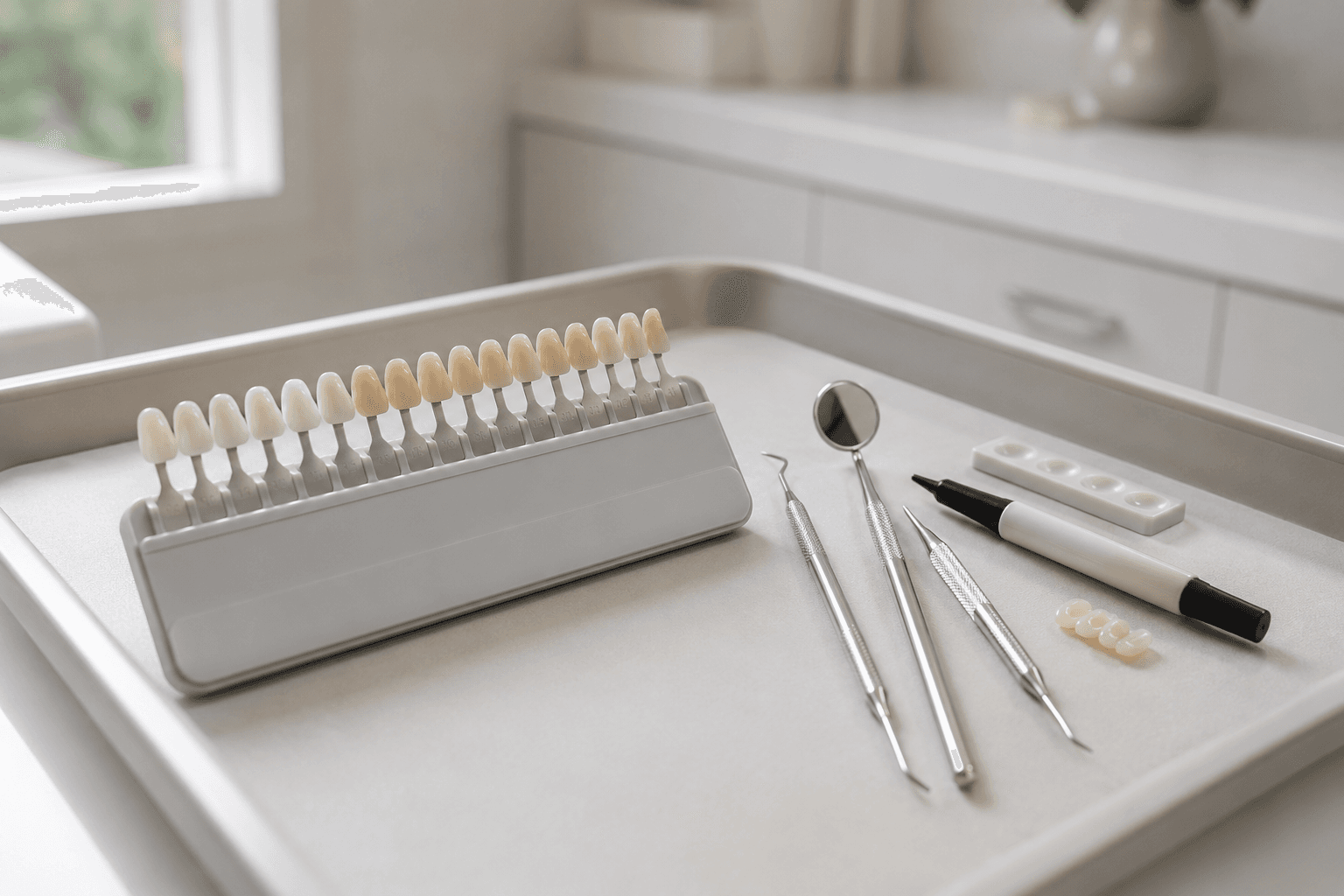
Not every cosmetic concern needs veneers. Not every chipped front tooth needs a crown.
Dental bonding is a conservative way to repair small imperfections using tooth-coloured material. It can help with minor chips, small gaps, worn edges, uneven shapes, and selected visible defects.
The appeal of bonding is restraint. It can improve the tooth while often preserving more natural structure than more involved treatment.
It is not the answer for every smile concern. But when the problem is small and the tooth is otherwise healthy, bonding can be a quiet, sensible fix.
What dental bonding is
Bonding uses a tooth-coloured composite material that is shaped and bonded to the tooth. The dentist selects a shade, prepares the surface, places the material, shapes it, sets it, and polishes it.
The result depends heavily on planning, shade matching, tooth shape, bite, and finishing. Good bonding should not look like a patch. It should disappear into the tooth as much as possible.
What bonding can help with
Bonding may help with:
- Small front tooth chips
- Minor gaps
- Slightly uneven edges
- Small shape corrections
- Worn incisal edges
- Localised discolouration in selected cases
- Exposed root areas in some cases
- Replacement of small old cosmetic repairs
It is often considered when the tooth needs a small addition rather than a full cover.
What bonding cannot do
Bonding has limits.
It cannot correct every bite problem, severe crowding, deep staining, large fractures, active decay, gum disease, or heavy wear from grinding without addressing the cause.
It can chip, stain, or wear over time. It may need polishing, repair, or replacement. It is not as stain-resistant as porcelain.
That does not make it weak treatment. It means the patient should understand what it is and what maintenance it asks for.
Why bonding is often conservative
In many cases, bonding requires little or no removal of healthy tooth compared with veneers or crowns. That makes it attractive for small cosmetic changes.
For example, if a young adult has a small front tooth chip, bonding may restore shape without committing the tooth to a veneer. If a patient has a tiny gap, bonding may close it gently if the proportions still look natural.
Conservative does not mean casual. Small changes in front teeth are visible. They must be planned carefully.
When bonding is suitable
Bonding may be suitable when:
- The defect is small
- The tooth is otherwise healthy
- The bite does not place heavy force on the bonded area
- The patient accepts maintenance
- The desired change is modest
- The gums are healthy
- The patient prefers a conservative first step
It is often a good option for patients who want improvement without making the smile look artificial.
When bonding may not be enough
Bonding may not be the best answer if:
- A tooth is badly broken
- The bite is heavy in that area
- The patient grinds strongly
- Large colour change is needed
- Several teeth need major shape change
- Old restorations are extensive
- The tooth has deep decay
- The patient wants a very long-lasting porcelain result
In those cases, veneers, crowns, orthodontic alignment, whitening, or other care may be discussed.
What happens during bonding
The dentist examines the tooth, checks the bite, and selects a shade. The surface is prepared so the material can bond properly. Composite is placed in layers or shaped directly, then set, adjusted, and polished.
The appointment is often less involved than veneers or crowns because a lab-made restoration may not be needed. But the artistic and clinical judgment still matters.
The final polish is important. A rough bonding surface can stain faster and feel unnatural.
How to care for bonded teeth
Bonded teeth should be cared for like natural teeth, with a few extra cautions.
Avoid biting hard objects with the bonded edge. Do not open packets, bite nails, chew pens, or crack nuts with front teeth. Maintain brushing and cleaning. Return for polishing if the surface becomes rough or stained.
If you grind your teeth, the dentist may discuss a night guard.
What not to do
Do not choose bonding to cover an untreated cavity.
Do not expect bonding to behave exactly like porcelain.
Do not whiten after bonding and expect the bonded material to whiten with the tooth. Whitening should be planned before shade matching when relevant.
Do not use front bonded teeth as tools.
Do not ignore bite problems if bonding keeps chipping.
FAQs
What is dental bonding?
Dental bonding is the use of tooth-coloured composite material to repair or improve small areas of a tooth.
Is bonding better than veneers?
Neither is always better. Bonding is often more conservative for small defects. Veneers may be more suitable for larger or more durable cosmetic changes.
Can bonding fix a chipped front tooth?
Often, yes, if the chip is small or moderate and the bite allows it. A dentist needs to check the tooth first.
Does bonding stain?
Bonding can stain over time, especially with tea, coffee, tobacco, gutka, paan masala, or rough surfaces. Polishing and maintenance help.
Can bonding be whitened?
No. Composite bonding does not whiten like natural tooth structure. Whitening should be planned before bonding if shade change is desired.
How long does bonding last?
It varies by size, bite, habits, material, and care. Bonding may need repair, polishing, or replacement over time.
Is bonding suitable before a wedding?
It can be, especially for small chips or shape concerns. Plan early enough for polishing, adjustments, and any whitening beforehand.
Bonding is often the quietest form of cosmetic dentistry.
It does not try to remake every tooth. It corrects what is small enough to correct conservatively.
At Dr Nanda's Dental Clinic in Mohali, bonding is planned around the tooth, the bite, and the face. If a chip, gap, or uneven edge bothers you, call or WhatsApp the clinic to understand whether bonding is enough, or whether another option would serve the tooth better.