Not every clinic is built to become a chain.
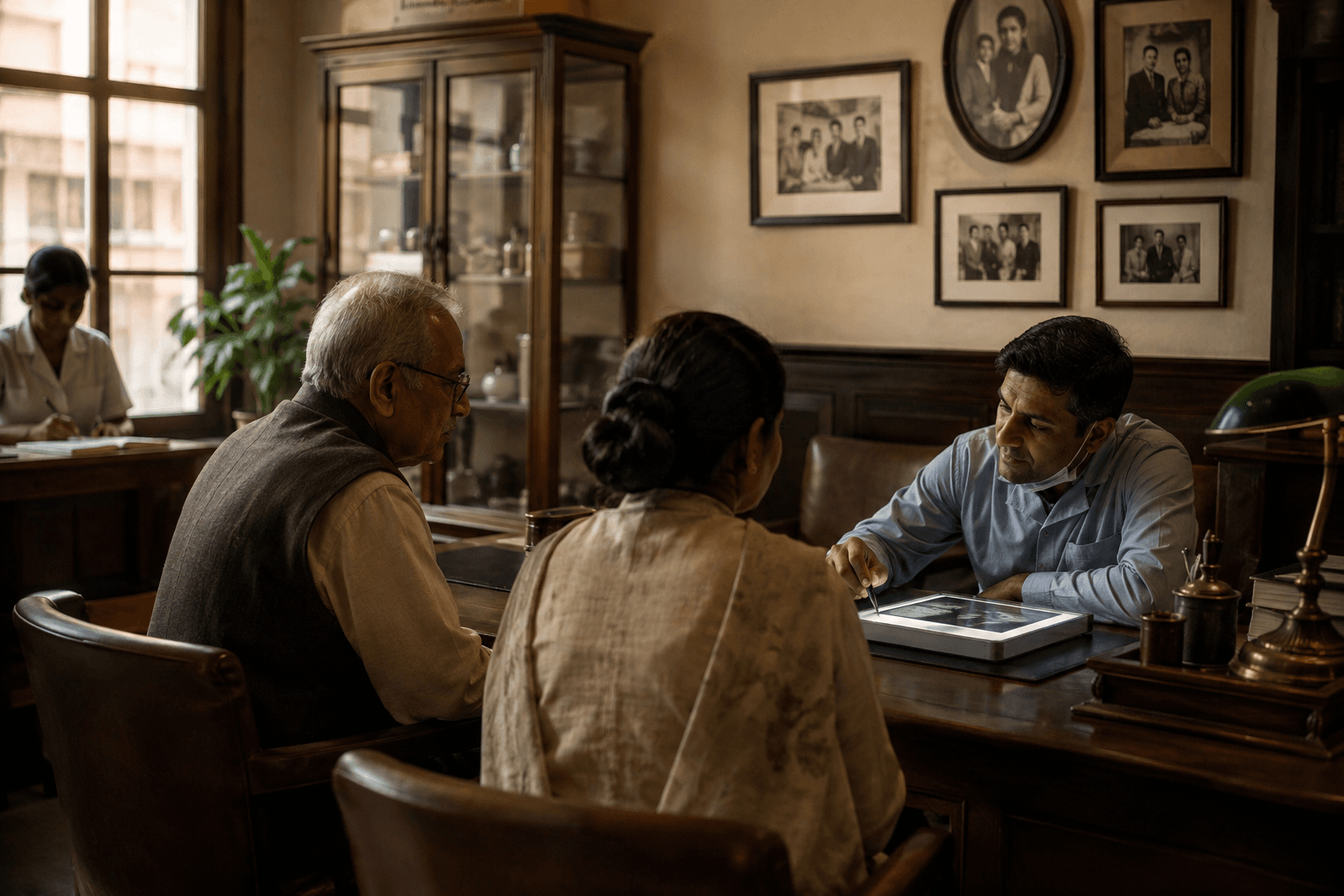
Dr Nanda's Dental Clinic has worked in Mohali since 1997. Over the years, it could have become larger, louder, faster, and more promotional. It did not. The clinic was kept small on purpose.
That choice protects something patients can feel even before they can name it: personal attention, continuity, slower diagnosis, and the sense that the person examining you is responsible for the judgment being made.
A small clinic cannot be everything to everyone. That is partly the point.
What staying small protects
A smaller practice protects time.
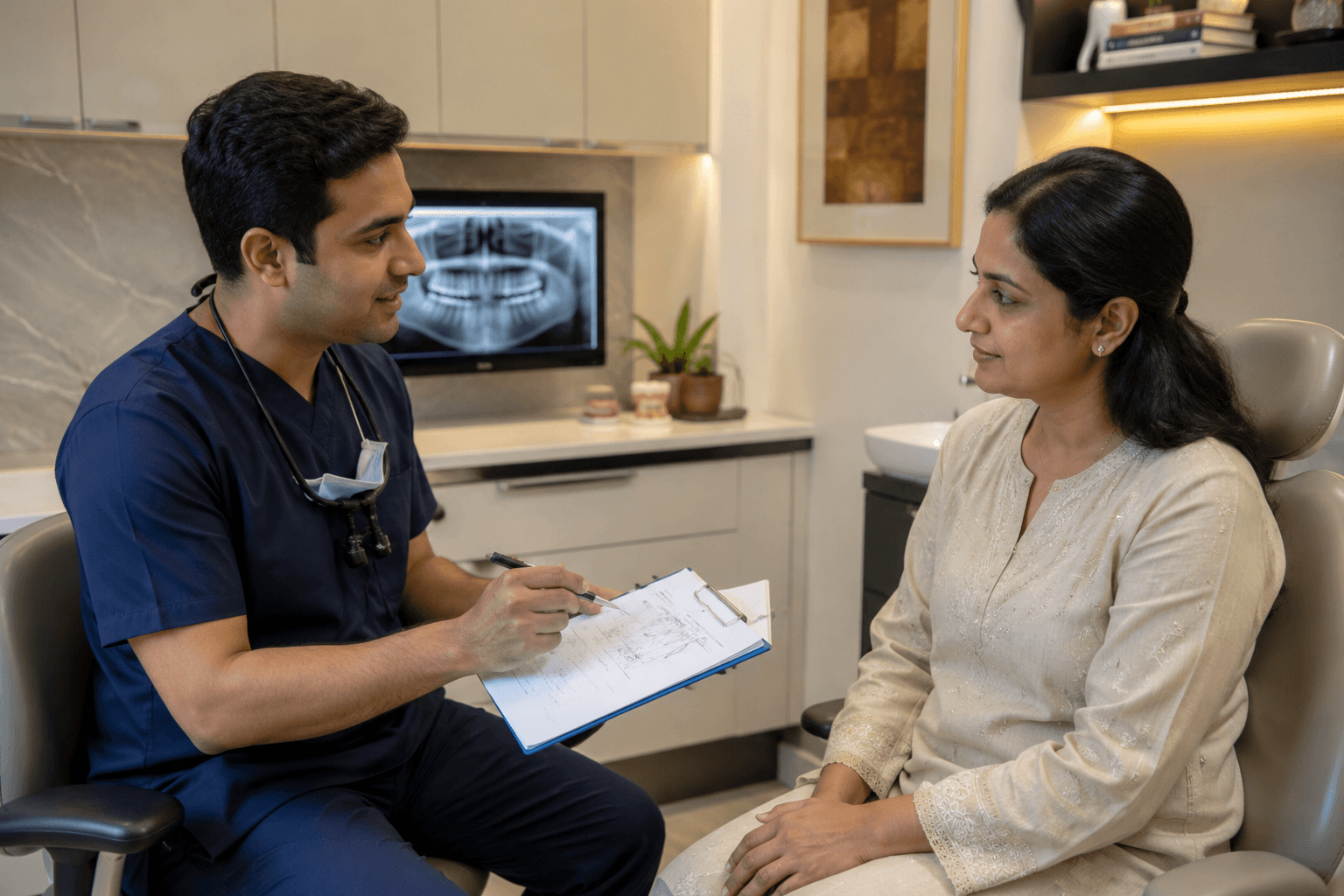
Time to listen before examining. Time to explain why a tooth hurts. Time to compare options. Time to tell a patient that treatment can wait, or that it should not. Time to notice when an elderly patient is anxious but not saying so. Time to let a child become comfortable before opening their mouth.
Dentistry is full of small decisions. A rushed clinic may still perform procedures. But careful dentistry depends on attention.
The clinic has stayed small because attention is easier to protect when the practice is personal.
Continuity matters in dentistry
Many dental problems are not one-day problems. Gum disease, worn teeth, old crowns, missing teeth, bite issues, childhood dental fear, and full mouth rehabilitation all unfold over time.
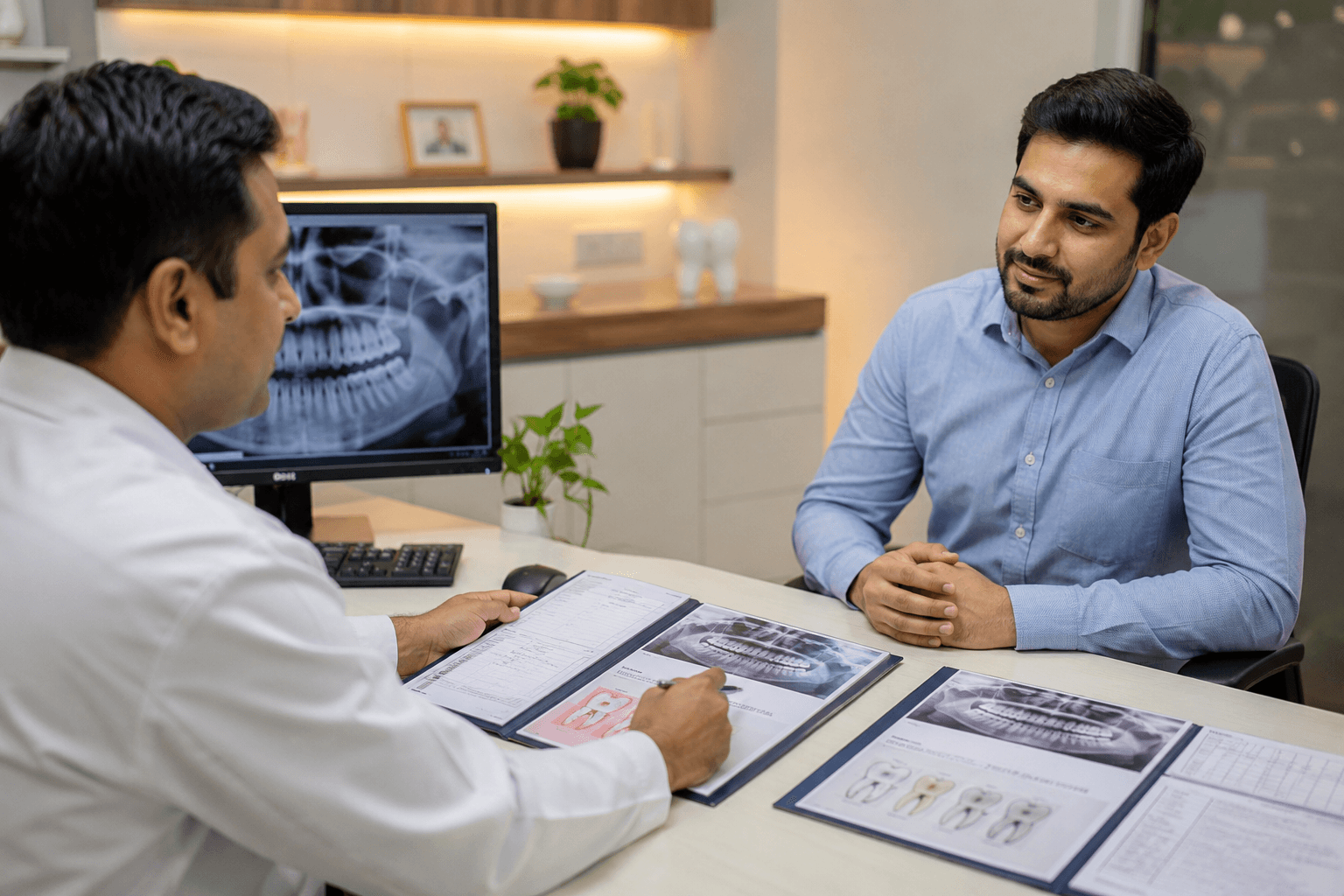
A patient who returns to the same clinician or same clinical system is not starting from zero each time. The history is known. The old X-rays matter. The way the patient heals matters. The family's dental patterns matter.
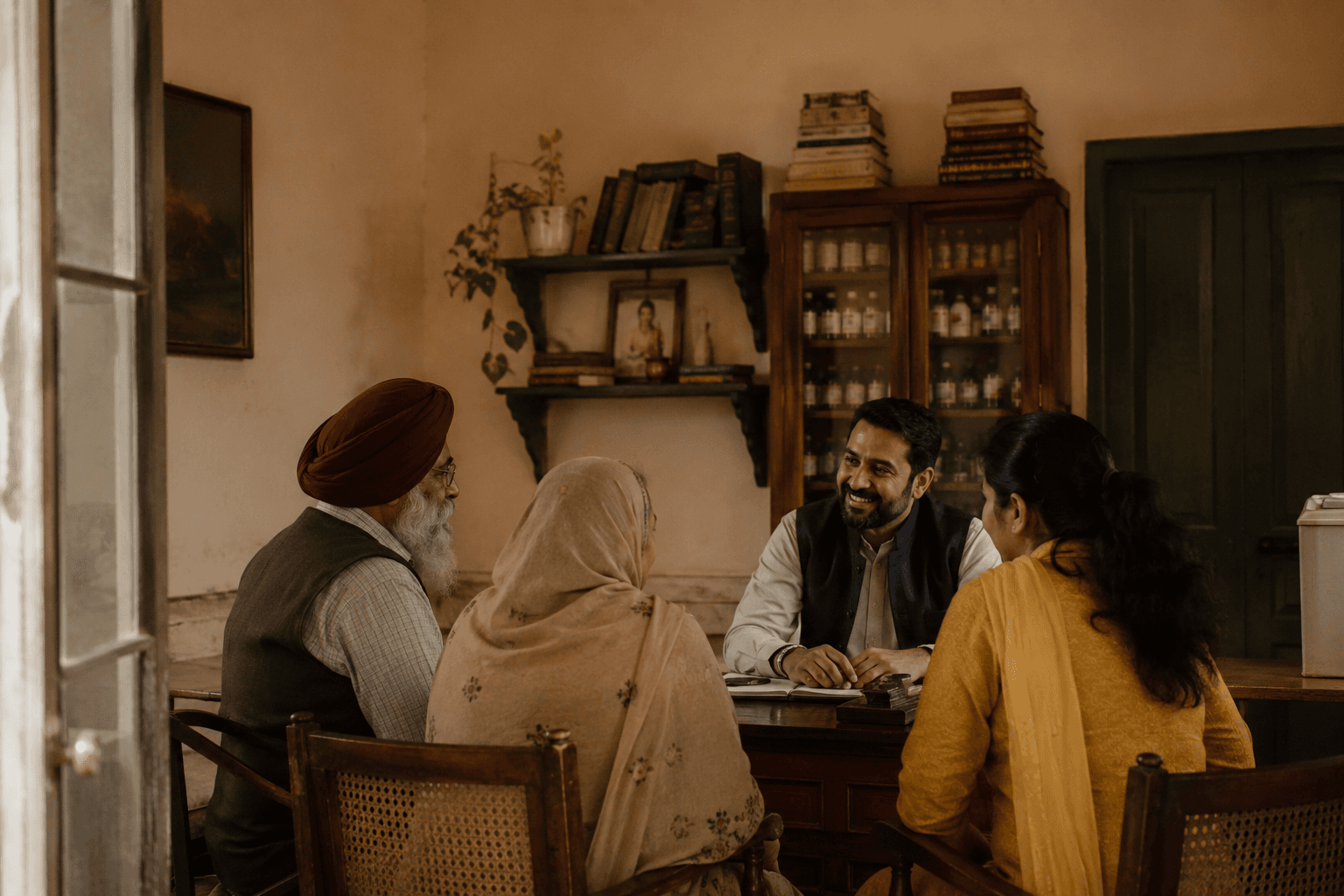
For many families in Mohali and the Chandigarh Tricity, the clinic has seen more than one generation. That changes the nature of care. A child becomes an adult patient. An adult brings a parent. A parent sends a friend.
This is not a marketing funnel. It is a relationship.
Why faster is not always better
There are times when speed matters. A knocked-out adult tooth, swelling, severe pain, or trauma should not wait.
But most dental decisions benefit from careful planning.
A tooth should not be crowned because a slot is available. A smile should not be redesigned because a wedding is close. An implant should not be placed before the bone, gum, and medical picture are understood.
The clinic's pace is deliberate. It is not a lack of efficiency. It is a way of reducing unnecessary treatment and avoiding decisions that are difficult to reverse.
The role of the visiting specialist panel
A small clinic does not mean narrow care.
Dr Nanda's Dental Clinic works with a visiting specialist panel when the case needs additional expertise. This allows patients to receive multi-specialty input while keeping the central clinical relationship steady.
The patient is not passed through a faceless rotation. The care remains anchored.
That balance matters: personal enough to know the patient, broad enough to manage complexity responsibly.
Why the clinic does not sound like a chain
Many dental websites speak in the same language: fastest, best, painless, perfect smile, advanced technology, limited offers.
That is not how this clinic was built.
The clinic's reputation grew through word of mouth, physician referral, and patients sending their families. The website and journal now put that reputation into words, but the tone should still feel like the practice itself: measured, clear, and respectful.
A clinic that has earned trust slowly should not start speaking urgently.
What patients should expect from a small clinic
Patients should expect:
- A personal examination
- Clear explanation of options
- Honest discussion of limits
- Conservative care where appropriate
- Decisive care when needed
- No pressure language
- Continuity across visits
- Respect for family decision-making
- Referral or specialist involvement when the case needs it
They should not expect a discount-driven, high-volume experience. They should not expect every answer to be given before diagnosis. They should not expect complex care to be rushed.
What this means for NRI patients
For NRI patients, a small clinic can be especially useful.
A patient planning treatment from abroad needs someone to understand the whole situation: records, travel dates, medical history, family commitments, aftercare, and what can realistically be completed in the visit.
The answer is not always "yes, everything can be done." Sometimes the more honest answer is staged treatment, temporary care, or a second visit.
That honesty is easier to give when the clinic is not trying to process every patient as quickly as possible.
What this means for families
Families often make dental decisions together in North India. A son may bring his mother. A daughter may research treatment for her father. A parent may bring a child after a painful first experience somewhere else.
A small clinic allows those conversations to happen properly.
The patient can ask. The family can understand. The dentist can explain without turning the appointment into a sales pitch.
Good dentistry is not only clinical skill. It is also the manner in which decisions are made.
FAQs
Why has Dr Nanda's Dental Clinic stayed small?
The clinic has stayed small to protect personal attention, continuity, and careful clinical decision-making.
Does a small clinic mean fewer treatment options?
Not necessarily. The clinic works with a visiting specialist panel when cases need additional expertise, while keeping care anchored in a personal clinical relationship.
Is a slower clinic less efficient?
No. Some urgent problems need fast attention, but most dental planning benefits from time, explanation, and careful diagnosis.
Why does continuity matter in dental care?
Dentistry often involves long-term patterns: gum health, old restorations, bite, family history, and patient anxiety. Continuity helps the dentist understand those patterns.
Is this approach suitable for NRI patients?
Yes. NRI patients often need careful planning around travel windows, staged treatment, and aftercare. A personal approach can make that planning clearer.
Will the clinic still refer if a case needs specialist care?
Yes. A small clinic should know when to involve additional expertise. That is part of responsible care.
What kind of patient is this clinic for?
It suits patients who want explanation, continuity, restraint, and serious dental judgment rather than rushed or promotional care.
The clinic was kept small because some things are easier to protect at a human scale.
Attention. Continuity. Responsibility. The ability to say, "not yet," as calmly as "this needs treatment now."
Dr Nanda's Dental Clinic has worked in Mohali since 1997 with that belief. If you are looking for care that begins with diagnosis rather than pressure, call or WhatsApp the clinic. The conversation can begin quietly.