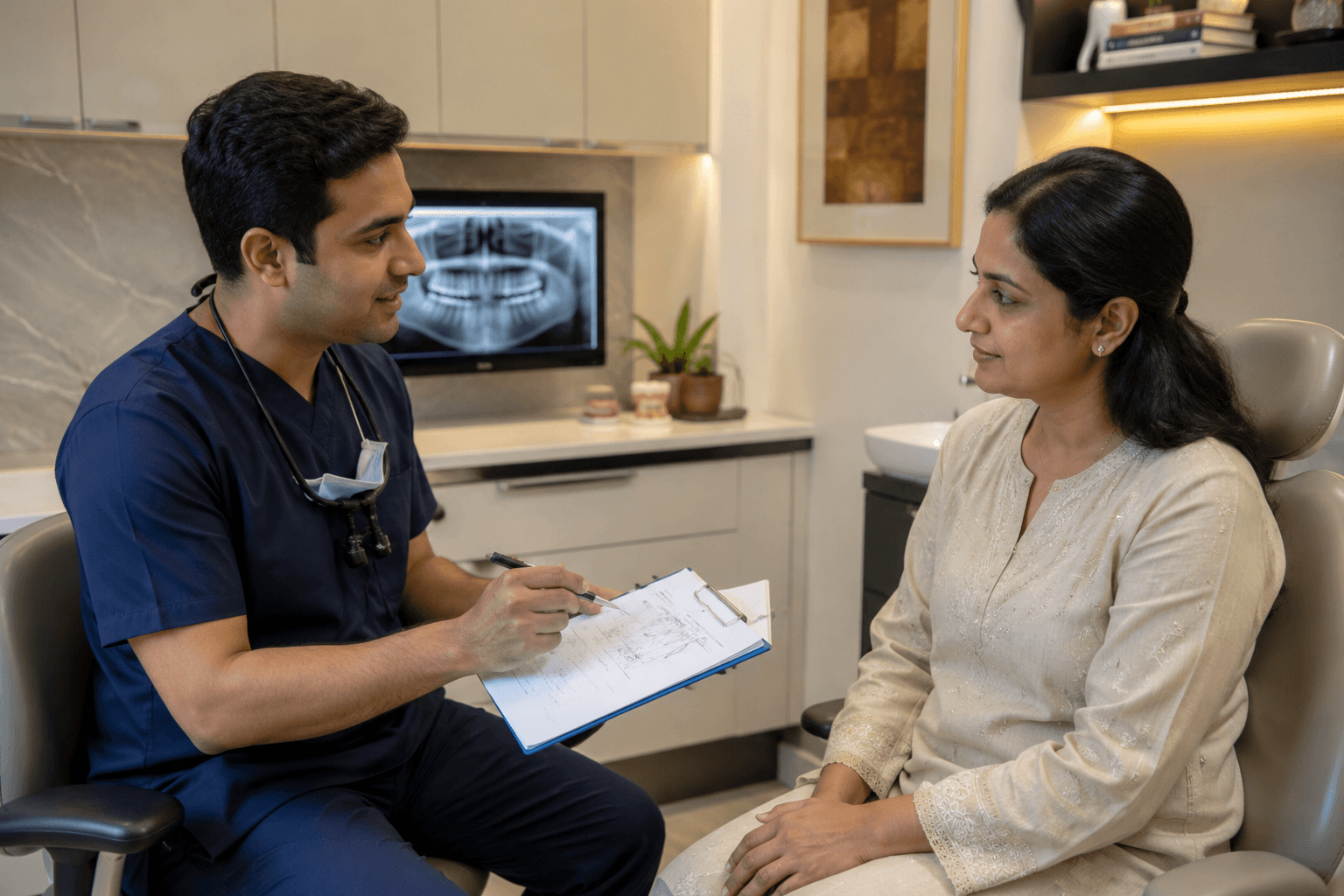
A second opinion is not an insult to the first dentist.
It is often a careful patient's way of understanding a decision before agreeing to treatment that may permanently change a tooth. In dentistry, many choices are irreversible: extraction, crown preparation, veneers, implants, and some root canal decisions.
If you have been advised major dental work and feel unsure, a second opinion can help you understand the diagnosis, the options, the urgency, and what may happen if you wait.
The purpose is not to collect opinions until one says what you want. The purpose is clarity.
When a second opinion is useful
A second opinion may be useful when:
- Extraction has been advised
- Multiple crowns or bridges have been advised
- Implant treatment has been recommended
- Full mouth rehabilitation has been discussed
- Veneers or cosmetic treatment will involve enamel removal
- Root canal treatment has been advised but you have little pain
- You have been given very different treatment plans
- The explanation felt rushed
- You do not understand what problem is being treated
- The treatment is costly, complex, or irreversible
A patient does not need to be difficult to ask for clarity. Dental treatment belongs in the patient's body. Understanding it is reasonable.
What a good second opinion should do
A good second opinion should not simply say yes or no.
It should explain:
- What the problem appears to be
- Whether the diagnosis is clear
- What information is missing
- What treatment options exist
- What is urgent and what can wait
- What the risks are of waiting
- What the risks are of treatment
- Whether a more conservative option is possible
- What outcome is realistic
The dentist should not criticize another clinician casually. They should assess the mouth in front of them and explain their reasoning.
What to bring for a second opinion
Bring as much information as possible.
Helpful records include:
- X-rays
- OPG or CBCT scan, if available
- Written treatment plan
- Photographs
- Medical history
- List of medicines
- Previous dental records
- Details of pain, swelling, or symptoms
- Timeline of what has happened so far
- Questions you want answered
If you do not have records, the dentist can still examine you. But existing records often make the conversation more complete.
Questions to ask during a second opinion
Patients often feel nervous about asking direct questions. These are fair questions:
- What exactly is wrong with this tooth?
- How urgent is it?
- Can it be monitored?
- What happens if I do nothing for now?
- Is there a smaller treatment option?
- What are the risks of the recommended treatment?
- What are the risks of delaying?
- How long should this treatment last?
- What maintenance will it need?
- Are there alternatives?
A dentist who is confident in the plan should be able to explain it in plain language.
When not to delay for a second opinion
There are times when waiting can be risky.
Do not delay urgent care if there is:
- Facial swelling
- Fever with dental infection
- Difficulty swallowing or breathing
- Severe uncontrolled pain
- A knocked-out adult tooth
- Spreading infection
- Trauma with loose or displaced teeth
- Bleeding that does not settle
In urgent situations, stabilising the problem comes first. A second opinion can still happen later for the larger treatment plan if needed.
Why treatment plans can differ
Two dentists may give different plans without either being careless.
Differences can come from:
- Different X-rays or imaging available
- Different risk tolerance
- Different philosophy on saving teeth
- Different assessment of restorability
- Different views on bite forces
- Different experience with complex cases
- Different assumptions about the patient's time and budget
- Different understanding of the patient's goals
The important thing is not that every plan is identical. The important thing is that the reasoning is clear and clinically sound.
Second opinions for implants and cosmetic dentistry
Second opinions are especially useful before implants, veneers, full mouth rehabilitation, and multiple crowns.
These treatments can be valuable, but they need planning. Bone, gums, bite, tooth structure, face, smile line, medical health, and maintenance all matter.
A second opinion can sometimes confirm the first plan. That confirmation is useful. It helps the patient proceed with more confidence.
Other times, it may reveal that treatment should be staged, simplified, delayed, or changed.
What not to do
Do not hide the first treatment plan from the second dentist. It helps to know what was recommended and why.
Do not look only for the cheapest plan. A lower price does not always mean a better or safer plan.
Do not keep searching until someone agrees to do the treatment you already decided you want.
Do not delay urgent care for a second opinion.
Do not feel embarrassed. Careful patients ask careful questions.
FAQs
Is it rude to ask for a dental second opinion?
No. A second opinion is a normal and reasonable step before major, costly, or irreversible treatment.
When should I get a second opinion?
Consider one before extraction, implants, veneers, multiple crowns, full mouth rehabilitation, or when a plan is not clearly explained.
What should I bring for a second opinion?
Bring X-rays, scans, photographs, the written treatment plan, medical history, medicines, and your questions.
Can two dentists give different opinions?
Yes. Treatment plans can differ because of diagnosis, philosophy, risk assessment, imaging, and patient goals. The reasoning should be explained clearly.
Should I get a second opinion before removing a tooth?
Often, yes, unless the situation is urgent. Extraction is irreversible, so it is reasonable to understand whether the tooth can be saved.
Can I ask for a second opinion if I already started treatment?
Yes. Bring records of what has been done. The second dentist can explain the current position and possible next steps.
Will the second dentist criticize the first dentist?
A careful second opinion should focus on diagnosis and options, not personal criticism. The aim is clarity for the patient.
A second opinion is not about mistrust. It is about understanding.
Dentistry involves decisions that can stay with a patient for years. A careful patient should be allowed to ask why, what else, how urgent, and what happens if we wait.
At Dr Nanda's Dental Clinic in Mohali, second-opinion patients are welcome. If you have been advised major dental treatment and want the plan explained in plain terms, call or WhatsApp the clinic. Clarity is a reasonable thing to ask for.