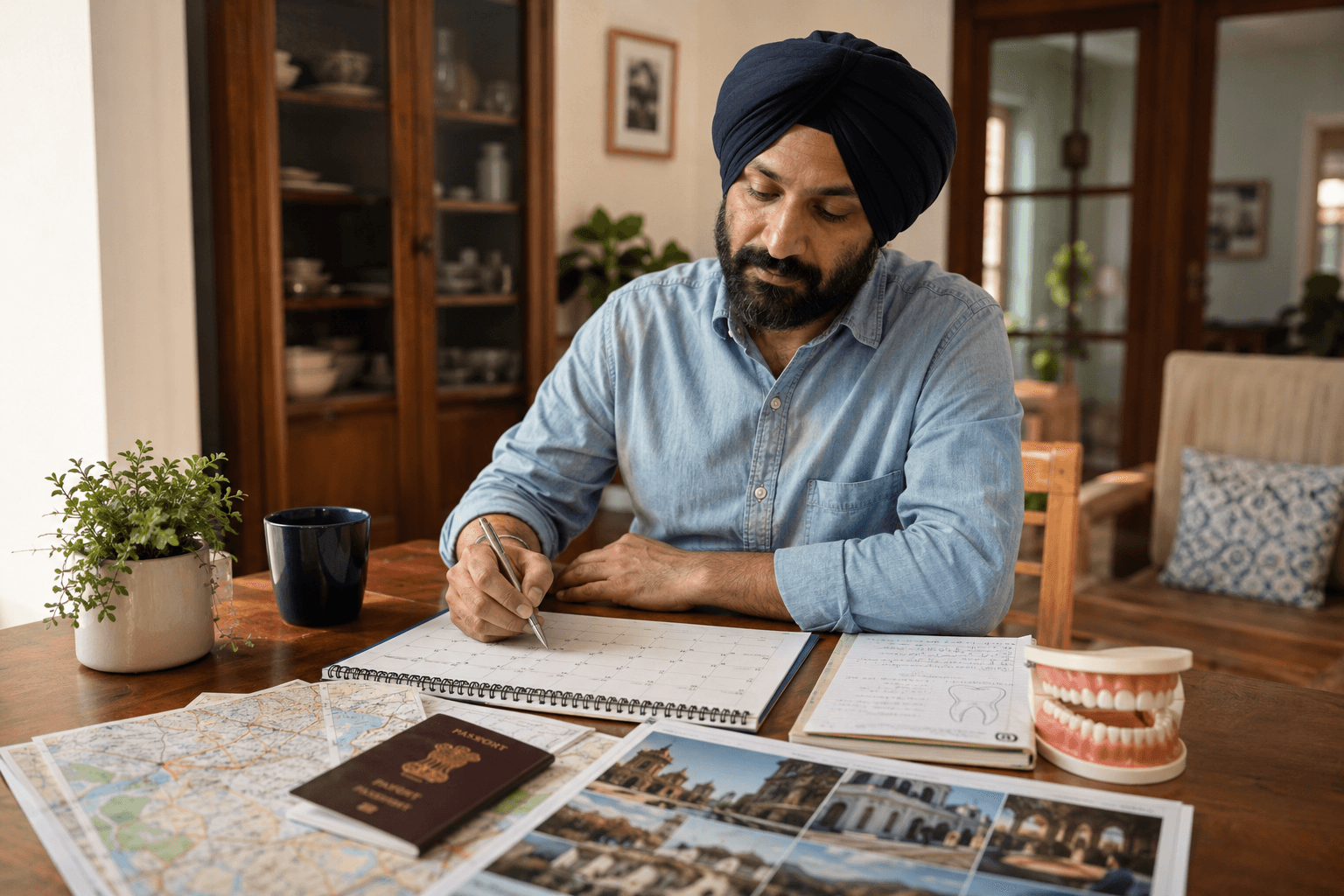
For many NRI patients, the first question about implant treatment is practical: can it be finished in one trip to India?
Sometimes the answer may be yes. Sometimes the honest answer is no.
Dental implants depend on bone, gum healing, infection control, bite, and the timing of the final tooth. If a tooth has to be removed, if bone grafting is needed, if the gum needs time to settle, or if the implant must heal before taking full force, treatment may be safer across two visits.
A second visit is not a failure of planning. Often, it is the planning.
Why implants need time
An implant is placed into bone. The bone then needs time to heal around it before the final tooth is attached in many cases.
This healing period is not empty time. It is when the foundation becomes stable.
Trying to compress every step into a short travel window can overload the implant, compromise gum shape, or force decisions before the mouth is ready. In dentistry, biology has its own pace.
When one trip may be realistic
A shorter plan may be possible when:
- The missing tooth area has enough bone
- The gums are healthy
- There is no active infection
- No extraction or grafting is needed
- The bite is favourable
- The patient can stay long enough for a follow-up
- The final restoration can be planned safely
Even then, the dentist needs to examine the mouth in person. X-rays and video consultations help, but they do not replace clinical assessment.
When two visits may be safer
Two visits may be advised when:
- A damaged tooth must be extracted first
- There is infection around the tooth
- Bone grafting is needed
- The bone is thin or weak in the area
- The gum needs to heal before final planning
- Several implants are being planned
- The bite is heavy or complex
- A front tooth needs careful gum and appearance planning
- The patient has diabetes, tobacco use, or healing risk factors
- Full mouth rehabilitation is involved
These situations are not unusual. They are exactly why implant planning should be honest.
What the first visit may include
The first visit may involve diagnosis, scans or X-rays, extraction if needed, bone grafting if needed, implant placement if suitable, temporary tooth planning, and aftercare.
For some patients, the first visit is about preparing the mouth. For others, the implant can be placed during that visit. The plan depends on what the dentist finds.
NRI patients should avoid assuming that every appointment advertised as "same day" applies to their case.
What happens between visits
Between visits, the mouth heals. The dentist may stay in touch with the patient, especially if they have returned abroad.
The patient may be asked to:
- Keep the area clean
- Avoid chewing heavily on the site
- Follow aftercare instructions
- Send updates if there is swelling, pain, or concern
- Visit a local dentist abroad if an urgent issue arises
- Return after the advised healing period for final restoration
This period should be planned before the patient leaves India. A patient should not fly out without knowing the next step.
What the second visit may include
The second visit may involve checking implant stability, gum health, bite, impressions or scans, trial adjustments, and final crown, bridge, or denture fitting.
This stage is not just cosmetic. The final tooth has to be shaped so that it can be cleaned, looks appropriate, and does not overload the implant.
A good final tooth is planned around the mouth, not just the gap.
Why this matters for NRI patients
NRI patients often travel with fixed dates: weddings, school holidays, visa windows, office leave, family commitments.
It is natural to want everything completed while in Mohali or Chandigarh Tricity. But the safest plan may not be the fastest plan.
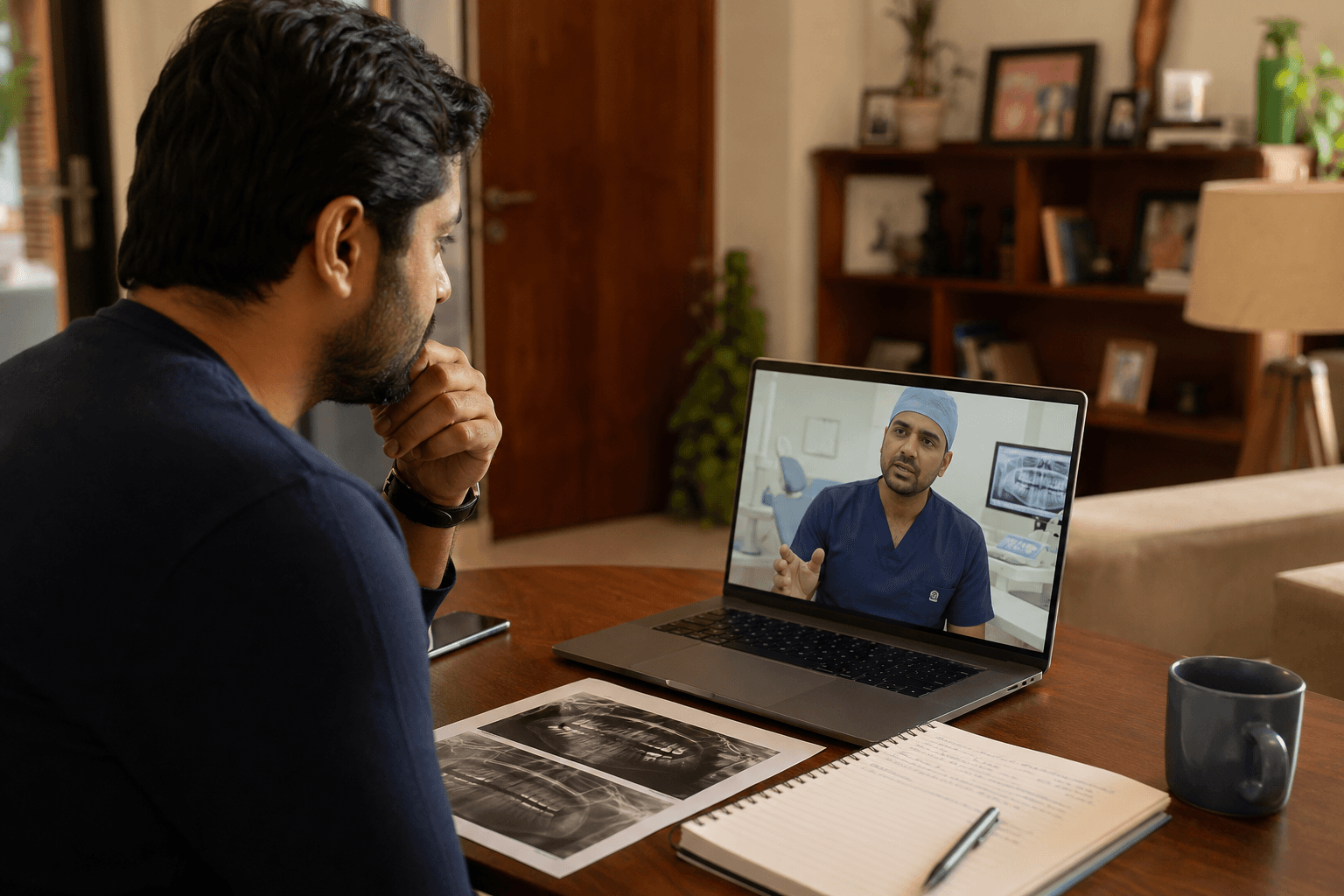
Before booking flights, patients should send records, X-rays if available, and a clear description of the problem. A video consultation can help set expectations. The final decision still depends on in-person examination.
What not to do
Do not book return flights so tightly that there is no room for follow-up.
Do not insist on a one-trip implant if the dentist explains that healing or staging is needed.
Do not ignore gum disease, diabetes control, smoking, gutka, or paan masala use before implant planning.
Do not compare your timeline with another patient's timeline. Implant treatment is case-specific.
Do not treat a temporary tooth like a final tooth unless the dentist has clearly allowed it.
FAQs
Can a dental implant be completed in one trip?
Sometimes. It depends on bone, gums, infection, bite, whether extraction is needed, and how long the patient can stay for a follow-up.
Why do some implants need two visits?
Because the mouth may need time for extraction healing, bone grafting, implant integration, gum shaping, or final restoration planning.
Is a two-visit implant plan better?
Not always. It is better when the clinical situation needs it. The aim is not more visits. The aim is safer timing.
Can NRI patients start planning before flying to India?
Yes. They can send X-rays, photos, medical history, and treatment records. A video consultation can help, but the final plan requires in-person examination.
What if I have only two weeks in India?
Some assessments and selected treatments may fit into two weeks. Complex implant work may not. It is better to know this before travel.
Can I get a temporary tooth while the implant heals?
Often, a temporary solution can be planned, especially for visible areas. It must be designed so it does not overload the healing implant.
Why not place the final crown immediately?
In many cases, the implant needs time to become stable in the bone before taking full chewing force. Immediate placement is not suitable for every case.
A second visit is sometimes the most honest part of implant planning.
It respects healing, bone, gums, bite, and the long-term result. For NRI patients, that honesty matters even more because travel is expensive and time is limited.
At Dr Nanda's Dental Clinic in Mohali, implant timelines are planned around what the mouth can safely support. If you are flying in for treatment, call or WhatsApp the clinic before booking a tight schedule. A good plan begins before the journey.