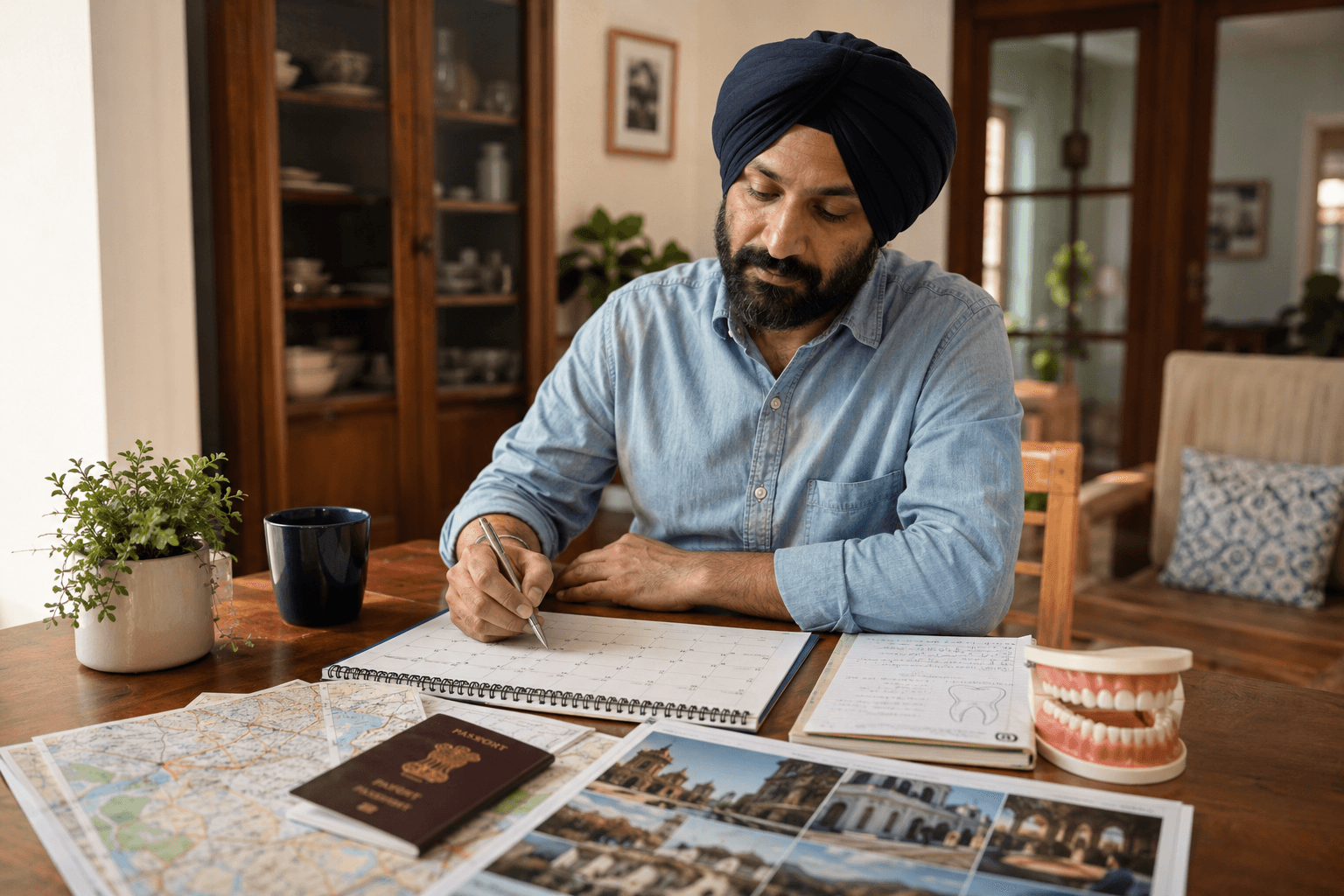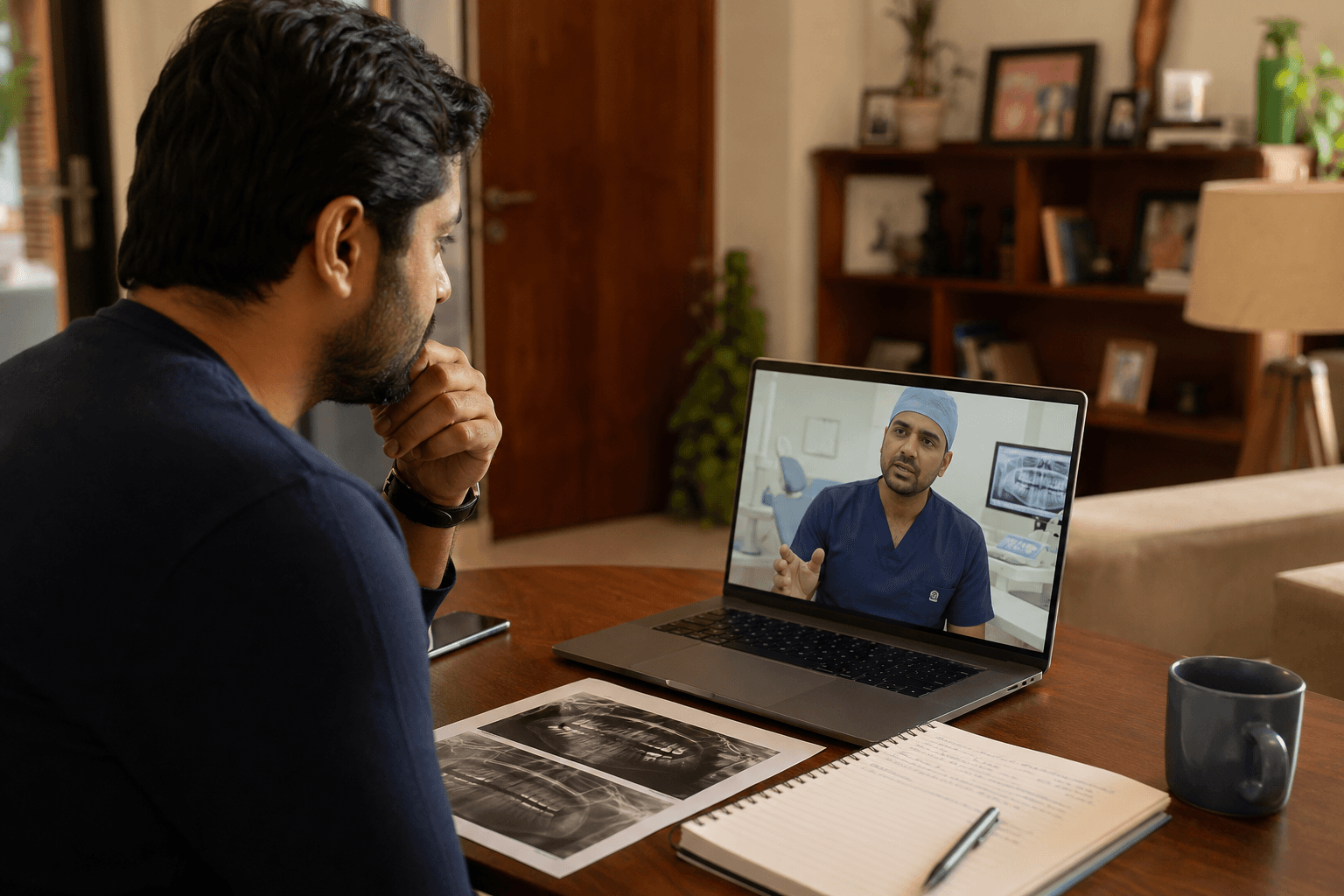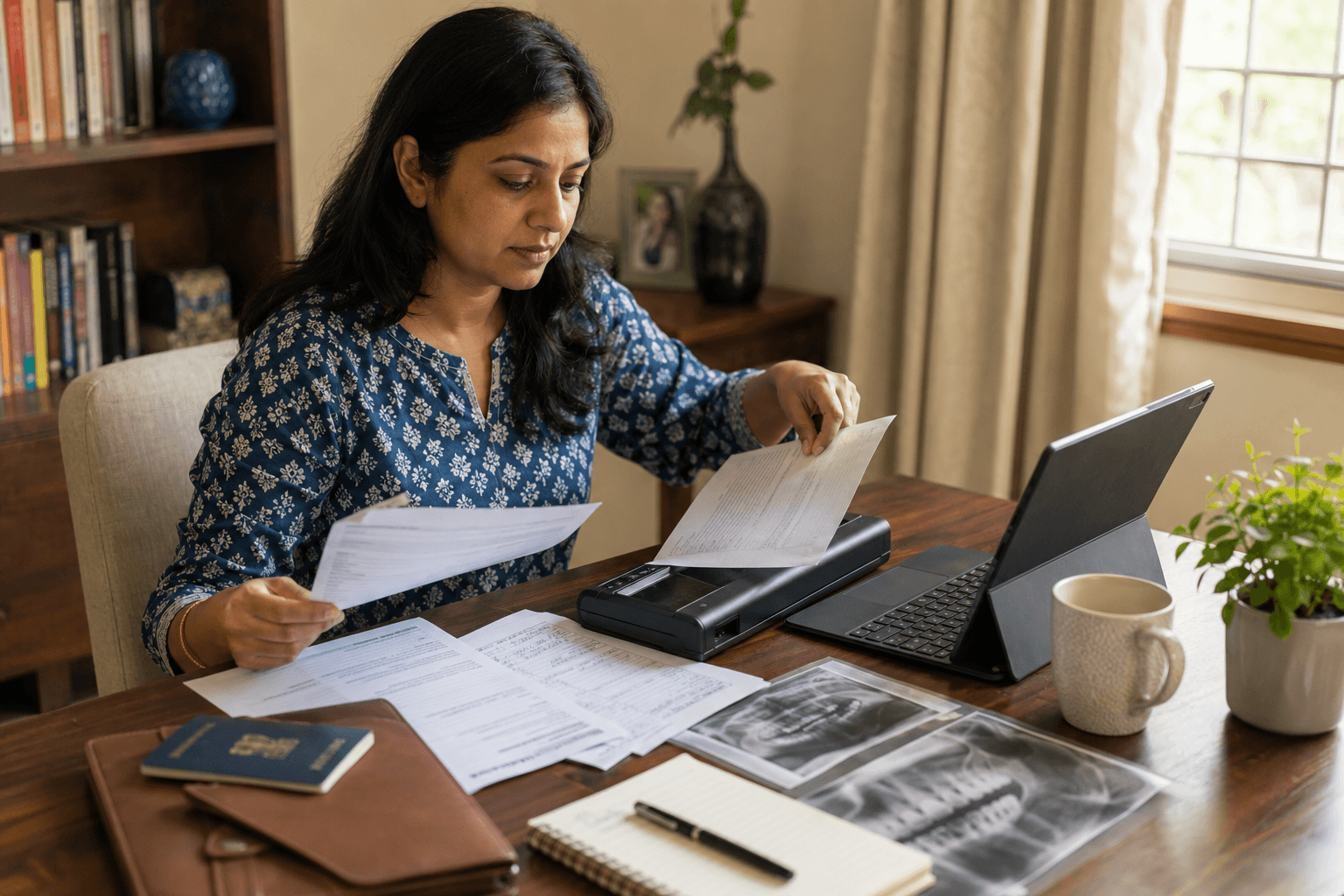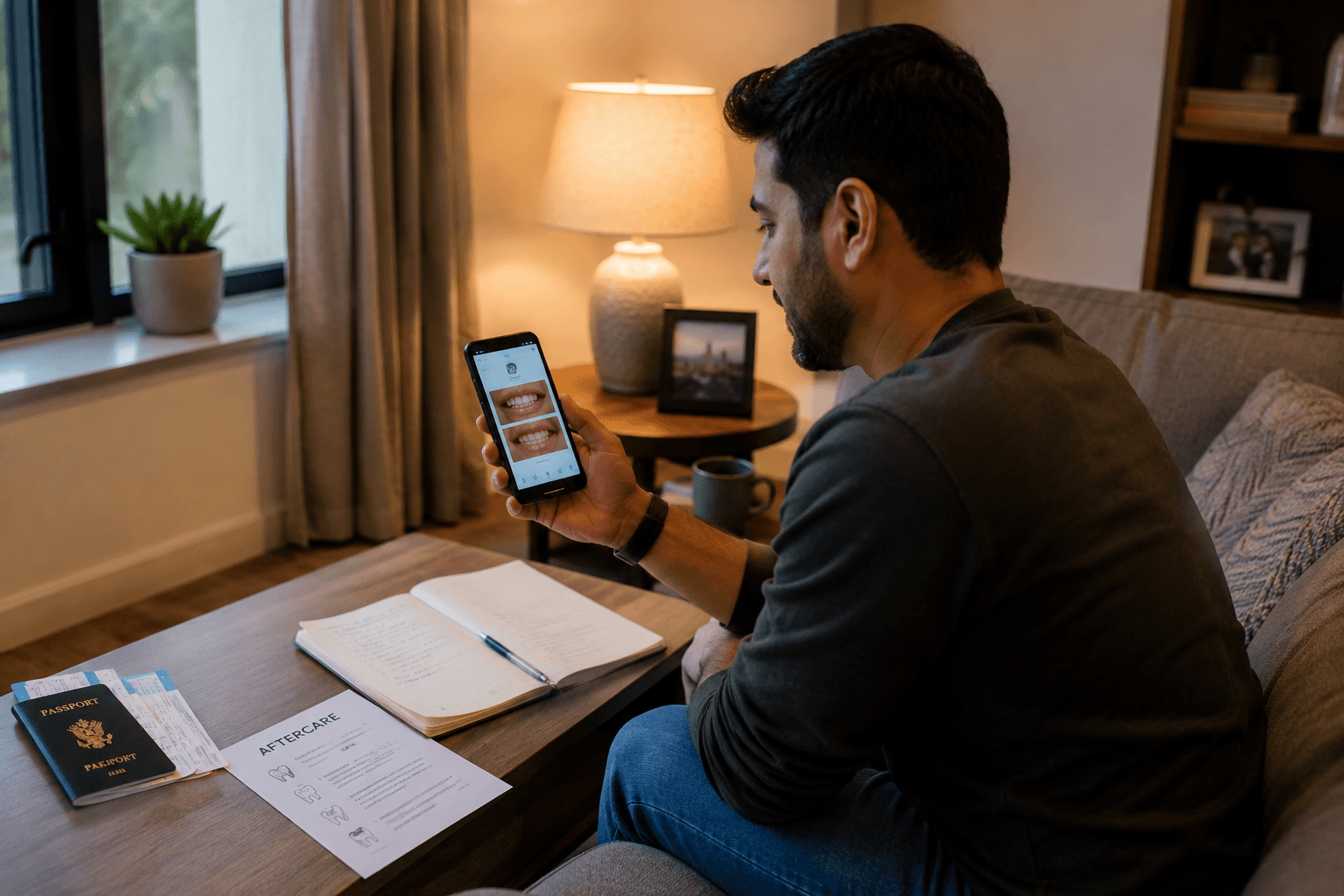
For an NRI patient, dental treatment often has two parts: the care done in Mohali and the care that continues after returning home.
This second part matters. A crown, implant, denture, root canal, veneer, or full mouth rehabilitation does not become maintenance-free because the patient has boarded a flight. Healing continues. The bite settles. Gums respond. Habits return. Sometimes small adjustments are needed.
Good aftercare across borders is not complicated, but it has to be planned.
Before leaving India, the patient should know what was done, what to expect, what warning signs to watch for, how to clean the area, when to send an update, and when to see a dentist locally.
Why aftercare matters for NRI patients
A local patient can return to the clinic easily if something feels different. An NRI patient may be eight or ten time zones away.
That distance changes the responsibility of planning. Instructions must be clearer. Records should be organised. Follow-up expectations should be realistic. The patient should know what is normal and what is not.
Aftercare is not only for problems. It is how dental work is protected.
What to ask before you leave Mohali
Before returning home, ask for clarity on:
- What treatment was completed
- Which teeth were treated
- What materials or restorations were placed
- Whether any temporary work is present
- What symptoms are expected for a short time
- What symptoms are not expected
- How to clean the area
- Foods to avoid temporarily
- Whether a night guard or special hygiene tool is needed
- When the next check should happen
- Whether local dental follow-up is recommended
For complex treatment, written notes are helpful. A patient should not have to remember everything from the final appointment.
What updates can be sent from home
A simple update can be useful, especially after implants, dentures, crowns, or cosmetic work.
A good update includes:
- Your name
- Date of treatment
- What you are feeling now
- Whether there is pain, swelling, bleeding, looseness, or difficulty chewing
- Clear photographs if there is a visible concern
- Whether symptoms are improving, stable, or worsening
- Any advice received from a local dentist, if you have seen one
Keep messages factual. "It feels a little sore when I chew on the right back side" is more useful than "something is wrong."
What can be managed remotely
Some aftercare questions can often be discussed remotely.
For example:
- Whether mild soreness sounds expected
- How to clean around a crown, bridge, denture, or implant
- Whether a photograph shows obvious inflammation
- Whether a temporary restoration needs local attention
- Whether a local dentist should examine the area
- Whether a planned follow-up can wait until the next India visit
Remote guidance is helpful, but it has limits. A dentist cannot adjust a bite, check gum pockets, take an X-ray, or test a tooth through a phone.
When to see a local dentist after returning home
See a local dentist if you have:
- Increasing pain
- Swelling
- Fever
- Bleeding that does not settle
- A crown, bridge, veneer, or denture that feels loose
- Pain when biting that is not improving
- A temporary restoration that has broken
- Implant area swelling, discharge, or worsening discomfort
- A sharp edge causing repeated ulcers
- Difficulty eating or speaking with a new denture
The clinic in Mohali can remain involved, but urgent issues should not be delayed because of distance.
Aftercare for implants
Implants need clean gums and careful maintenance.
After returning home, keep the area clean as instructed. Watch for swelling, discharge, bleeding that persists, increasing pain, or a feeling that the restoration is moving.
Long-term implant care includes regular dental checks, cleaning around the implant, and attention to bite forces. An implant is not a natural tooth, but the gum and bone around it still need care.
Patients who smoke, use tobacco, or have diabetes need especially careful maintenance.
Aftercare for crowns, bridges, and veneers
Crowns, bridges, and veneers should feel comfortable in the bite.
A little awareness of new dental work can be normal at first. But persistent high bite, pain on chewing, food trapping, gum swelling, or looseness should be checked.
Cleaning around bridges and margins is important. Dental work can fail from the edges if plaque and food remain there over time.
Cosmetic work also needs restraint. Do not bite hard objects, open packets with teeth, chew ice, or use teeth as tools.
Aftercare for dentures
New dentures often need adjustment. A sore spot does not mean the denture has failed. It may mean the denture is rubbing in one area and needs refinement.
If you return home and a denture causes ulcers, pain, looseness, or difficulty eating, see a local dentist for adjustment and update the clinic if needed.
A denture should be cleaned daily and stored as advised. The mouth underneath also needs care.
What not to do
Do not ignore worsening pain because you are abroad.
Do not try to adjust crowns, bridges, dentures, or sharp edges at home.
Do not use glue on dental work unless it is a denture adhesive advised for temporary use.
Do not take antibiotics left from an old prescription without dental or medical advice.
Do not disappear after complex treatment and return years later only when something fails. Maintenance is part of the treatment.
FAQs
Can I stay in touch with the clinic after returning abroad?
Yes. For NRI patients, remote updates can help the clinic understand how you are doing and guide next steps where appropriate.
Can dental aftercare be done completely online?
No. Some questions can be discussed remotely, but examination, X-rays, bite adjustment, cleaning, and emergency care require an in-person dentist.
What should I do if a crown feels high after I return home?
If the bite feels high or painful when chewing, see a local dentist for assessment. A high bite should not be ignored for long.
What if my implant area hurts after returning home?
Mild discomfort may occur early after treatment, but increasing pain, swelling, discharge, bleeding, or looseness should be checked promptly by a dentist.
Should I keep all treatment records?
Yes. Keep X-rays, treatment notes, implant details, prescriptions, and photographs if provided. They help any future dentist understand what was done.
Can I wait until my next India trip for every issue?
No. Routine questions may wait, but pain, swelling, looseness, trauma, or broken dental work should be assessed where you are.
Good dental care does not end when a patient leaves Mohali.
For NRI patients, aftercare is part of the plan from the beginning. The patient should travel back with records, instructions, and a clear understanding of what to watch for.
At Dr Nanda's Dental Clinic, staying in touch across borders is not a substitute for local emergency care. It is a way of keeping the original treatment connected, understood, and properly maintained.