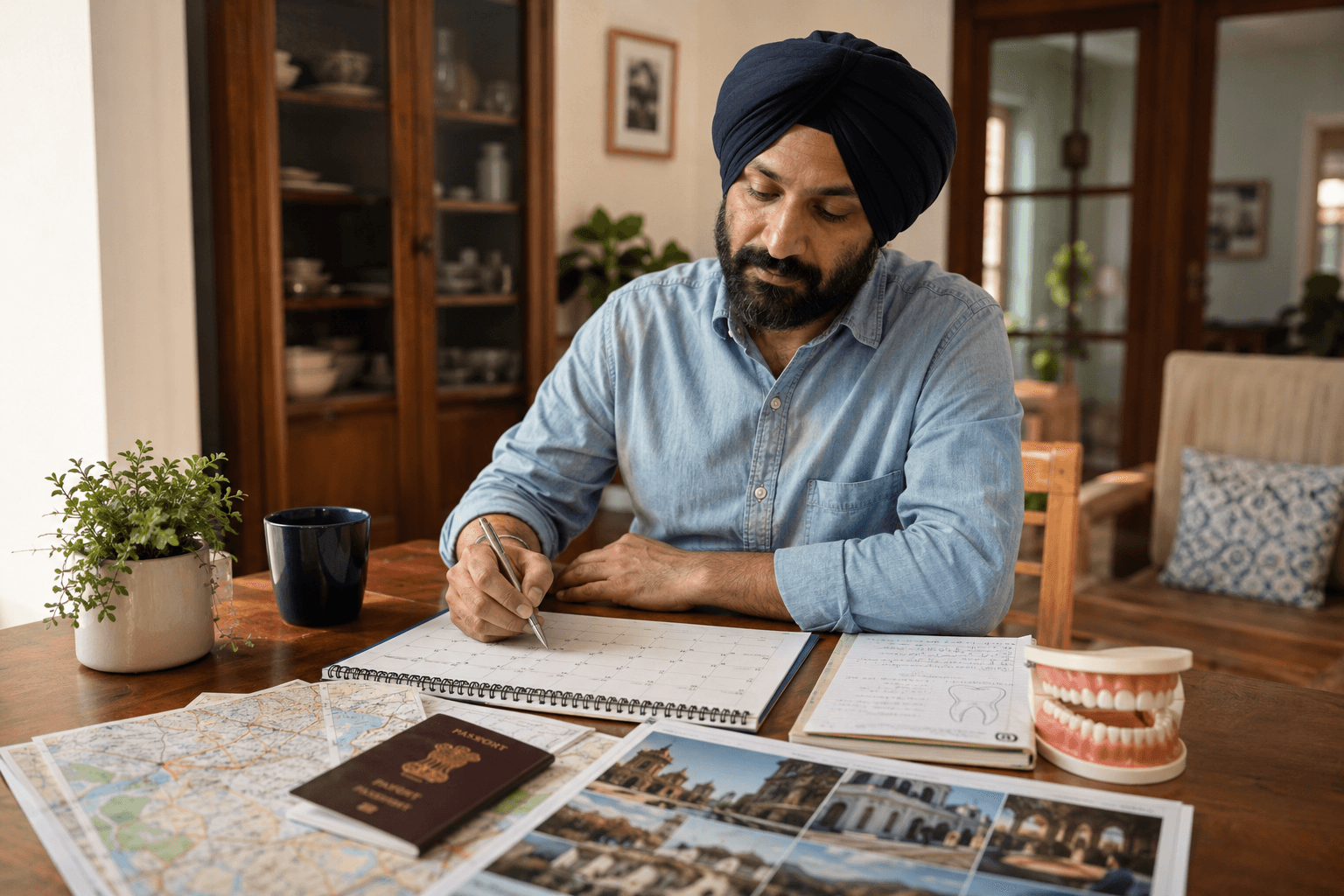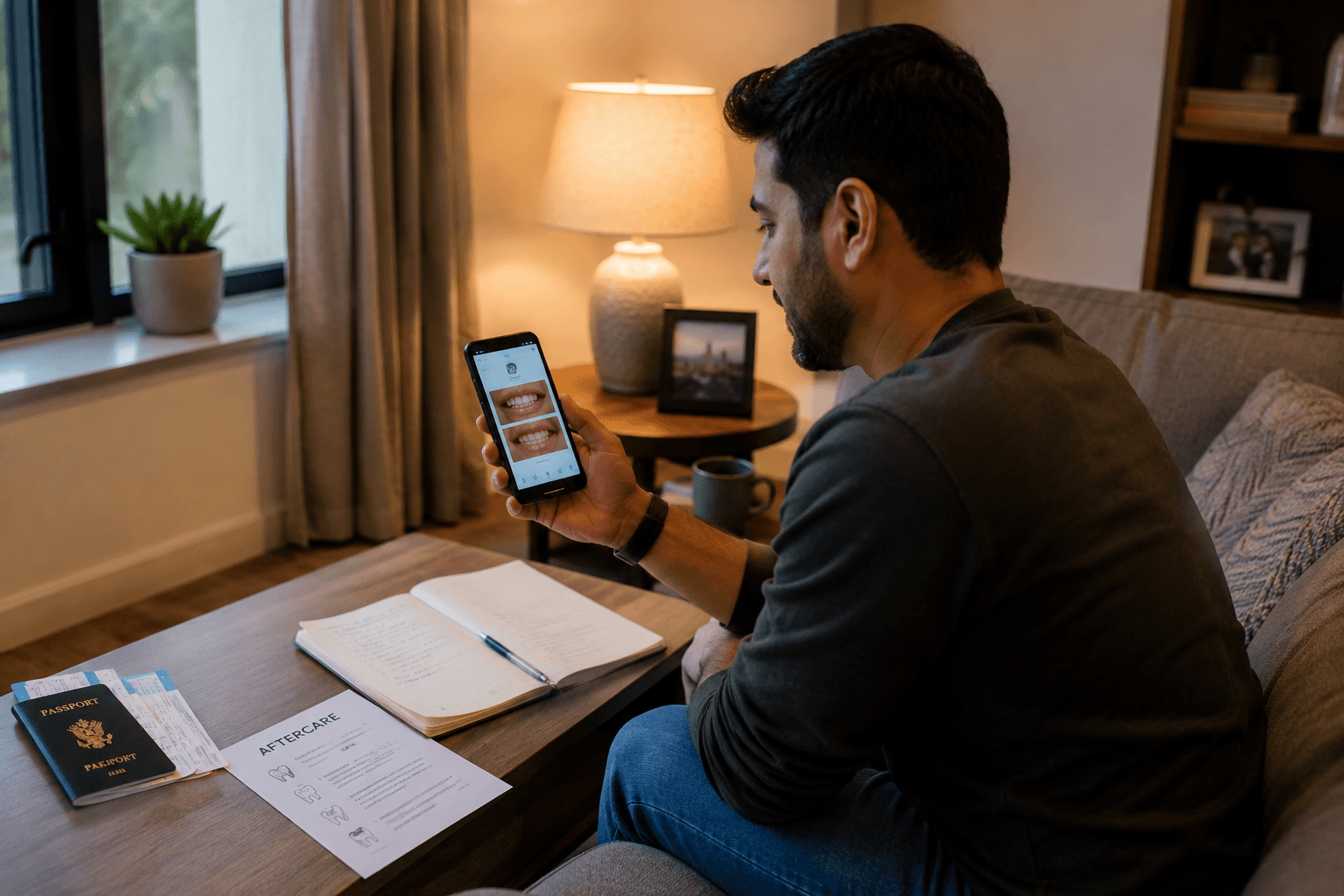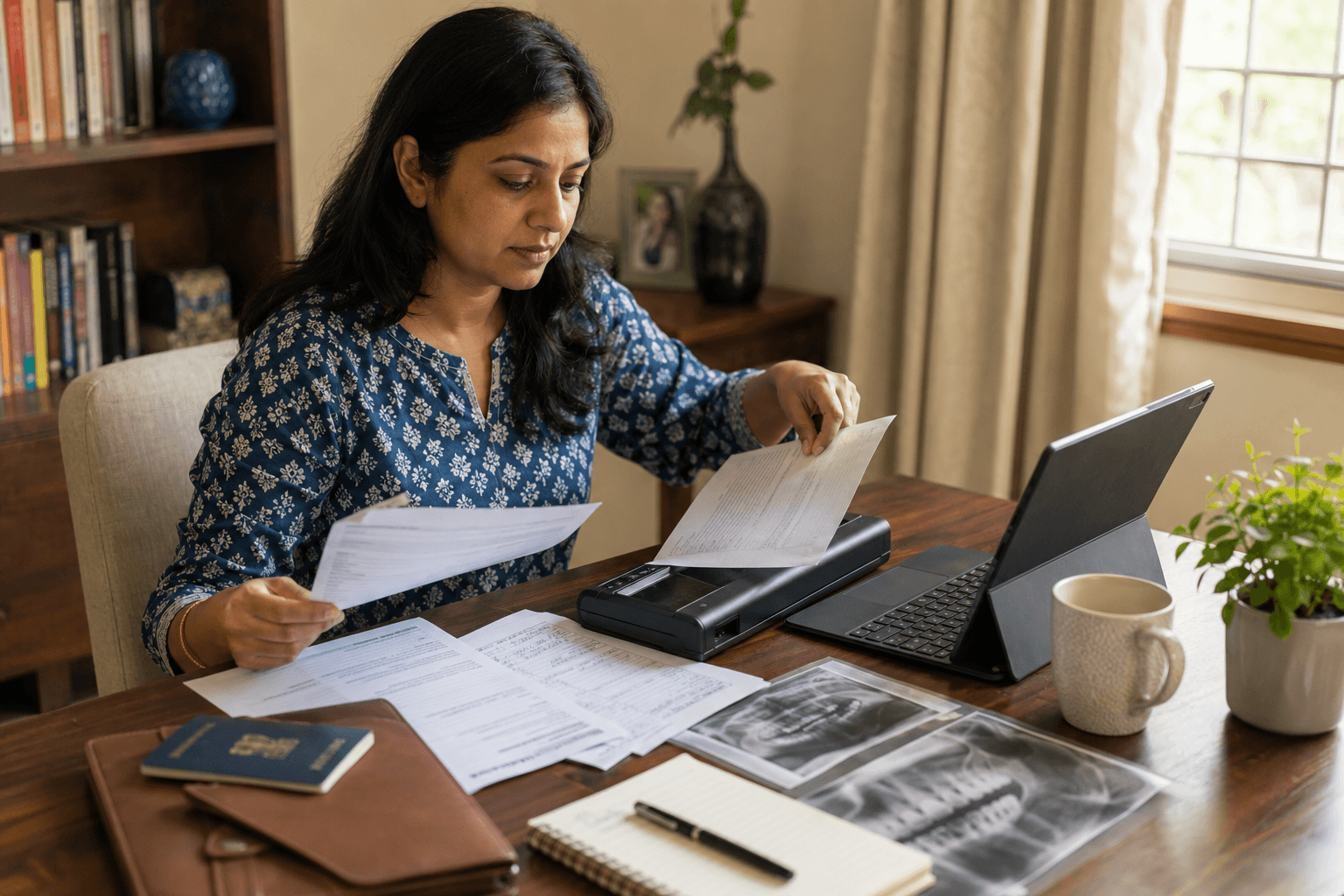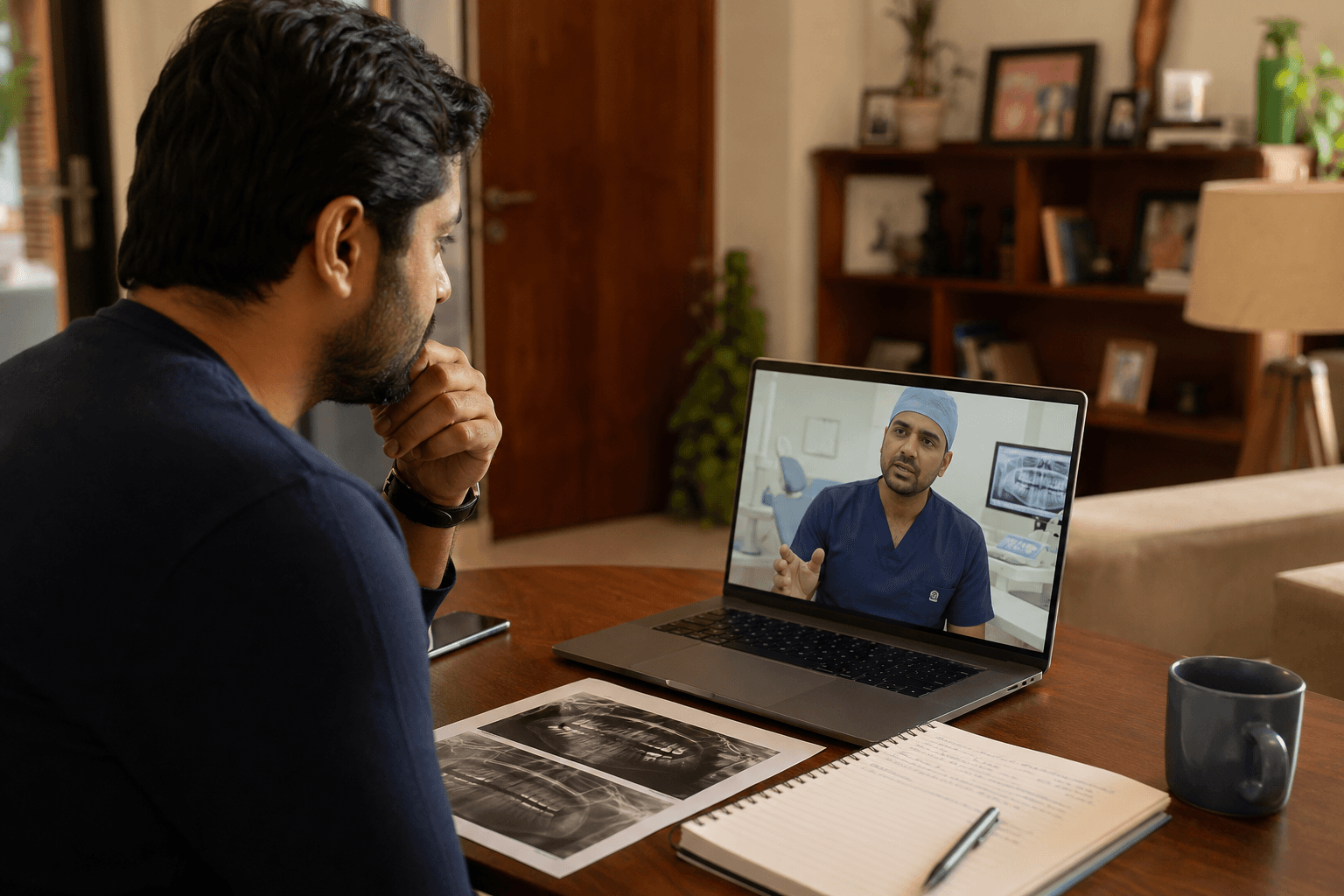
For an NRI patient, a dental decision often begins long before the flight to India.
You may be sitting in Toronto, London, Melbourne, Dubai, or California, trying to understand whether dental treatment can fit into a family visit, a wedding trip, or a short visa window. You may have X-rays from your local dentist, pain that comes and goes, or a treatment plan that feels too rushed to accept without another opinion.
A video consultation can help. It can clarify the problem, organise records, explain possible paths, and help you decide whether the trip should be planned as a routine visit or a complex treatment visit.
But it cannot replace an in-person dental examination. The mouth still has to be seen, touched, tested, and sometimes imaged again before a final plan is made.
What a video consultation is good for
A video consultation is useful for conversation and planning.
It can help the dentist understand:
- Your main concern
- How long the problem has been present
- Whether there is pain, swelling, or difficulty chewing
- What treatment has already been advised
- What records are available
- How much time you will have in India
- Whether your expectations are realistic
- Whether more records should be sent before you travel
For NRI patients, this is often enough to make the next step clearer.
The video call may not give a final answer, but it can prevent a poorly planned trip.
What it cannot settle
A video consultation cannot fully diagnose a dental problem.
It cannot reliably check:
- Tooth mobility
- Gum pocket depth
- Pain on biting
- Exact crack lines
- Bite forces
- Mouth opening
- Denture fit
- The true condition under an old crown
- Whether a tooth is restorable
- Whether implant bone is adequate without proper imaging
Even with excellent photographs and X-rays, some decisions must wait until the patient is in the chair.
This honesty is important. A remote promise may feel comforting, but it can become unfair if the clinical reality is different.
What to prepare before the video call
The call is more useful when you prepare.
Before the appointment, gather:
- Recent X-rays or scans
- Previous dental reports or treatment plans
- Photographs of the concern
- List of current medicines
- Medical history
- Allergy details
- Dates you expect to be in India
- The treatment you were told you need
- Your main worry, written in one or two sentences
Also think about your practical constraints. Are you available for multiple visits? Will you be travelling within India during the stay? Are you attending a wedding? Do you need to return abroad by a fixed date?
Dental planning has to fit biology and life. Both matter.
Questions NRI patients should ask
A good video consultation should leave you with clearer questions, not confusion.
Useful questions include:
- What can be understood from my current records?
- What cannot be confirmed until I am examined?
- Is this likely to be simple, moderate, or complex?
- How many appointments might be needed?
- Is same-trip completion realistic?
- Could this require staged treatment?
- What records should I bring or send next?
- Should I avoid booking return travel too tightly?
- Are there signs that I should be seen locally before flying?
The goal is not to force a final answer. The goal is to avoid surprises where possible.
When a video consultation is especially useful
It is especially useful if you are considering:
- Dental implants
- Full mouth rehabilitation
- Multiple crowns or bridges
- Cosmetic smile planning
- Veneers
- Denture replacement
- Treatment for an elderly parent
- A second opinion
- Treatment around a wedding or fixed travel date
- A decision between saving and extracting a tooth
The more complex the case, the more useful advance planning becomes.
When you should not wait for a video call
Some situations should be handled immediately where you are.
Do not wait for a remote consultation if you have:
- Facial swelling
- Fever with dental pain
- Difficulty swallowing or breathing
- Uncontrolled bleeding
- Severe trauma
- A knocked-out adult tooth
- Severe pain that is not manageable while waiting
In those situations, seek urgent local dental or medical care first. Travel planning can happen after the immediate risk is managed.
How the first in-person visit builds on the video call
When you arrive in Mohali, the dentist will usually revisit the concerns discussed online.
The in-person appointment may include:
- Clinical examination
- Gum assessment
- Bite check
- Tooth vitality or sensitivity tests
- X-rays or scans, if needed
- Discussion of treatment options
- Timeline planning
- Prioritising what must be done first
The video call makes this visit more prepared. It does not make it unnecessary.
What not to expect from a video consultation
Do not expect a guaranteed treatment plan before examination.
Do not expect final pricing for complex treatment without seeing the mouth and records properly.
Do not expect the dentist to promise that implants, veneers, or full mouth rehabilitation can be completed in one short trip.
Do not send unclear photographs and expect certainty.
Do not ignore a local emergency because you prefer to be treated in India later.
A careful video consultation is useful because it is honest about its limits.
FAQs
Can a dentist diagnose my problem on video?
A video call can help understand the concern and plan next steps, but it cannot replace an in-person examination. Some things must be checked directly.
Should I send X-rays before the call?
Yes, if you have them. Recent X-rays, scans, reports, and photographs make the video consultation more useful.
Can the clinic tell me how many days I need in India?
The clinic can give broad planning guidance based on your records and goals. The final timeline depends on examination, diagnosis, treatment type, healing, and lab work.
Is a video consultation useful for implants?
Yes, especially for early planning. But implant suitability depends on clinical examination and appropriate imaging, including bone and gum assessment.
Can cosmetic dentistry be planned on video?
The conversation can begin on video, especially around goals and timelines. Final cosmetic planning needs in-person assessment of the face, smile, bite, teeth, and gums.
What if I have pain before travelling?
If pain is mild and stable, a video consultation may help you plan. If there is swelling, fever, severe pain, or difficulty swallowing or breathing, seek urgent local care.
A video consultation is best understood as a planning conversation.
It can make an NRI patient's visit to Mohali more organised, more realistic, and less anxious. It can help you ask better questions before you travel. It can also tell you when not to make promises to yourself too early.
At Dr Nanda's Dental Clinic, the value of a video consultation is not certainty from a distance. It is clarity before arrival.