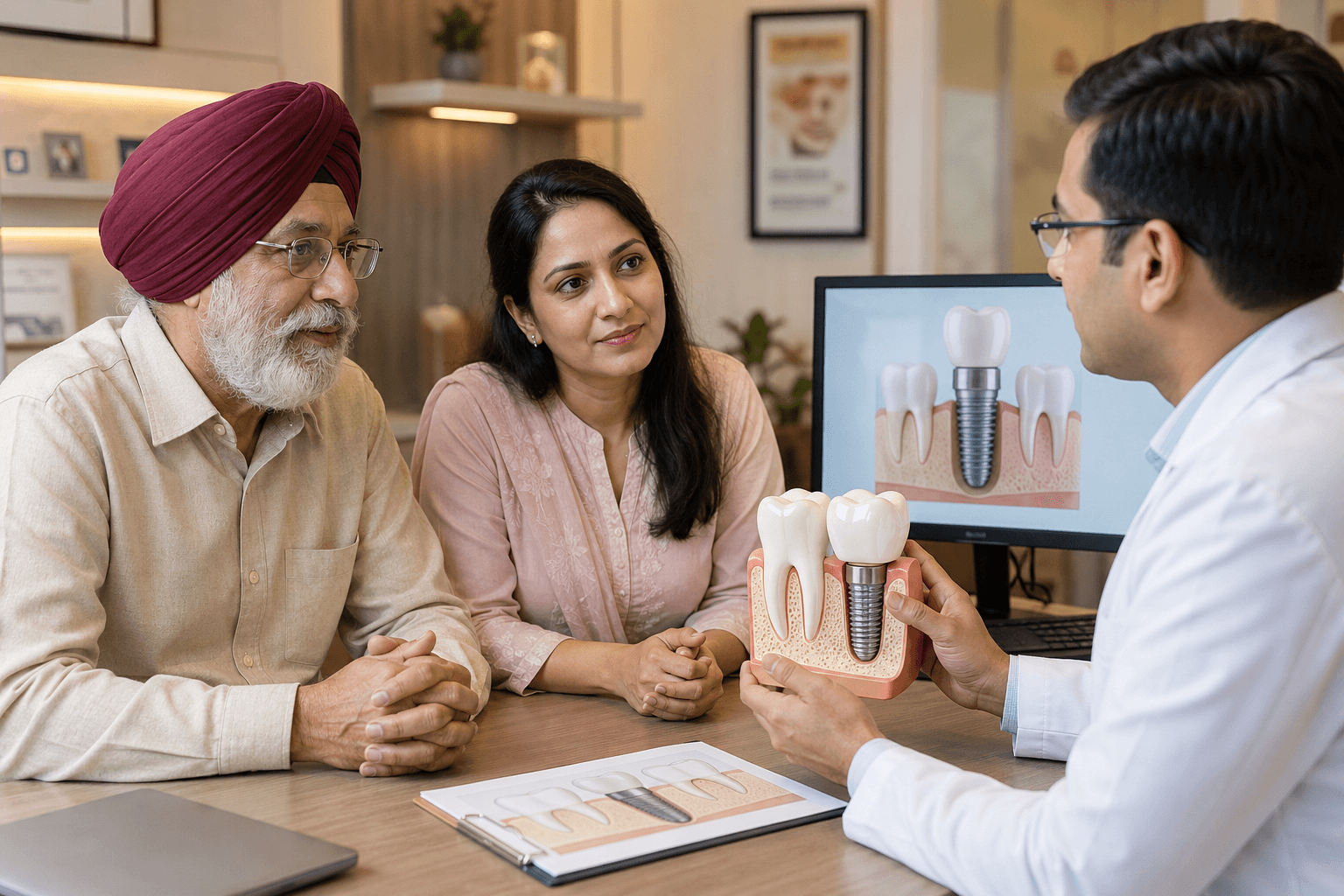
A dental implant is not simply a new tooth placed into a gap. It is a small titanium post placed in the jawbone to act like an artificial tooth root. Once it heals and becomes stable, it can support a crown, bridge, or denture.
For many patients, especially adults and seniors in Mohali, Chandigarh, and NRI families visiting Punjab, implants can be a strong way to replace missing teeth. But they are not the right answer for every mouth, every health condition, or every timeline.
Good implant treatment begins with assessment: bone, gums, bite, medical health, hygiene, and expectations.
The question is not "Can an implant be placed?" The better question is "Should an implant be placed here, now, and in this patient?"
What a dental implant replaces
A missing tooth has two parts to think about. The visible tooth is the crown. The part inside the bone is the root.
A denture or bridge may replace the visible chewing surface. An implant replaces the root area first, then supports the visible tooth above it.
An implant-supported tooth usually has three parts:
- The implant, placed in the jawbone
- The abutment, which connects the implant to the tooth replacement
- The crown, bridge, or denture that the patient sees and uses
This is why implant planning is more than choosing a tooth shade. It is planning a foundation.
Who may suit dental implants?
A patient may be suitable for implants if they have:
- One or more missing teeth
- Enough bone to support the implant, or willingness to consider bone grafting if needed
- Healthy gums or gum disease that is treated first
- Good oral hygiene habits
- A stable bite or a plan to manage bite forces
- Medical health that allows healing
- Realistic expectations about time, stages, and maintenance
Age alone does not decide suitability. Many older patients can be good candidates if their health, bone, gums, and hygiene are suitable.
Who may need extra caution?
Some patients need more careful planning before implant treatment.
This includes patients with:
- Active gum disease
- Uncontrolled diabetes
- Heavy smoking or tobacco use
- Poor oral hygiene
- Insufficient bone
- Teeth grinding or strong bite forces
- Certain medicines that affect bone healing
- Recent cancer treatment involving the jaw area
- Medical conditions that affect healing
These are not always permanent barriers. Sometimes the answer is to treat gum disease first, improve diabetes control, stop tobacco, build bone, or change the treatment plan.
A rushed implant in an unready mouth is not careful dentistry.
Why gums and bone matter so much
An implant needs stable bone around it. It also needs healthy gum tissue and good cleaning habits.
If gum disease caused tooth loss, that disease does not automatically disappear because the tooth is replaced. The same mouth, same bacteria, and same cleaning habits remain unless they are addressed.
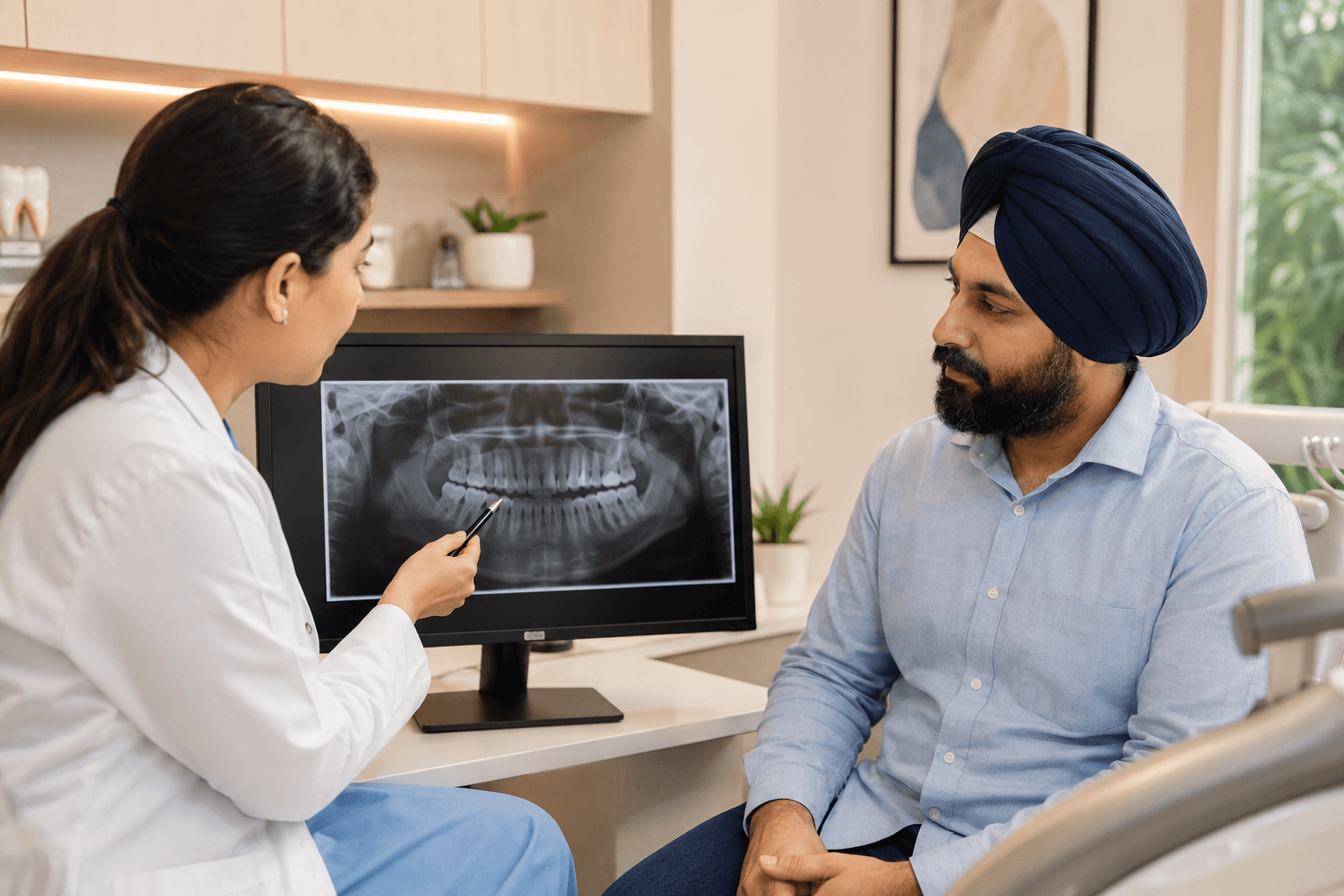
This is why implant planning often begins with gum assessment, cleaning, X-rays, and sometimes 3D imaging. The dentist needs to know what support is available and what risks must be controlled.
A missing tooth is visible. Bone loss is not always visible to the patient.
What happens during implant planning
Before recommending an implant, the dentist may check:
- Medical history
- Diabetes control, if relevant
- Smoking, gutka, paan masala, or tobacco use
- Gum health
- Bone quantity and quality
- Space between teeth
- Bite forces
- Opposing tooth position
- Smile line, if the gap is visible
- Oral hygiene ability
- Whether the patient can return for follow-up
For NRI patients, records and X-rays sent in advance can help the clinic understand what may be possible. Still, final planning depends on an in-person examination.
What the treatment usually involves
Implant treatment is usually staged.
First comes diagnosis and planning. Then, if appropriate, the implant is placed into the bone. Healing time is allowed so the implant can become stable. After that, the final tooth, bridge, or denture connection is made.
Some cases can move faster. Some need bone grafting, gum treatment, extraction healing, or staged visits. A good plan respects biology. Bone and gum healing cannot be rushed just because a patient has a fixed travel date.
When an implant may not be the first choice
An implant may not be the best first answer if:
- The gap can be managed well another way
- The patient cannot maintain cleaning
- Gum disease is active
- Medical healing risk is high
- Bone support is inadequate and grafting is not suitable
- The patient wants an unrealistically fast result
- The cost and maintenance commitment are not understood
Other options may include a bridge, removable denture, or leaving a space in selected cases. The right option depends on the mouth, not the trend.
What not to do
Do not choose implants only because they sound premium.
Do not compare implant plans only by price. Bone, gum, planning, materials, follow-up, and restoration design matter.
Do not hide tobacco use, diabetes, medicines, or medical history from the dentist. These details affect healing.
Do not assume every missing tooth must be replaced with an implant.
Do not expect the implant to look after itself. Implants need cleaning, maintenance, and periodic check-ups.
FAQs
What is a dental implant?
A dental implant is a small post placed in the jawbone to replace the root of a missing tooth. It can support a crown, bridge, or denture after healing.
Are dental implants suitable for seniors?
They can be, if the patient's health, bone, gums, and hygiene are suitable. Age alone does not decide implant suitability.
Can diabetic patients get implants?
Some diabetic patients can receive implants if their diabetes is well controlled and healing risk is acceptable. The dentist will assess this carefully.
Can smokers get dental implants?
Smoking and tobacco use can increase implant risks and affect healing. Patients should discuss this honestly before planning treatment.
How long does implant treatment take?
It depends on the case. Some plans are straightforward. Others need extraction healing, bone grafting, gum treatment, or staged visits.
Is an implant better than a bridge?
Not always. An implant avoids cutting neighbouring teeth in many cases, but a bridge may suit some patients better. The decision depends on the mouth.
Do implants need cleaning?
Yes. Implants need daily cleaning and regular dental check-ups. Gum problems can also affect implants.
A dental implant is a strong treatment when the patient, mouth, and timing are right.
It is not a shortcut. It is a planned replacement that depends on healthy support, good healing, careful restoration, and long-term maintenance.
At Dr Nanda's Dental Clinic in Mohali, implant planning begins with the question that matters most: is this the right solution for this patient? If you are considering dental implants, call or WhatsApp the clinic to begin with a proper assessment.