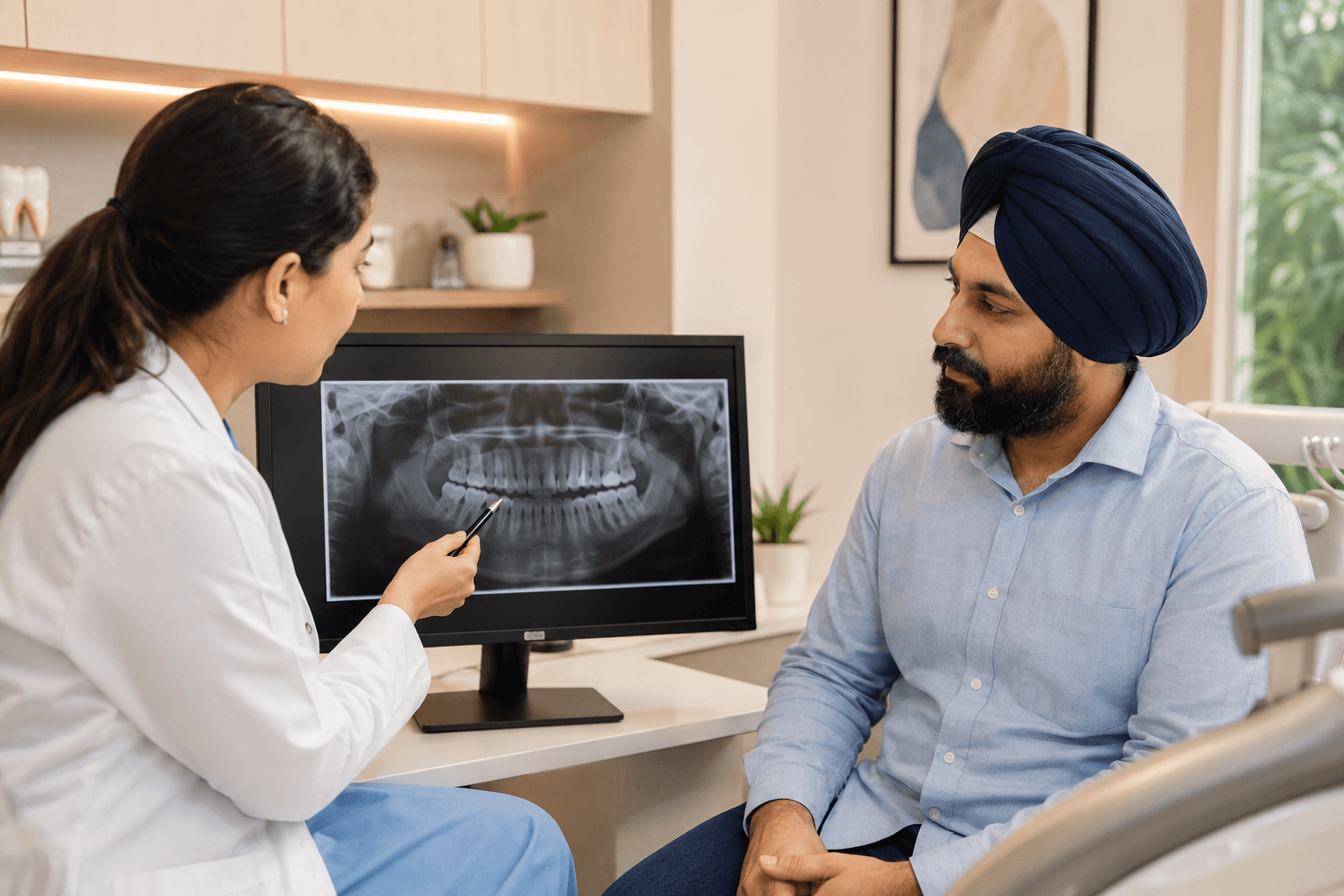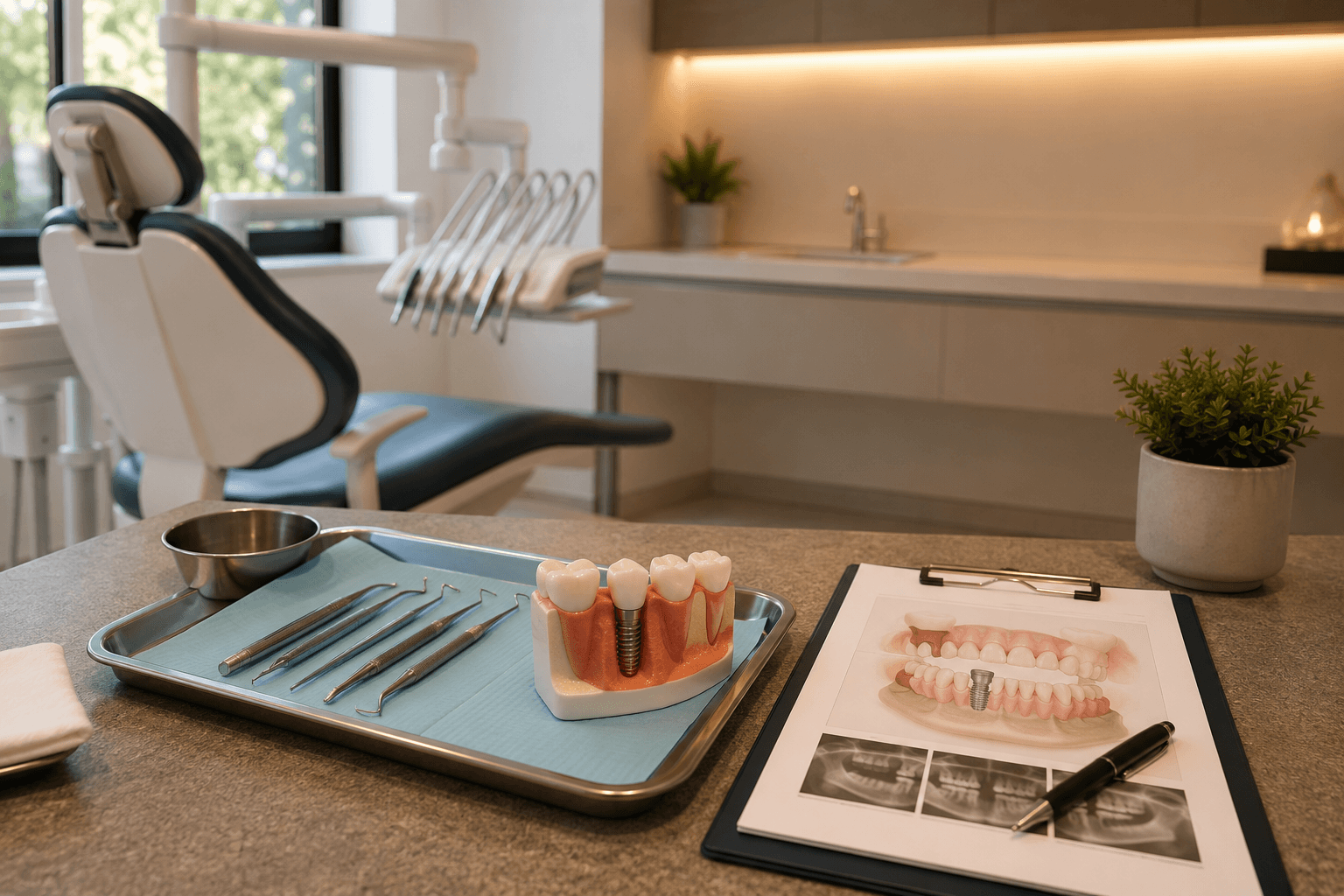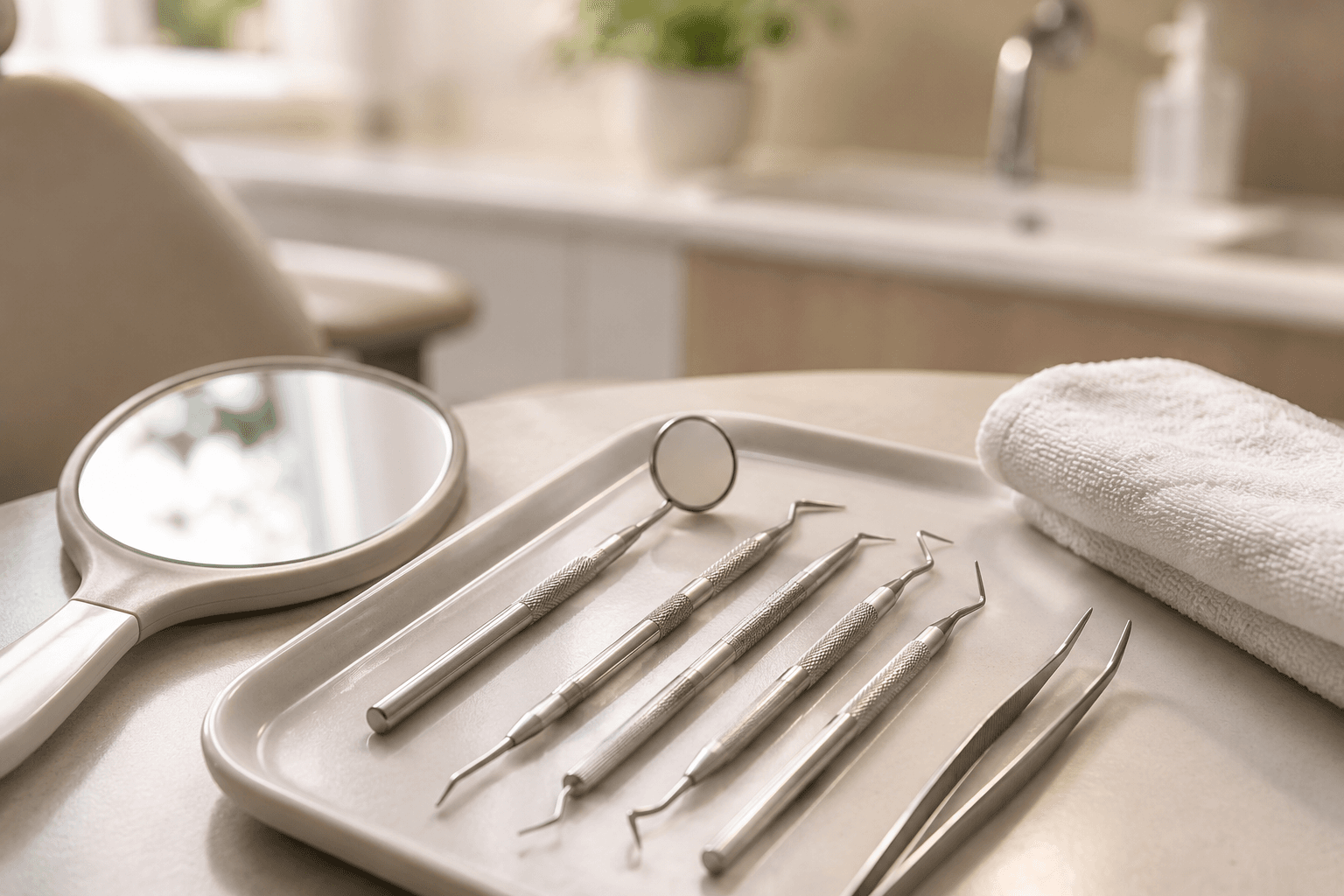
Many patients think dental cleaning is mainly for stains. It is not.
Scaling removes tartar that brushing cannot remove at home. Polishing smooths the tooth surface and removes some surface stains. Together, they help reduce gum inflammation, bleeding, bad breath, and plaque-retaining roughness.
A dental cleaning does not loosen healthy teeth. It removes buildup from around them. If a tooth feels loose after heavy tartar is removed, the looseness was usually already present because gum and bone support had been affected.
Cleaning reveals the condition. It does not create it.
What scaling means
Scaling is the removal of plaque and tartar from the teeth, especially near and under the gumline.
Plaque is soft and can be removed by good brushing and interdental cleaning. Tartar is hardened plaque. Once it forms, a toothbrush cannot remove it properly.
Tartar often collects behind the lower front teeth, around back molars, between crowded teeth, and near areas that are missed during brushing.
What polishing means
Polishing smooths the tooth surface after cleaning and can reduce surface stains from tea, coffee, tobacco, gutka, paan masala, and food habits.
Polishing is not the same as whitening. It does not change the natural tooth colour deeply. It removes external stain and makes the tooth surface feel smoother.
For many patients, the clean feeling after scaling and polishing is less about brightness and more about reduced roughness.
Why dental cleaning matters
Tartar holds bacteria close to the gum. The gum reacts by becoming inflamed, swollen, and more likely to bleed.
If gum inflammation is ignored, it can progress into gum disease, where the support around the tooth is affected.
Scaling helps because it removes the hardened deposits that daily brushing cannot shift. After that, home care has a better chance of working.
What patients usually notice before cleaning
Patients may notice:
- Bleeding gums
- Bad breath
- Yellow or brown deposits near the gumline
- Roughness behind lower front teeth
- Food trapping
- Gum swelling
- Stains from tea, coffee, tobacco, or paan masala
- Teeth looking dull
- Sensitivity near the gumline
Some patients notice nothing at all. Tartar can build up quietly.
How often is scaling needed?
There is no single interval for everyone.
Some patients may need cleaning once or twice a year. Others with gum disease, diabetes, heavy tartar buildup, smoking or tobacco use, crowded teeth, braces, bridges, implants, or poor access for brushing may need more frequent care.
The right interval depends on your mouth, not on a fixed calendar rule.
If tartar returns quickly, the dentist should also look at brushing technique, interdental cleaning, and risk factors.
Will scaling make teeth sensitive?
Some patients feel temporary sensitivity after scaling, especially if tartar was covering exposed root surfaces or the gums were inflamed.
This sensitivity usually settles. The dentist may advise a soft brush, fluoride toothpaste, desensitising toothpaste, or specific care depending on the cause.
Do not avoid cleaning forever because of temporary sensitivity. Untreated gum disease is a bigger problem.
What happens during the appointment
The dentist or dental professional examines the mouth, identifies tartar and gum inflammation, and cleans the deposits from the teeth.
The appointment may include:
- Checking gums and tartar deposits
- Scaling around teeth
- Polishing selected surfaces
- Advice on brushing technique
- Interdental cleaning guidance
- Risk discussion if tobacco, gutka, paan masala, diabetes, or dry mouth is relevant
A cleaning appointment should leave the patient with better information, not only cleaner teeth.
What not to expect
Scaling is not whitening. It will not make naturally darker teeth suddenly white.
It is not a cure for advanced gum disease by itself. Some patients need deeper gum treatment and follow-up.
It is not a substitute for daily brushing. Clean teeth can collect plaque again if home care does not improve.
It is not something that should be done aggressively for appearance alone. The purpose is oral health.
What not to do
Do not scrape tartar at home with pins, metal tools, or fingernails.
Do not use harsh powders, charcoal, salt, or abrasive materials to remove stains.
Do not stop brushing because your gums bleed.
Do not keep delaying cleaning because you are afraid your teeth will become loose.
Do not assume stains from tobacco or paan masala are only cosmetic. These habits also affect gums and oral tissues.
FAQs
Does scaling loosen teeth?
No. Scaling does not loosen healthy teeth. It removes tartar. If looseness is felt after cleaning, gum and bone support may already have been affected.
Is scaling painful?
Many patients tolerate routine scaling well. If gums are inflamed or teeth are sensitive, there may be discomfort. Tell the dentist so the appointment can be managed gently.
How often should I get scaling done?
It depends on tartar buildup, gum health, diabetes, tobacco habits, implants, braces, and brushing quality. Some need it once or twice a year. Others need closer maintenance.
Does polishing whiten teeth?
Polishing can remove surface stains and make teeth look cleaner. It is not the same as teeth whitening and does not change internal tooth colour.
Why do gums bleed more during cleaning?
Inflamed gums bleed easily when touched. Cleaning removes the deposits causing inflammation, which helps gums improve over time.
Can scaling help bad breath?
It can help when bad breath is caused by plaque, tartar, and gum inflammation. Other causes may also need assessment.
Should smokers or gutka users clean more often?
They may need closer monitoring because tobacco, gutka, and paan masala can worsen gum health, stain teeth, and affect healing.
Scaling and polishing are not cosmetic extras. They are part of gum care.
A clean mouth is easier to maintain, easier to examine, and less likely to hide early problems. The aim is not to polish the teeth into perfection. The aim is to remove what does not belong there.
At Dr Nanda's Dental Clinic in Mohali, cleaning is explained in plain terms so patients understand what is being removed and why. If your gums bleed, teeth feel rough, or stains keep returning, call or WhatsApp the clinic for a cleaning assessment.