Many patients imagine implant day as a large, frightening surgery. In most planned cases, it is more orderly than that.
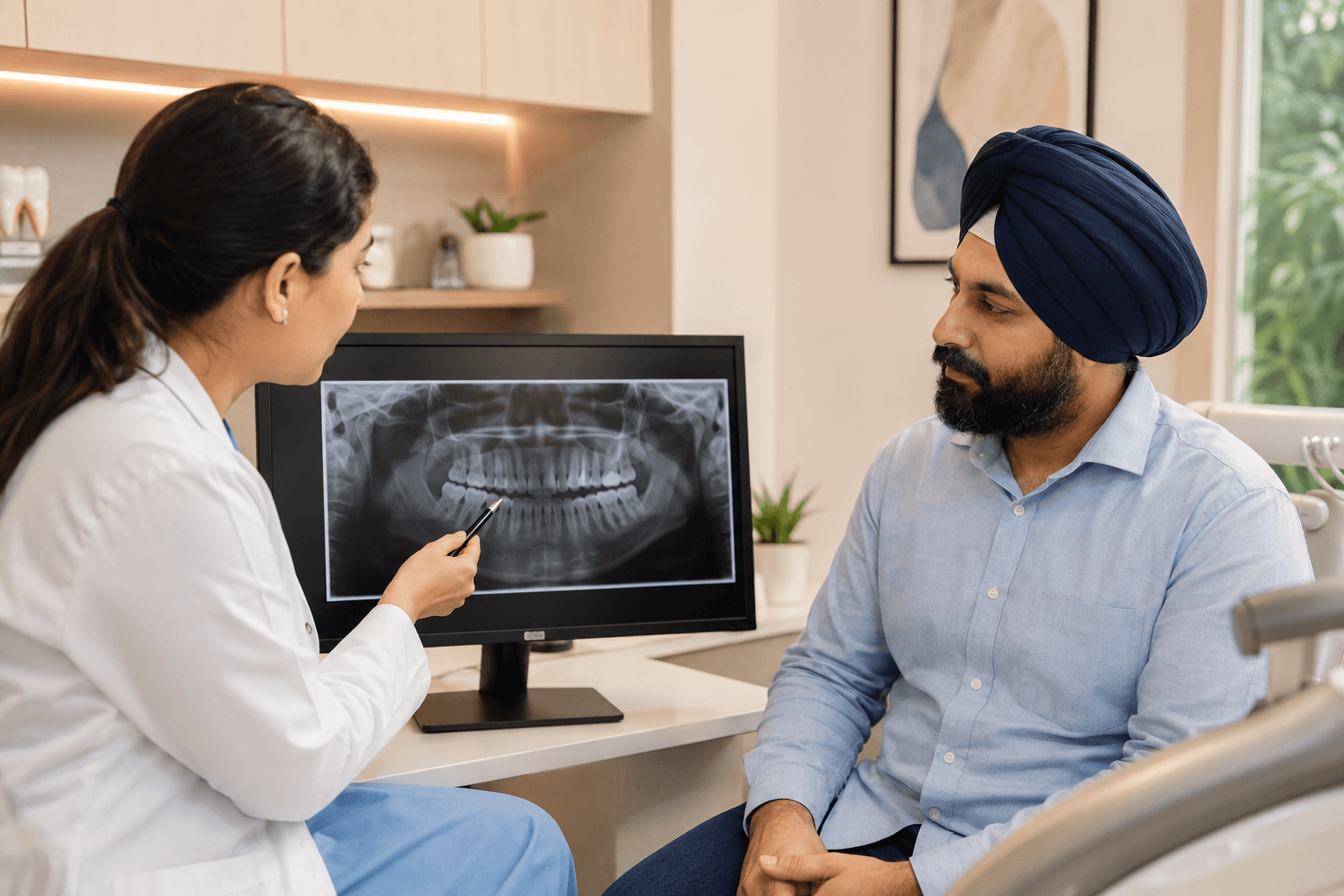
A dental implant appointment is built around preparation. By the time the patient sits in the chair, the dentist should already have assessed the missing tooth area, bone, gums, medical history, bite, X-rays or scans, and the treatment sequence.
On the day itself, the area is numbed, the implant is placed into the bone, the site is closed or protected, and clear aftercare instructions are given. The implant is not rushed into service. It needs time to heal and integrate before the final tooth is usually attached.
The unknown is often more stressful than the appointment.
What a dental implant is
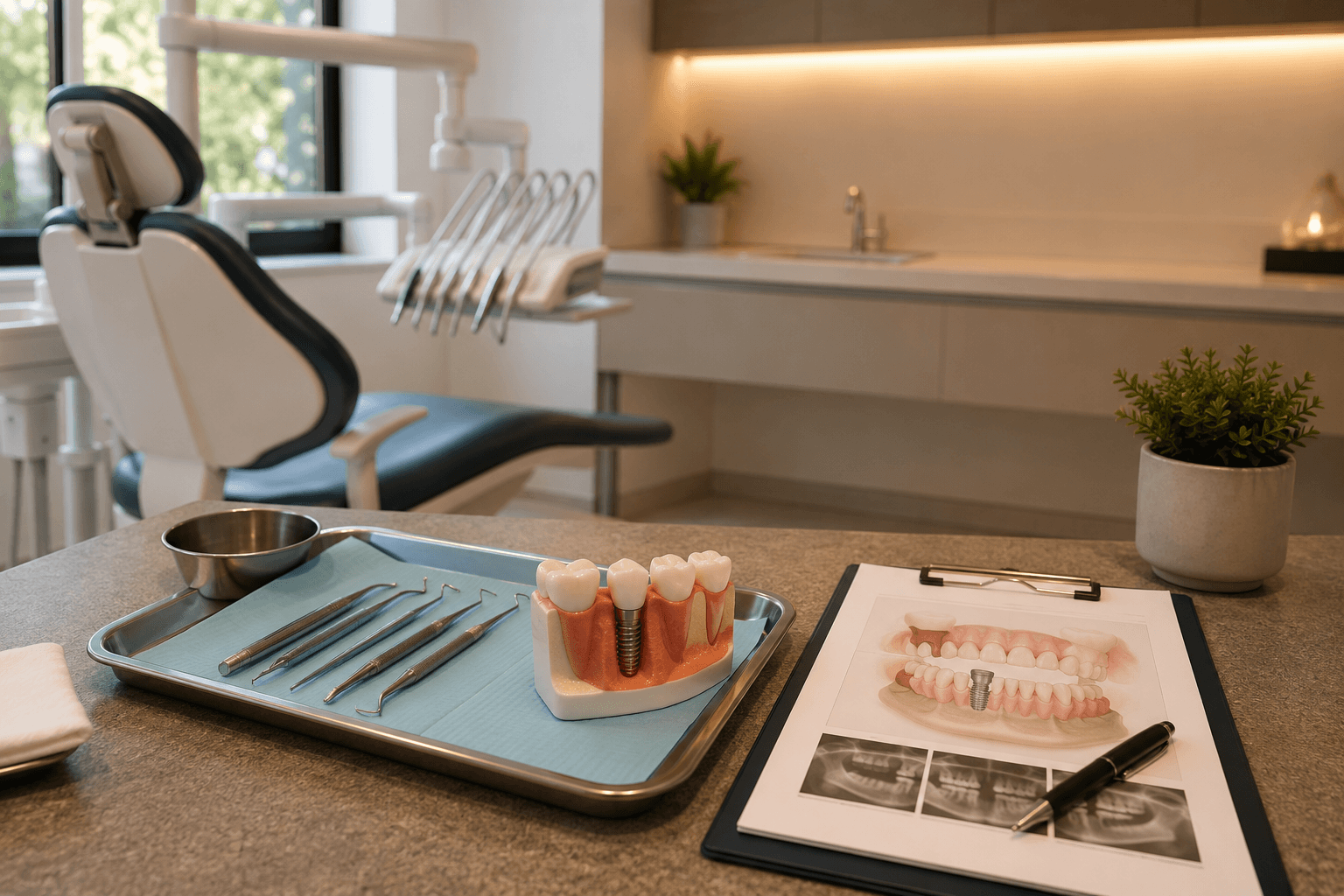
A dental implant is a small fixture placed in the jawbone to act as an artificial root. After healing, it can support a crown, bridge, or denture.
Patients often think the implant is the visible tooth. Strictly speaking, the implant is the part inside the bone. The visible tooth comes later as the restoration.
This distinction matters because implant treatment is not only about placing a screw. It is about creating a stable foundation and then restoring it in a way that works with the bite and gums.
Before implant day
Implant day should not begin with guesswork.
Before the procedure, the dentist usually checks:
- The missing tooth or failing tooth area
- Bone height and width
- Gum condition
- Medical history
- Diabetes control, if relevant
- Smoking, tobacco, gutka, or paan masala use
- Medicines and allergies
- Bite forces and grinding
- X-rays or scans
- Whether bone grafting or staging may be needed
For NRI patients visiting Mohali during a fixed India trip, this planning is especially important. Some decisions can be prepared before travel, but the mouth still has to be examined in person.
What happens when you arrive
The appointment usually begins with a final check of the plan. The dentist confirms the tooth area, medical updates, medicines, consent, and any last questions.
The mouth is cleaned and prepared. Local anaesthesia is given to numb the area. The aim is for the patient to be comfortable while the dentist works carefully.
The details vary by case, but the general sequence is:
- Numbing the area
- Preparing the implant site
- Placing the implant in the planned position
- Checking stability and position
- Closing or protecting the site
- Giving aftercare instructions
- Planning the next follow-up
Some patients need stitches. Some need a temporary tooth solution. Some leave with the implant under the gum while it heals. The plan depends on the case.
Will the tooth be placed the same day?
Sometimes a temporary tooth can be provided quickly, especially in visible areas. In many cases, the final crown is placed only after healing.
Immediate-looking results and immediate loading are not the same thing. A temporary tooth may be for appearance and careful use. It may not mean the implant is ready for full chewing force.
The dentist decides based on bone quality, implant stability, bite, gum condition, and the risk of overloading the implant too early.
Patience protects the result.
What patients usually feel afterward
After the anaesthesia wears off, some soreness, swelling, or tightness can occur. The amount varies by patient and by procedure.
Patients may be advised to:
- Avoid chewing directly on the implant site
- Keep the area clean as instructed
- Avoid disturbing the wound
- Follow medicine instructions exactly if prescribed
- Avoid smoking and tobacco
- Avoid hard, hot, or spicy foods for the initial period if advised
- Return for follow-up as planned
If stitches are placed, the dentist will tell you when they need a follow-up or removal.
When to call the dentist after implant placement
Call the clinic if you notice:
- Increasing swelling after the expected early period
- Bleeding that does not settle with pressure
- Severe pain that is not improving
- Fever or feeling unwell
- A bad taste or pus
- The temporary tooth feeling loose
- Numbness that does not settle as expected
- Any concern that feels unusual
Aftercare is part of implant treatment. A patient should not feel they have to guess at home.
What happens next
The implant needs time to heal in the bone. This process is often called integration. The timing varies depending on the site, bone quality, whether grafting was needed, and the dentist's plan.
Once the implant is ready, the dentist takes measurements or impressions for the final tooth. The crown, bridge, or denture connection is then made and adjusted to the bite.
The final result is not only judged by whether it looks good on day one. It is judged by whether it can be cleaned, maintained, and used safely.
What not to do
Do not chew hard food on the implant site before the dentist allows it.
Do not smoke or use gutka, paan masala, or tobacco around healing implant treatment.
Do not miss follow-up appointments because the site feels fine.
Do not compare your healing timeline with someone else's. Implant planning is individual.
Do not assume the final tooth must be placed immediately. Sometimes staged treatment is the safer plan.
FAQs
Is implant day painful?
The area is numbed with local anaesthesia. Patients may feel pressure or vibration, but the aim is comfort during the procedure. Soreness afterward varies and is managed with the dentist's instructions.
How long does implant placement take?
It depends on the number of implants, site complexity, and whether additional procedures are needed. The appointment includes preparation, placement, and aftercare explanation.
Can I travel after implant placement?
Travel depends on the procedure and the dentist's advice. NRI patients should not plan implant treatment so tightly that there is no time for a follow-up before flying out.
Will I get a tooth on the same day?
Sometimes a temporary tooth is possible. The final tooth is often made after healing. The decision depends on implant stability, bone, gums, and bite.
Why do I need follow-up after implant surgery?
The dentist needs to check healing, the gum, stitches if present, and whether the site is settling as planned.
Can smokers get implants?
Smoking and tobacco can affect healing and long-term implant health. A dentist will assess risk and may advise stopping before and after treatment.
Is an implant suitable for every missing tooth?
No. Suitability depends on bone, gums, medical history, habits, bite, space, and patient expectations.
Implant day is only one part of implant treatment.
The success of the appointment depends on what happens before it: diagnosis, planning, timing, and honest discussion. It also depends on what happens after it: healing, follow-up, restoration, and maintenance.
At Dr Nanda's Dental Clinic in Mohali, implant treatment is explained step by step so the patient understands what is being done and why. If you are considering an implant, especially around a planned visit to India, call or WhatsApp the clinic to begin with assessment and planning.