Toothpaste is one of the most marketed products in oral care. Every tube seems to promise something: whitening, freshness, gum care, sensitivity relief, enamel repair, herbal protection, or complete mouth health.
Some toothpaste claims are useful. Some are exaggerated. Some distract from the basics.
A good toothpaste supports brushing. It helps remove plaque, delivers fluoride where appropriate, freshens the mouth, and may help with sensitivity or gum care in selected cases. But toothpaste cannot remove tartar, cure deep decay, seal a crack, reverse advanced gum disease, or replace a dental examination.
The brush, the technique, and the diagnosis still matter.
The main job of toothpaste
The main job of toothpaste is to make brushing more effective and protective.
For most patients, fluoride toothpaste is the standard choice because fluoride helps protect enamel against acid attack and tooth decay. Toothpaste also helps remove plaque from tooth surfaces when used with correct brushing.
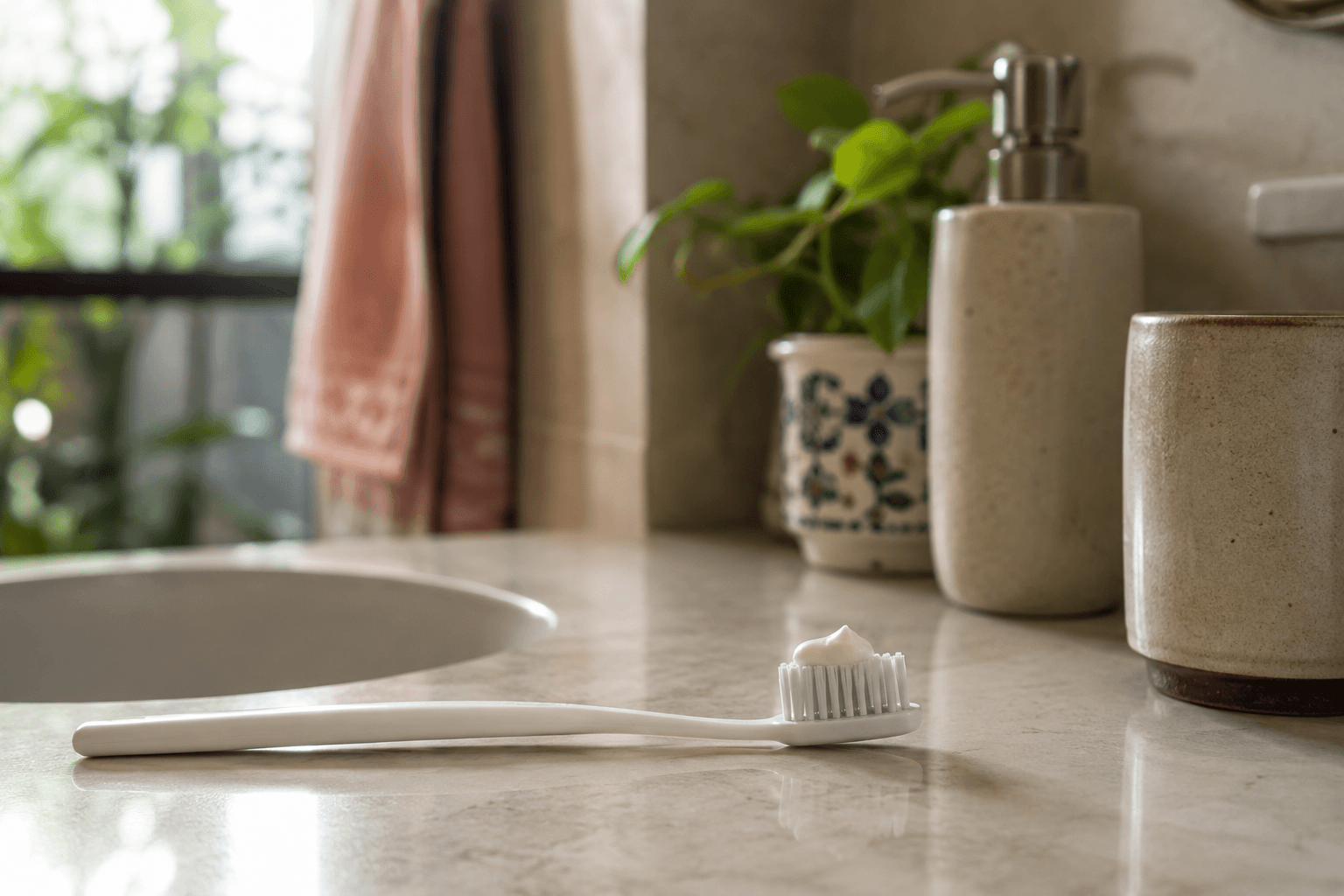
The amount does not need to be excessive. More foam does not mean more cleaning. A pea-sized amount is usually enough for adults.
For children, the amount and fluoride strength should follow age-appropriate dental guidance.
What fluoride does
Fluoride helps strengthen enamel and makes it more resistant to acid produced by bacteria after eating and drinking.
It is especially useful for patients who have cavities, frequent snacking, dry mouth, braces, gum recession, or a history of decay.
Some patients worry about fluoride because they hear mixed messages online. The practical point is simple: used correctly, fluoride toothpaste is one of the most useful everyday tools for preventing tooth decay.
If a child is involved, ask the dentist about the right amount for that child's age and risk.
What sensitivity toothpaste can do
Sensitivity toothpaste can help some patients whose sensitivity comes from exposed dentine.
It works best when used regularly, not changed every few days. Some patients are advised to brush with it twice daily and avoid aggressive rinsing immediately after brushing. In selected cases, a small amount may be applied to a sensitive area as advised by the dentist.
But sensitivity toothpaste is not a diagnosis.
It will not fix a cavity. It will not seal a cracked tooth. It will not treat a nerve infection. If sensitivity is only in one tooth, lingers after cold or hot drinks, hurts on biting, or is worsening, see a dentist.
What whitening toothpaste can and cannot do
Whitening toothpaste usually works by removing surface stains. It may help with stains from tea, coffee, tobacco, or food, depending on the product and the tooth surface.
It cannot change the natural internal colour of teeth in the way professional whitening may. It cannot whiten crowns, veneers, fillings, or dentures. It also cannot solve stains caused by decay, old fillings, trauma, or enamel defects.
Some whitening pastes are abrasive. Used aggressively, they may contribute to sensitivity and enamel wear.
Natural-looking teeth are not always the brightest teeth. A healthy shade should suit the face, age, and mouth.
What about herbal, charcoal, and tooth powders?
Many patients in North India have used tooth powders, salt, charcoal, clove, or herbal pastes at some point. Some products feel strong and leave the mouth feeling very clean.
The feeling is not the same as safety.
Abrasive powders and charcoal products can wear enamel and irritate gums, especially when used with hard brushing. Salt and harsh powders can scratch or dry the mouth. Clove may temporarily distract from pain but does not treat the cause.
Herbal toothpaste is not automatically harmful, but it should still be judged by the basics: does it contain fluoride if you need decay protection, is it gentle, and is it being used with correct brushing?
What toothpaste cannot do
Toothpaste cannot:
- Remove tartar once it has hardened
- Fill a cavity
- Cure a tooth infection
- Fix a broken tooth
- Tighten loose teeth
- Replace scaling
- Make gum disease disappear on its own
- Whiten crowns or veneers
- Protect teeth if brushing technique is poor
This is not a criticism of toothpaste. It is a reminder that toothpaste is a support, not a treatment plan.
When it can wait
If your mouth feels comfortable, your gums are not bleeding, and you have no toothache or sensitivity, toothpaste questions can usually wait until your next routine visit.
Bring the tube if you are unsure. A dentist can tell you whether it suits your teeth, gums, age, sensitivity, and decay risk.
When to call a dentist
Call a dentist if:
- Sensitivity continues despite toothpaste
- One tooth reacts strongly to cold or hot drinks
- Gums bleed regularly
- Bad breath returns quickly
- A tooth has pain, swelling, or a visible cavity
- You see tartar deposits despite brushing
- Toothpaste burns the mouth or causes ulcers
- You are using abrasive powders or charcoal and notice sensitivity
- A child is swallowing toothpaste frequently
A product change may help some issues. Persistent symptoms need examination.
What the dentist may check
The dentist may check:
- Decay risk
- Gum health
- Enamel wear
- Gum recession
- Sensitivity pattern
- Brushing technique
- Tartar buildup
- Existing crowns, veneers, fillings, or implants
- Whether a child needs different toothpaste guidance
The right toothpaste depends on the mouth in front of the dentist.
What not to do
Do not choose toothpaste only because it foams more.
Do not use harsh powders to make teeth look cleaner.
Do not use whitening toothpaste aggressively to chase a brighter shade.
Do not assume sensitivity toothpaste means the tooth is safe.
Do not use adult toothpaste amounts for young children without guidance.
Do not keep changing products while ignoring bleeding gums, pain, or tartar.
FAQs
Which toothpaste is best?
There is no single best toothpaste for everyone. Most patients do well with a fluoride toothpaste, but sensitivity, gum health, age, and dental work may change the recommendation.
Does whitening toothpaste really whiten teeth?
It may reduce surface stains, but it cannot change the deeper natural shade of teeth like professional whitening can. It also cannot whiten crowns or veneers.
Is charcoal toothpaste safe?
Many charcoal products are abrasive. They may wear enamel or increase sensitivity, especially with forceful brushing. Ask a dentist before using them regularly.
Should I rinse after brushing?
Many patients are advised to spit out excess foam and avoid vigorous rinsing immediately after brushing so fluoride can stay on the teeth longer.
Can toothpaste remove tartar?
No. Toothpaste can help reduce plaque before it hardens, but tartar needs professional scaling.
Can sensitivity toothpaste replace a dental visit?
No. It may help mild general sensitivity. One-tooth, lingering, biting, or worsening pain should be checked.
How much toothpaste should a child use?
It depends on the child's age and decay risk. Ask the dentist for age-appropriate fluoride and quantity guidance.
Toothpaste is useful when it is chosen sensibly and used with good technique.
It protects. It supports. It may help with sensitivity or stains in the right case. But it does not replace diagnosis, cleaning, or treatment when a real problem is present.
At Dr Nanda's Dental Clinic in Mohali, toothpaste advice is kept practical. If you are unsure whether your toothpaste suits your teeth, bring it to your appointment. A small correction in the bathroom can prevent a much larger problem in the chair.