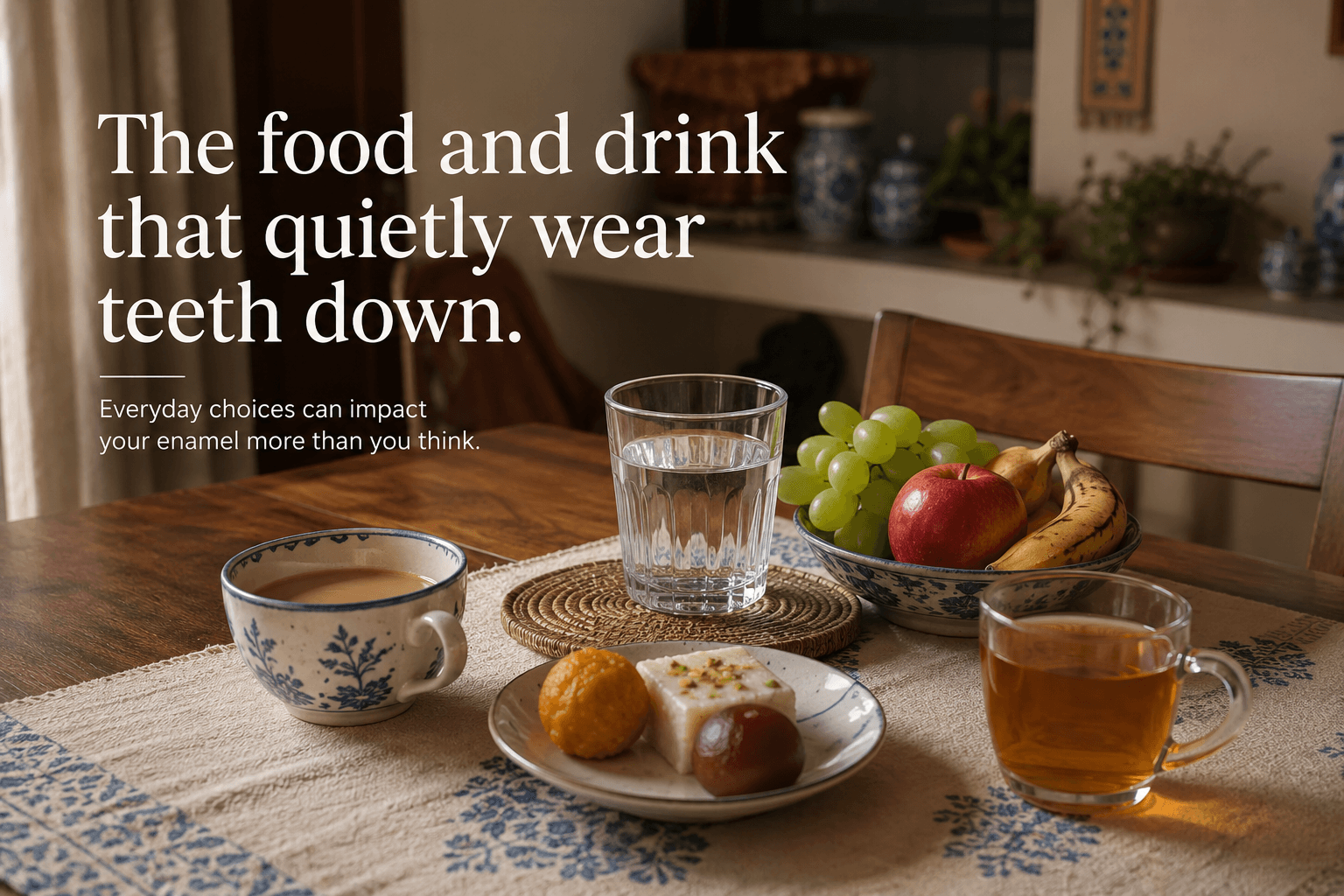
Most people think sugar is the only food-related problem for teeth. Sugar matters, but it is not the whole story.
Teeth can also be worn down quietly by acid, frequent snacking, fizzy drinks, lemon water, sports drinks, reflux, sticky foods, and slow sipping habits. The damage may happen gradually. The first sign may be sensitivity, dull edges, yellowing near the biting surfaces, or teeth that look shorter than before.
This is not an article about giving up every favourite food. It is about understanding frequency, timing, and small habits that protect enamel.
In dentistry, how often you expose teeth to sugar and acid often matters as much as what you eat.
What wears teeth down
The outer layer of the tooth is enamel. It is strong, but it is not indestructible.
Enamel can be affected by two everyday processes:
- Decay, where bacteria use sugars and produce acid that attacks the tooth
- Erosion, where acids from foods, drinks, or stomach reflux soften and wear the surface directly
Wear can also come from grinding, hard brushing, or biting habits. Food and drink are only one part of the picture, but they are an important part because they happen every day.
Sugar is not only about amount
A large sweet eaten once with a meal may be less harmful than small sugary snacks eaten repeatedly through the day.
Each sugar exposure gives bacteria another chance to produce acid. If teeth are exposed again and again, the mouth has less time to recover.
This is why frequent mithai, biscuits with tea, sweetened tea, sticky snacks, toffees, and sweet drinks can quietly increase risk even when the total quantity does not seem large.
Frequency is the hidden problem.
Acidic drinks and lemon water
Lemon water, fizzy drinks, packaged juices, sports drinks, vinegar-based drinks, and some fruit drinks can be acidic.
Acid can soften enamel. If the habit is frequent, or if the drink is sipped slowly over a long time, teeth receive repeated acid exposure.
Lemon water is a good example. Many people drink it for digestion, weight loss routines, or acidity management. The issue is not one glass. The issue is slow sipping, swishing it around the mouth, or brushing immediately afterward when enamel is softened.
A safer routine is simple:
- Do not sip acidic drinks for long periods
- Do not swish them around teeth
- Rinse with plain water afterward
- Avoid brushing immediately after acidic exposure
- Use a soft brush and fluoride toothpaste
Tea, coffee, and teeth
Tea and coffee are part of daily life in North India. They are not automatically a dental problem.
The concern is usually sugar, frequency, and staining. Sweetened tea taken many times a day exposes teeth repeatedly to sugar. Tea and coffee can also stain teeth, especially when combined with tobacco or poor plaque control.
If you drink tea often, keep the sugar low, avoid constant sipping, and rinse with water afterward when practical.
The goal is not to remove tea from life. It is to stop tea from becoming a constant sugar bath for the teeth.
Sticky foods and school snacks
Sticky foods cling to teeth longer. Toffees, sticky sweets, some dried fruits, sweet biscuits, and certain packaged snacks can stay in grooves and between teeth.
For children, the tiffin pattern matters. A sweet or sticky snack eaten quickly and followed by water is different from grazing on sugary food throughout the school day.
Back teeth have pits and grooves where food can sit. This is one reason sealants may be advised for some children.
Reflux and acidity
Stomach acid can affect teeth too.
Patients with frequent acidity, reflux, vomiting, or sour burps may expose teeth to acid from inside the body. This can wear enamel, especially on inner tooth surfaces, and may cause sensitivity.
A dentist may notice erosion patterns before the patient connects them to reflux.
If acidity or reflux is frequent, dental protection and medical care both matter. The teeth should be protected, but the underlying reflux should not be ignored.
What patients usually notice
Patients may notice:
- Sensitivity to cold drinks
- Teeth looking flatter or shorter
- Yellowing as enamel thins
- Rough or transparent edges
- Small chips on biting edges
- Food trapping in worn grooves
- Stains from tea, coffee, or tobacco
- Cavities between teeth or in grooves
- Pain with sweets
Wear and decay often begin quietly. By the time there is pain, the problem may be larger.
When it can wait
If there is no pain, no sensitivity, no visible cavity, and you simply want to improve habits, ask at your next routine check.
A dentist can look for early signs of enamel wear, decay risk, and gum recession. Early changes are often easier to manage than advanced ones.
When to call a dentist
Call a dentist if:
- Sensitivity is increasing
- Teeth hurt with sweets or cold drinks
- You see pits, holes, or dark areas
- Teeth look shorter, flatter, or more yellow
- Edges are chipping
- You have frequent reflux or vomiting
- Food gets stuck in the same grooves
- A child complains while eating sweets or cold foods
Diet advice is most useful when it is connected to what is actually happening in the mouth.
What the dentist may check
The dentist may check:
- Early decay
- Enamel erosion
- Gum recession
- Tooth wear from grinding
- Acid wear patterns
- Food traps
- Existing fillings and grooves
- Child cavity risk
- Brushing technique and toothpaste use
- Whether fluoride or sealants are appropriate
The aim is not to shame food choices. It is to reduce risk in a way the patient can actually live with.
What not to do
Do not brush immediately after lemon water, fizzy drinks, vomiting, or reflux. Rinse with water first and allow the mouth to settle.
Do not sip sugary or acidic drinks slowly over hours.
Do not assume fruit juices are harmless because they sound healthy.
Do not use harsh whitening pastes to remove tea stains if sensitivity is present.
Do not give children sticky sweets as frequent between-meal snacks and then rely only on night brushing.
Do not ignore reflux-related tooth wear.
FAQs
Are sweets the only food problem for teeth?
No. Sweets matter, but acidity, frequency of snacking, sticky foods, fizzy drinks, lemon water, and reflux can also affect teeth.
Is lemon water bad for teeth?
Frequent lemon water can contribute to enamel erosion, especially if sipped slowly or swished. Rinse with plain water afterward and avoid brushing immediately.
Does tea damage teeth?
Tea can stain teeth, and sweetened tea taken often can increase decay risk. Tea itself is not the only issue. Sugar and frequency matter.
Are fizzy drinks harmful even if they are sugar-free?
They can still be acidic. Sugar-free does not always mean tooth-friendly.
Can acidity or reflux affect my teeth?
Yes. Reflux can expose teeth to stomach acid and contribute to enamel wear and sensitivity.
What should children drink most often?
Plain water is the safest routine drink for teeth. Milk can be part of the diet, but sweet drinks and juices should not be constant sipping habits.
Can worn enamel grow back?
Lost enamel does not grow back. Early changes can sometimes be managed and protected, but prevention is much better than repair.
Food and drink do not have to be treated with fear. A sensible life includes tea, festive sweets, family meals, and the occasional dessert.
The mouth does not need perfection. It needs balance, timing, water, fluoride, and enough quiet time between exposures.
At Dr Nanda's Dental Clinic in Mohali, food and drink advice is given practically, not as a lecture. If your teeth are becoming sensitive, worn, stained, or prone to cavities, call or WhatsApp the clinic. Often, the first treatment is a better routine.