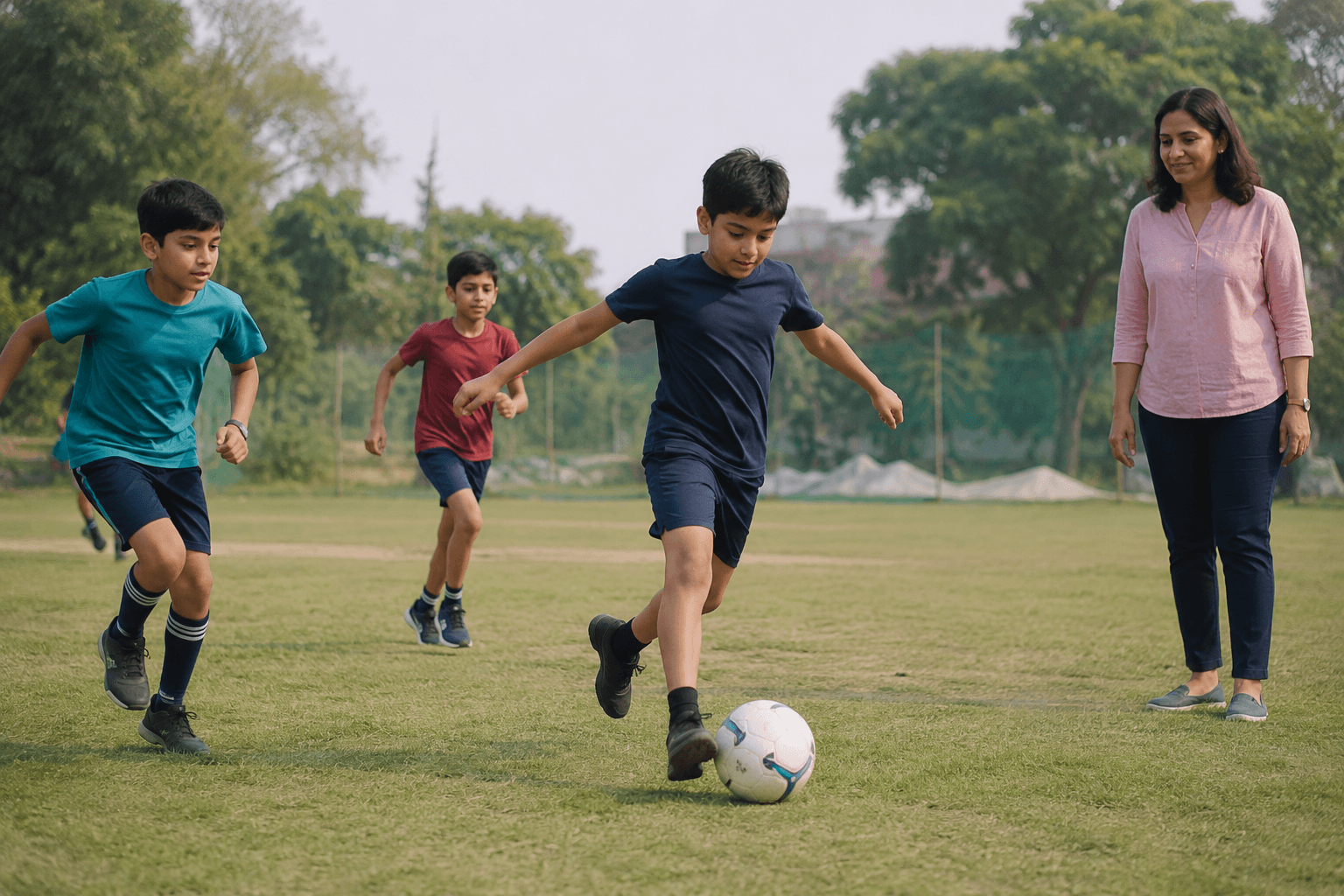
Children fall. They run, cycle, play cricket, football, basketball, and school sports. They collide in playgrounds and slip at home. Most injuries are small. Some involve the teeth.
A chipped, loose, displaced, or knocked-out tooth needs the right response. The first few minutes can affect the outcome, especially if an adult tooth has come out completely.
The best plan has two parts: reduce the risk before sport, and know what to do when an accident happens.
Parents do not need to panic. They do need to act in the right order.
Why children's teeth get injured
Dental injuries in children commonly happen during:
- School sports
- Cycling or skating
- Cricket, football, basketball, or hockey
- Playground falls
- Running indoors
- Falls from beds or stairs
- Rough play with siblings
- Car or scooter accidents
Front teeth are most often affected because they sit at the front of the mouth and take the impact first.
A child with protruding front teeth may have a higher risk of injury, especially during sport or falls.
Milk teeth and adult teeth are handled differently
This is very important.
A knocked-out adult tooth may sometimes be placed back by a dentist if handled quickly and correctly. A knocked-out milk tooth is usually not put back because it may damage the developing adult tooth underneath.
Parents should not try to reinsert a milk tooth at home.
If you are not sure whether the tooth is milk or adult, call a dentist immediately and describe the child's age and tooth position.
Mouthguards and sports protection
For children who play contact or collision sports, a mouthguard may reduce the risk of dental injury.
A mouthguard helps cushion impact to the teeth, lips, and jaw. Store-bought options may help in some cases, but a dentist can advise whether a custom mouthguard is better, especially for older children, braces, or serious sport.
Mouthguards need to fit. A loose guard that the child keeps chewing or removing will not protect properly.
The best protection is the one the child will actually wear.
What to do after a dental injury
First, stay calm and check the child.
Check for head injury, fainting, vomiting, confusion, heavy bleeding, or facial injury. If present, seek urgent medical care.
Rinse the mouth gently with clean water.
Apply gentle pressure with clean gauze or cloth if there is bleeding.
Use a cold compress on the outside of the face for swelling.
Look for broken tooth pieces.
Call or WhatsApp a dentist with clear details and photos if possible.
If an adult tooth has come out completely, handle it by the crown, not the root. Keep it moist in milk or saliva and seek immediate dental care.
Chipped or broken teeth
A chipped tooth may be minor or serious depending on how much tooth has broken and whether the nerve is involved.
Call a dentist if:
- A piece of tooth has broken
- The tooth is painful
- The tooth is sensitive to cold
- The edge is sharp
- The tooth changed colour after injury
- The child avoids biting from that side
- There is bleeding from the gum
If you find a broken fragment, save it in milk or saliva in a clean container and bring it to the dentist.
Loose or displaced teeth
If a tooth is pushed inward, outward, sideways, or feels loose after trauma, it should be checked.
Do not keep wiggling it. Do not let the child bite hard on it to test it. Avoid chewing from that side until the dentist advises.
A displaced tooth may need repositioning, monitoring, X-rays, or referral depending on whether it is a milk tooth or adult tooth.
When it can wait
A very small chip with no pain, no looseness, no bleeding, and no swelling may be able to wait for a routine dental appointment.
Even then, it should not be ignored. A tooth injury can affect the nerve later, and a dentist may need to record a baseline.
Watch for colour change, swelling, pain, or a pimple-like gum boil in the following days or weeks.
When to call a dentist urgently
Call urgently if:
- An adult tooth is knocked out
- A tooth is loose or displaced
- There is severe pain
- There is swelling
- The child cannot bite normally
- The tooth is broken deeply
- There is bleeding that does not settle
- The injury involved the face, jaw, or head
- The child seems drowsy, confused, or unwell
For head injury signs, medical care comes first.
What the dentist may check
The dentist may check:
- Whether the tooth is milk or adult
- Tooth fracture depth
- Tooth mobility
- Position of the tooth
- Gum and lip injuries
- Bite changes
- Nerve response over time
- X-rays if needed
- Whether follow-up monitoring is required
- Whether a mouthguard is needed later
Dental trauma often needs follow-up, not only a single visit. Some teeth look fine at first and show changes later.
What not to do
Do not put a knocked-out milk tooth back into the socket.
Do not hold a knocked-out adult tooth by the root.
Do not scrub the root of a knocked-out tooth.
Do not let the tooth dry out.
Do not throw away broken fragments.
Do not ignore a tooth that changes colour after injury.
Do not delay medical care if there are head injury symptoms.
FAQs
What should I do if my child's adult tooth is knocked out?
Hold it by the crown, not the root. Keep it moist in milk or saliva and seek immediate dental care. Time matters.
Should I put a knocked-out milk tooth back?
No. A knocked-out milk tooth is usually not replanted because it may harm the developing adult tooth. Call a dentist for advice.
Is a small chip serious?
Sometimes it is minor. But a dentist should check the depth, sharpness, sensitivity, and whether the nerve may be affected.
What if the tooth turns dark after injury?
A colour change after trauma should be checked. It may mean the tooth has been affected internally.
Do children need mouthguards for sport?
Children in contact or collision sports may benefit from mouthguards. The dentist can advise based on age, sport, teeth, and braces.
Can a broken tooth fragment be reused?
Sometimes, depending on the fragment and tooth. Keep it moist in milk or saliva and bring it to the dentist.
When should I worry after a fall?
Worry if there is a loose or displaced tooth, swelling, severe pain, bleeding, bite change, head injury symptoms, or an adult tooth knocked out.
Childhood accidents cannot be prevented completely. But the response can be prepared.
Know the difference between milk and adult teeth. Save fragments. Keep knocked-out adult teeth moist. Use mouthguards for sport when appropriate. Call early when a tooth has moved, broken, or come out.
At Dr Nanda's Dental Clinic in Mohali, children's dental injuries are handled with calm urgency and careful follow-up. If your child has injured a tooth during sport, school, or play, call or WhatsApp the clinic with a clear photo and the time of injury.