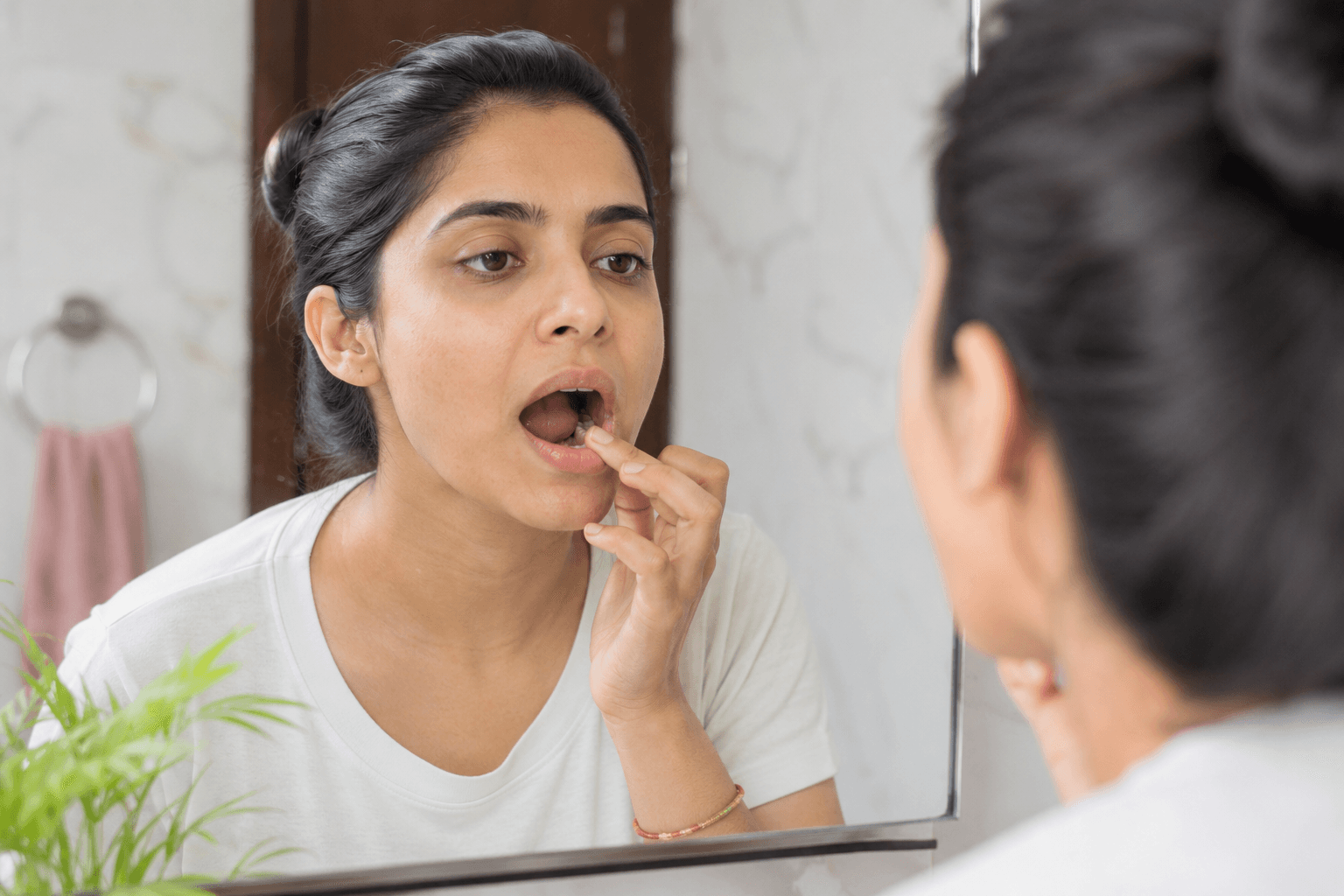
Most mouth ulcers are small, painful, and short-lived. They appear, trouble you for a few days, and then settle.
But a sore, lump, or red or white patch that has not healed after about two weeks should be checked by a dentist or doctor. This does not mean it is cancer. Most changes in the mouth are not. It does mean the mouth is asking for a closer look.
For patients in Mohali and the Chandigarh Tricity, this is especially important because many people first try home remedies, wait for the pain to become severe, or assume that a painless patch is harmless. Pain is not the only signal.
The sensible rule is simple: if something in the mouth is not healing, do not keep guessing.
What kinds of changes are worth noticing?
The mouth changes often. A sharp tooth may rub the cheek. A hot paratha or tea can burn the palate. Stress, acidity, minor injury, or a new dental appliance can cause a sore area.
Many such changes heal quickly once the irritation settles.
The changes that deserve attention are the ones that persist or behave unusually. These may include:
- An ulcer that does not heal
- A red patch
- A white patch
- A mixed red and white patch
- A lump in the cheek, tongue, lip, gum, or palate
- A rough area that keeps returning
- A sore spot under a denture
- A non-healing crack at the corner of the mouth
- A patch that bleeds, thickens, or changes shape
A dentist is not only looking for one disease. They are looking for the cause.
Why these changes happen
A mouth ulcer or patch can happen for many reasons.
Common causes include accidental biting, a sharp tooth edge, a rough filling, braces or dentures rubbing, spicy food irritation, stress, acidity, vitamin deficiency, tobacco use, gutka, paan masala, smoking, infections, immune conditions, or reactions to medicines.
Some patches are related to chronic irritation. Some are related to fungal infection. Some ulcers are recurrent and benign. Some changes need biopsy or specialist opinion.
This is why the article cannot diagnose the lesion by appearance alone. A white patch on the tongue, a red patch under the tongue, and an ulcer near a sharp tooth may all need different decisions.
Why two weeks matters
The lining of the mouth usually heals quickly. If a simple injury caused the ulcer, it should generally begin improving within days and continue healing.
When a sore, lump, or patch remains for around two weeks, especially without clear improvement, it is safer to have it examined. Some public health guidance uses three weeks as a threshold for persistent mouth ulcers. In dental practice, two weeks is a useful earlier point to stop waiting and start checking.
This is not alarmist. It is practical.
A short dental visit can often identify a simple cause, such as a sharp edge, denture sore, or traumatic bite. If the dentist is not satisfied with how it looks or behaves, further tests or referral can be arranged.
What patients usually notice
Patients may notice:
- A sore area that keeps rubbing against the teeth
- Pain while eating spicy or hot food
- A white patch that does not wipe away
- A red patch that looks raw
- A lump felt by the tongue
- A thickened area in the cheek
- Bleeding from the same spot
- A denture sore that keeps returning
- Difficulty chewing or speaking
- A patch that is painless but still present
Painless changes are easy to ignore. That is exactly why they should not be dismissed.
When it can wait briefly
It may be reasonable to watch a mouth ulcer briefly if:
- It appeared after a clear injury, such as cheek biting
- It is small and already improving
- There is no lump or thickening
- There is no spreading patch
- There is no tobacco, gutka, or paan masala habit affecting the area
- You are able to eat and drink normally
Even then, watch for improvement. If the area is not clearly healing, arrange a dental check.
When to call a dentist
Call a dentist if:
- An ulcer has not healed after about two weeks
- A white or red patch stays in the same place
- A lump does not go away
- The area bleeds easily
- A sore keeps returning at the same spot
- There is pain that does not settle
- A denture sore keeps coming back
- You use tobacco, gutka, paan masala, or smoke and notice any persistent change
- There is difficulty swallowing, speaking, or moving the tongue normally
- You feel a lump in the neck along with a mouth change
If a dentist advises referral or biopsy, it is not a verdict. It is a way of getting clarity.
What the dentist may check
The dentist may check:
- The exact site of the ulcer, lump, or patch
- Whether a tooth, filling, crown, denture, or sharp edge is irritating the area
- Whether the patch wipes away or stays fixed
- Whether the area is firm, thickened, bleeding, or tender
- The tongue, floor of mouth, cheeks, gums, palate, and lips
- Neck nodes, if needed
- Tobacco, gutka, paan masala, smoking, and alcohol history
- Medical conditions and medicines
- Whether the lesion needs monitoring, treatment, referral, or biopsy
A complete oral check is not dramatic. It is a careful look at the whole mouth.
What not to do
Do not apply strong home remedies, acids, alcohol, tobacco, or powders to the sore area.
Do not keep changing gels and medicines without knowing the cause.
Do not ignore a painless white or red patch.
Do not assume that a denture sore is harmless if it keeps returning.
Do not delay because you are afraid of what it might be. Most findings are manageable, and the serious ones are exactly the ones that should be found early.
FAQs
Why has my mouth ulcer not healed after two weeks?
It may be due to repeated irritation, a sharp tooth, a denture sore, infection, acidity, medicine-related changes, tobacco habits, or other causes. A dentist should examine it if it is not clearly healing.
Is every white patch in the mouth cancer?
No. Many white patches are not cancer. But a white patch that does not wipe away or does not settle should be checked because appearance alone is not enough.
Should I worry if the patch is painless?
A painless patch can still deserve attention. Pain is not the only sign that something needs checking.
Can gutka or paan masala cause mouth patches?
Yes. Gutka, paan masala, chewing tobacco, and smoking can irritate the mouth and are linked with serious oral health risks. Persistent changes should be examined.
Can a sharp tooth cause an ulcer?
Yes. A sharp edge, broken tooth, rough filling, or denture can repeatedly injure the same area. The dentist can identify and correct the source.
Will the dentist need to do a biopsy?
Not always. Many lesions can be explained clinically. If the dentist is unsure, or if the lesion has warning features, biopsy or specialist referral may be advised.
Can I use an ulcer gel and wait?
A gel may reduce discomfort in some cases, but it should not be used to delay examination if the ulcer is not healing.
Most mouth ulcers are not serious. But a mouth change that does not heal deserves respect.
The purpose of being checked is not to create fear. It is to replace uncertainty with a proper examination.
At Dr Nanda's Dental Clinic in Mohali, persistent ulcers, lumps, and patches are approached calmly and carefully. If something in your mouth has not healed after about two weeks, call or WhatsApp the clinic. Waiting longer rarely gives more clarity.