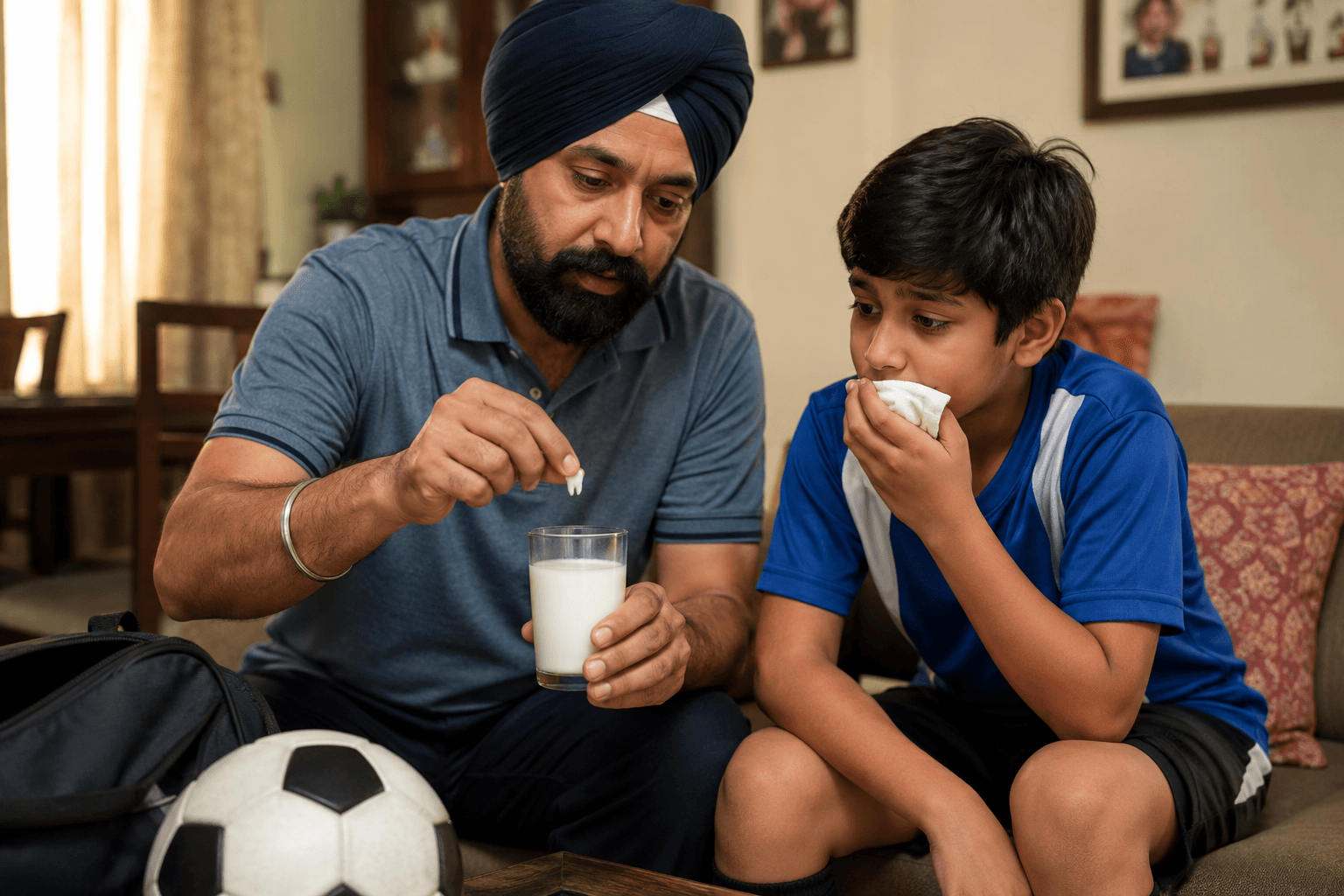
A knocked-out adult tooth is one of the few dental situations where minutes really matter.
If a permanent tooth comes out fully, hold it by the crown, avoid touching the root, rinse it gently only if dirty, and get to a dentist immediately. If it can be placed back in the socket safely, that is often best. If not, keep it moist in milk or saliva and bring it with you.
Do not store the tooth dry. Do not scrub the root. Do not wrap it in tissue. Do not wait to see if the pain settles.
This article is for a knocked-out tooth, not a small chip. A chipped tooth is important. A knocked-out adult tooth is urgent.
First, is it a milk tooth or an adult tooth?
The first question is the age of the patient and which tooth has come out.
A knocked-out adult tooth should be treated as a dental emergency. It may be possible to replant it, especially if care is quick and the tooth is handled correctly.
A knocked-out milk tooth is different. It is usually not placed back into the socket because it can damage the developing adult tooth underneath. The child still needs a dental check, but the steps are not the same.
If you are unsure whether it is a milk tooth or adult tooth, call a dentist immediately and explain the child's age and which tooth came out.
What to do in the first few minutes
Stay calm and move quickly.
- Find the tooth.
- Hold it by the white crown, not the root.
- If it is dirty, rinse it gently with milk or clean running water for a few seconds. Do not scrub.
- If it is an adult tooth and the patient is conscious and calm, try placing it back into the socket the correct way round.
- Ask the patient to bite gently on clean gauze or cloth to hold it in place.
- If you cannot place it back, keep it moist in milk or saliva in a clean container.
- Go to a dentist immediately.
If there has been a serious fall, head injury, facial injury, heavy bleeding, dizziness, vomiting, or loss of consciousness, seek emergency medical care as well.
Why milk or saliva is used
The root surface of a knocked-out adult tooth has delicate cells that matter for healing. These cells are damaged when the tooth dries out.
Milk or saliva keeps the tooth moist while you travel. Milk is often easier and safer to use than plain water for storage. If milk is not available, saliva in a clean container is better than keeping the tooth dry.
Do not put the tooth in a tissue, cloth, pocket, or dry plastic bag.
The aim is simple: keep the tooth moist and get to a dentist quickly.
What patients and parents usually notice
After a tooth is knocked out, there may be:
- Bleeding from the socket
- Pain or shock
- A missing front tooth
- Lip or gum injury
- A broken tooth fragment nearby
- Dirt on the tooth after a fall
- Other loose or displaced teeth
- Swelling of the lip or face
- Difficulty knowing whether it was a milk tooth or adult tooth
The visible missing tooth can be frightening. But the handling steps matter more than panic.
When it cannot wait
A knocked-out adult tooth should not wait.
Call a dentist and go immediately if:
- A permanent tooth has come out fully
- A tooth is loose or pushed out of position after trauma
- There is bleeding that does not settle with gentle pressure
- There is facial swelling or a deep cut
- There are multiple injured teeth
- The patient cannot bite normally after the injury
- There has been a fall, sports accident, or road injury
Even if the tooth cannot be saved, the mouth still needs assessment for bone, gum, lip, and other tooth injuries.
What the dentist may do
The dentist may:
- Check whether the tooth is permanent or milk
- Look at the socket and surrounding gum
- Examine other teeth for cracks, looseness, or displacement
- Take X-rays, if needed
- Clean the area carefully
- Replant the tooth if appropriate
- Stabilise the tooth with a splint
- Discuss follow-up care and possible root canal treatment for an adult tooth
- Check tetanus and medical history if the injury involved dirt or a fall
A replanted tooth needs follow-up. The first visit is only the beginning of care.
What not to do
Do not touch or scrub the root.
Do not let the tooth dry out.
Do not store the tooth in plain water for a long time.
Do not wrap it in tissue.
Do not place a knocked-out milk tooth back into the socket.
Do not delay because the bleeding has stopped.
Do not give the child food from the injured area before the dentist has checked the mouth.
What this means for families
Dental trauma often happens during school, sport, play, weddings, travel, or falls at home. Families may be surrounded by people giving advice, but the correct first steps are simple.
For an adult tooth: crown, not root. Back in socket if safe. Milk or saliva if not. Dentist immediately.
For a milk tooth: do not reinsert. Keep the child calm. Call a dentist.
Knowing this before an accident is far better than searching for it during one.
FAQs
What should I do if an adult tooth is knocked out?
Hold it by the crown, avoid touching the root, place it back in the socket if safe, or store it in milk or saliva. Go to a dentist immediately.
Should I put a knocked-out tooth in milk?
Yes, if the tooth cannot be placed back in the socket. Milk helps keep the tooth moist while you reach the dentist.
Can I put the tooth in water?
A quick gentle rinse may be needed if the tooth is dirty, but long storage in water is not ideal. Milk or saliva is better than keeping it dry.
Should I reinsert a knocked-out milk tooth?
No. A knocked-out milk tooth is usually not put back because it can harm the adult tooth developing underneath. The child should still see a dentist.
How fast do we need to reach the dentist?
As fast as possible. The earlier an adult tooth is managed, the better the chance of saving it.
What if the tooth broke but did not come out fully?
That is a different situation. Save any broken fragment, avoid chewing from that side, and call a dentist for advice.
Can a replanted tooth be completely normal again?
Sometimes a replanted tooth can be retained, but it needs careful follow-up. The outcome depends on the injury, time out of the mouth, handling, and healing.
A knocked-out tooth is frightening, but the right steps are clear.
Handle the tooth gently. Keep it moist. Do not waste time. Call a dentist and go.
At Dr Nanda's Dental Clinic in Mohali, dental injuries are assessed calmly, with attention to both the tooth and the patient. If a tooth has come out after an accident, call or WhatsApp immediately while you are on your way.