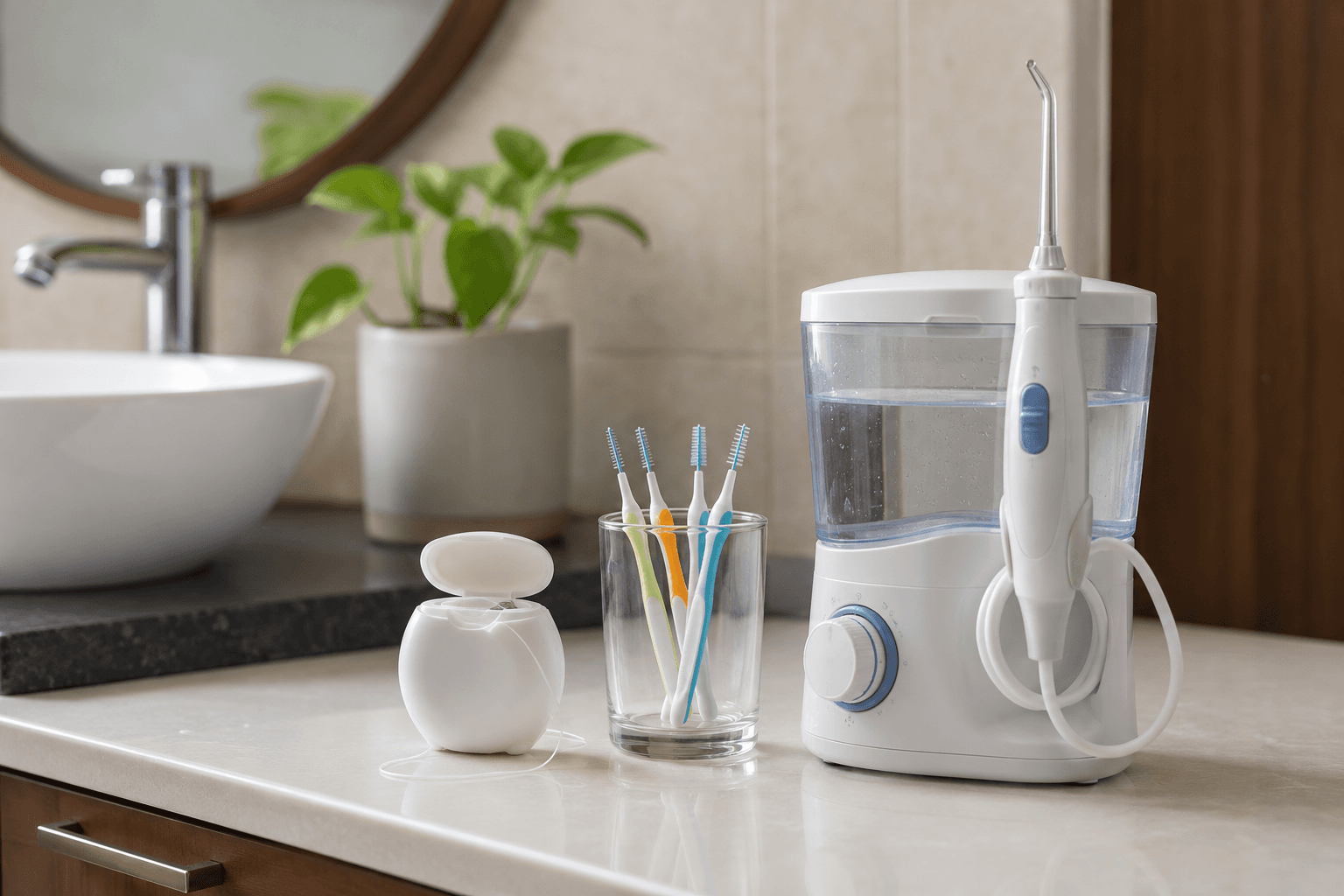
Most people brush. Far fewer clean properly between their teeth.
That is the gap where plaque, food, and gum inflammation often begin. A toothbrush is very useful, but its bristles do not reliably clean the tight spaces between teeth. For many patients, bleeding gums, food trapping, bad breath, and cavities between teeth are not because they never brush. They are because brushing is doing only part of the work.
Floss, interdental brushes, and water flossers can all help, but they do not suit every mouth in the same way. The best tool is the one that cleans your spaces safely and consistently.
Why brushing is not enough between teeth
Teeth touch each other. The spaces between them are narrow, curved, and easy to miss.
Plaque collects there just as it collects on visible tooth surfaces. If it stays, it can irritate gums, harden into tartar, and contribute to decay between teeth. These cavities are often noticed late because they are not easy to see in the mirror.
Cleaning between teeth is not an extra cosmetic habit. It is part of oral hygiene.
What floss does well
Floss is useful for tight spaces where an interdental brush cannot enter comfortably.
It can slide between teeth, curve gently around the tooth, and remove plaque from the side surface near the gumline. It is especially useful where the teeth contact closely and the gums are healthy enough for floss to pass without force.
The technique matters. Floss should not be snapped hard into the gum. It should slide gently, hug one tooth, move up and down, then hug the neighbouring tooth.
If floss always cuts the gum, shreds, gets stuck, or smells bad from one spot, ask the dentist to check that area.
What interdental brushes do well
Interdental brushes are small brushes designed to clean the spaces between teeth.
They are often useful when there are slightly larger spaces, gum recession, bridges, implants, braces, or areas where food gets trapped. Many adults find them easier than floss once the correct size is chosen.
Size matters. A brush that is too small may not clean well. A brush that is too large can injure the gum or bend. It should fit with gentle resistance, not force.
For many patients with gum problems, interdental brushes are more practical than floss.
What water flossers do well
Water flossers use a stream of water to help clean around teeth and gums.
They can be useful for patients with braces, bridges, implants, difficulty using floss, or areas that trap food. They may also help patients who are more likely to keep using a device than thread floss every day.
A water flosser is not magic. It should not become an excuse to stop brushing. In some mouths, it may work best alongside floss or interdental brushes rather than replacing them completely.
The right choice depends on the mouth, not the marketing claim on the box.
Which one should you use?
A simple way to think about it:
- Tight contacts often suit floss
- Slightly open spaces often suit interdental brushes
- Braces, bridges, implants, or dexterity issues may suit a water flosser
- Gum disease areas may need interdental brushes or a dentist's specific plan
- Crowded teeth may need a combination
Many patients need more than one tool. The front teeth and back teeth may not have the same spaces.
The aim is not loyalty to floss, brushes, or machines. The aim is clean spaces between teeth.
When it can wait
If your gums are healthy, there is no bleeding, no food trapping, and no cavities between teeth, you can ask about interdental cleaning at your next routine visit.
It is still worth asking. The dentist can show which tool suits your mouth before problems begin.
Starting gently is better than waiting until the gums are inflamed.
When to call a dentist
Call or schedule a visit if:
- Your gums bleed whenever you floss
- Food gets stuck in the same area repeatedly
- Floss shreds or catches between two teeth
- You feel a bad taste from one space
- Your gums are swollen or tender
- You have crowns, bridges, implants, braces, or retainers and are unsure how to clean around them
- You have bad breath that returns quickly
- You have been told you have gum pockets or bone loss
Bleeding during the first few days of careful cleaning may settle. Persistent bleeding should be checked.
What the dentist may check
The dentist may check:
- Tightness of tooth contacts
- Gum inflammation
- Tartar between teeth
- Cavities between teeth
- Rough filling edges
- Food traps around crowns or bridges
- Implant or bridge cleaning needs
- Which size interdental brush fits safely
- Whether floss, brush, water flosser, or a combination suits you
This is one of the most useful parts of a dental visit because it turns generic advice into your own routine.
What not to do
Do not force an interdental brush into a tight space.
Do not snap floss hard into the gum.
Do not stop cleaning between teeth forever because it bled once.
Do not use toothpicks aggressively. They can injure the gum and do not replace proper interdental cleaning.
Do not assume a water flosser makes brushing unnecessary.
Do not ignore floss that shreds repeatedly. That may mean there is a rough edge, cavity, or tartar.
FAQs
Do I really need to clean between my teeth?
For most people, yes. A toothbrush does not clean effectively between teeth. Plaque and food can collect there and affect gums and teeth.
Is floss better than interdental brushes?
Not always. Floss works well for tight spaces. Interdental brushes often work better where spaces are wider or gums have receded. The best tool depends on your mouth.
Are water flossers useful?
They can be useful, especially around braces, bridges, implants, or for people who struggle with floss. They should still be part of a complete cleaning routine.
Why do my gums bleed when I floss?
Bleeding may mean gum inflammation, technique injury, or tartar buildup. If it continues despite gentle cleaning, see a dentist.
Can floss damage gums?
Floss can injure gums if used harshly. Used gently and correctly, it is meant to clean the tooth surface near the gumline.
How often should I clean between my teeth?
Many patients benefit from cleaning between teeth once daily. Your dentist may adjust this based on gum health, dental work, and risk of decay.
What if my teeth are too tight for floss?
Do not force it. Ask the dentist to check for tight contacts, tartar, rough fillings, or decay.
The best interdental cleaner is the one that suits your mouth and that you will actually use.
For one patient, that may be floss. For another, an interdental brush. For someone with bridges, implants, braces, or limited hand control, a water flosser may make the difference.
At Dr Nanda's Dental Clinic in Mohali, interdental cleaning advice is given after looking at the spaces between your teeth. If food traps, bleeding gums, or bad breath keep returning, call or WhatsApp the clinic. The answer may be a small change in daily technique.