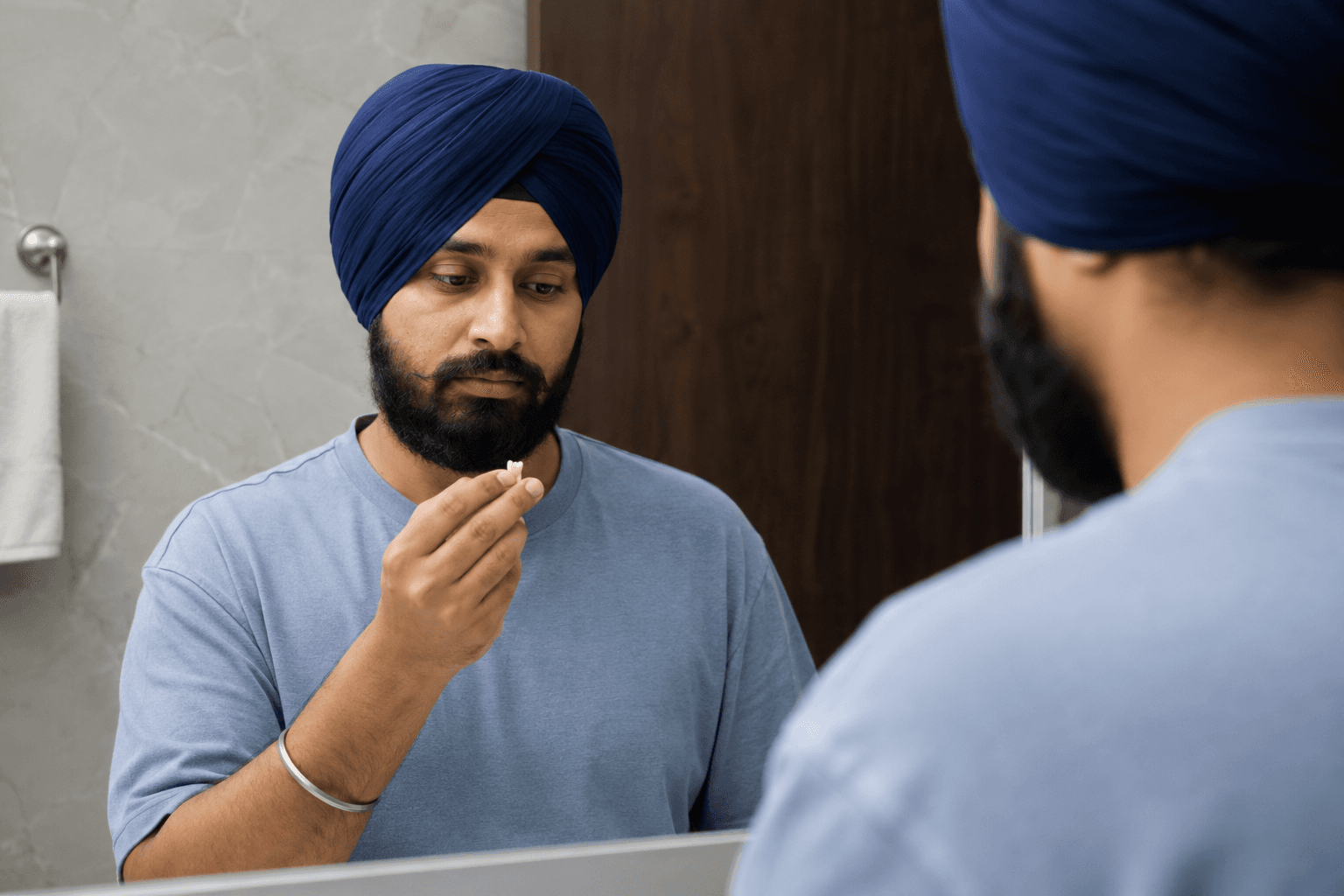
A tooth can chip suddenly while eating, during sport, after a fall, or even while biting something that did not seem especially hard.
The first hour matters because it is when people often make the wrong move. They keep chewing to check the damage. They throw away the broken piece. They ignore a crack because there is no pain. Or they panic when the situation can be handled calmly.
If you chip, crack, or break a tooth, stop chewing from that side, rinse gently, save any noticeable broken piece in milk or saliva if you can, and call a dentist for advice. If there is swelling, heavy bleeding, severe pain, a loose tooth, or trauma to the face, seek urgent care.
The tooth may be repairable. The first step is to protect it from further damage.
What a chipped or cracked tooth means
A chipped tooth means a piece of tooth structure has broken away. A cracked tooth means a fracture line may have formed in the tooth, even if nothing has fallen out.
A small chip on a front tooth may mainly affect appearance and smoothness. A crack in a back tooth may be a chewing-force problem and can be more serious than it looks. A tooth with an old filling may break because less natural tooth structure is left to absorb pressure.
The amount of pain does not always match the amount of damage. A tooth may look small and harmless but hurt sharply when biting. Another tooth may look alarming but still be restorable.
This is why a dental examination is important.
Why teeth crack or chip
Teeth can break for several reasons:
- Biting hard foods, such as nuts, bones, ice, or hard sweets
- Old fillings that leave less natural tooth structure behind
- Grinding or clenching
- Falls or accidents
- Sports injuries
- Decay weakening the tooth from inside
- Sudden pressure on one point of the tooth
Back teeth often crack from chewing pressure. Front teeth often chip from trauma or biting into something hard.
Either way, the aim is the same: prevent further damage and get the tooth assessed.
Front-tooth chips and back-tooth fractures are different
A front-tooth chip is often noticed immediately because it changes the smile or feels sharp to the tongue. Many small front-tooth chips can be restored conservatively with smoothing or bonding, depending on the size and position of the break.
A back-tooth fracture can be more deceptive. A molar may crack around an old filling or under biting pressure. It may hurt only when chewing, or only when the bite is released. Because back teeth carry heavy force, a simple-looking fracture may need stronger protection, such as a crown or another restoration that covers and supports the tooth.
The location matters. A cosmetic edge chip and a chewing-surface fracture should not be treated as the same problem.
What patients usually notice
After a chip or crack, you may notice:
- A rough or sharp edge cutting the tongue or cheek
- A visible missing piece
- Pain when biting
- Pain when releasing the bite
- Sensitivity to cold, hot, or sweet foods
- A line on the tooth surface
- A tooth that feels different when the tongue touches it
- Bleeding from the gum or lip if there was trauma
- No pain at all, at least in the beginning
No pain does not always mean no problem. Some cracks become painful later.
What to do in the first hour
Stay calm and do these steps in order.
- Stop chewing from that side.
- Rinse your mouth gently with clean water.
- If you find a noticeable broken piece, keep it moist in milk or saliva in a clean container.
- If it is your tooth, saliva can be collected by spitting into a clean container. For a child, use the child's saliva if possible.
- If there is bleeding from the lip, cheek, or gum, apply gentle pressure with clean gauze or cloth.
- If there is swelling from an injury, use a cold compress on the outside of the face.
- Avoid very hot, cold, hard, or sweet foods until the tooth is checked.
- Call or WhatsApp a dentist and explain what happened.
If the broken piece is tiny and powder-like, it may not be useful. But if you can save it without delay, bring it. Do not scrub it, bleach it, wrap it dry in tissue, or try to glue it back yourself.
What the clinic may ask on WhatsApp
A clear message helps the clinic judge how urgently you need to be seen. If you send a photo, try to include the tooth clearly and not only a close blur.
You may be asked:
- When did it happen?
- Is it an adult or a child?
- Is it a front tooth or a back tooth?
- Did the tooth chip, crack, loosen, or come out completely?
- Is there pain now?
- Does it hurt when you bite?
- Is there sensitivity to cold, hot, or sweets?
- Is there bleeding or swelling?
- Was there a fall, accident, or injury to the face?
- Do you have the broken piece?
- Can you send a clear photo of the tooth and the fragment?
If the tooth has come out completely, say that first. A knocked-out adult tooth is more urgent than a small chip.
When it can wait
A small chip may be able to wait until the clinic opens if:
- There is no severe pain
- There is no swelling
- There is no heavy bleeding
- The tooth is not loose
- The chip is small and only leaves a rough edge
- You can avoid chewing on that side
Even then, do not leave it for weeks. A sharp edge can cut the tongue or cheek, and a weakened tooth may break further.
When to call a dentist promptly
Call a dentist promptly if:
- The tooth hurts when biting
- The crack seems to run into the tooth
- A large piece has broken off
- The tooth is sensitive to cold, hot, or sweets
- The broken area is sharp and injuring the mouth
- The tooth has become loose
- The injury involved a fall, hit, or accident
- There is swelling, pus, fever, or worsening pain
If the tooth was knocked out completely, that is a different and more urgent situation. An adult tooth that has come out fully needs immediate dental advice.
What the dentist may check
The dentist will look at the tooth and the surrounding gum. They may check the bite, test sensitivity, look for movement, and take an X-ray if needed.
They will try to answer a few important questions:
- How much tooth structure is lost?
- Is the nerve involved?
- Is the crack only in the outer tooth, or deeper?
- Is the tooth restorable?
- Does the tooth need protection from chewing forces?
- Is the problem mainly cosmetic, structural, or both?
This is why a cracked tooth should not be judged only by how it looks in the mirror.
Treatment options
Treatment depends on the size, depth, and location of the fracture.
A very small chip may be smoothed. A visible front-tooth chip may be repaired with bonding. A larger broken area may need a filling, inlay, onlay, or crown. If the nerve is exposed or inflamed, root canal treatment may be discussed before restoring the tooth. If the tooth is split or cannot be saved, extraction may be necessary.
For front teeth, appearance and natural shape matter. For back teeth, strength and bite protection matter heavily. In both cases, the best treatment is the one that protects the remaining tooth properly.
What not to do
Do not keep biting on the tooth to test it. That can worsen a crack.
Do not throw away a noticeable broken fragment if you find it.
Do not file the sharp edge at home. You may remove more tooth structure or injure yourself.
Do not put household glue on the tooth or the broken piece.
Do not wrap a useful fragment dry in tissue if milk or saliva in a clean container is available.
Do not delay because there is no pain. Some cracks become painful only after the tooth has been stressed further.
Do not take leftover antibiotics. A broken tooth is a structural problem first. It needs assessment.
FAQs
Is a chipped tooth an emergency?
A small chip without pain or swelling may not be an emergency, but it should still be checked. A large break, pain on biting, swelling, bleeding, trauma, or a loose tooth needs prompt attention.
Should I keep the broken tooth piece?
Yes, if it is a noticeable piece. Keep it moist in milk or saliva in a clean container and bring it to the dentist. It may or may not be usable, but it is better to bring it than throw it away.
Can a dentist stick the broken piece back?
Sometimes, if the fragment is suitable, it may be possible to reattach it. In many cases, bonding or another restoration is more appropriate. The dentist will decide after examination.
What if the broken edge is cutting my tongue?
Avoid rubbing the area with your tongue. Call a dentist. Temporary dental wax may help cover a sharp edge until you are seen, if your dentist advises it.
Why does my cracked molar hurt only when I bite?
A crack can open slightly under chewing pressure and irritate the inner tooth. This type of pain should be assessed because cracks can deepen.
Are front tooth chips easier to fix than back tooth fractures?
Often, yes, but not always. Small front-tooth chips may be restored with bonding. Back teeth carry heavier chewing forces, so they may need stronger protection.
What if my child chips a tooth?
Children's dental injuries should be checked, especially if the tooth is loose, painful, displaced, or the injury involved a fall. Milk teeth and adult teeth are handled differently.
A chipped or cracked tooth is not always a crisis, but it should be respected.
The safest first response is simple: stop chewing from that side, save any noticeable broken piece in milk or saliva, keep the mouth clean, and call a dentist for advice.
At Dr Nanda's Dental Clinic in Mohali, broken and cracked teeth are assessed with one practical aim: to protect the tooth in the kindest way possible. Sometimes the answer is small. Sometimes it is more involved. The examination decides.